How Regenerative Agriculture Reduces Carbon Footprint
The Carbon Footprint Crisis in Textile and Agriculture Industries
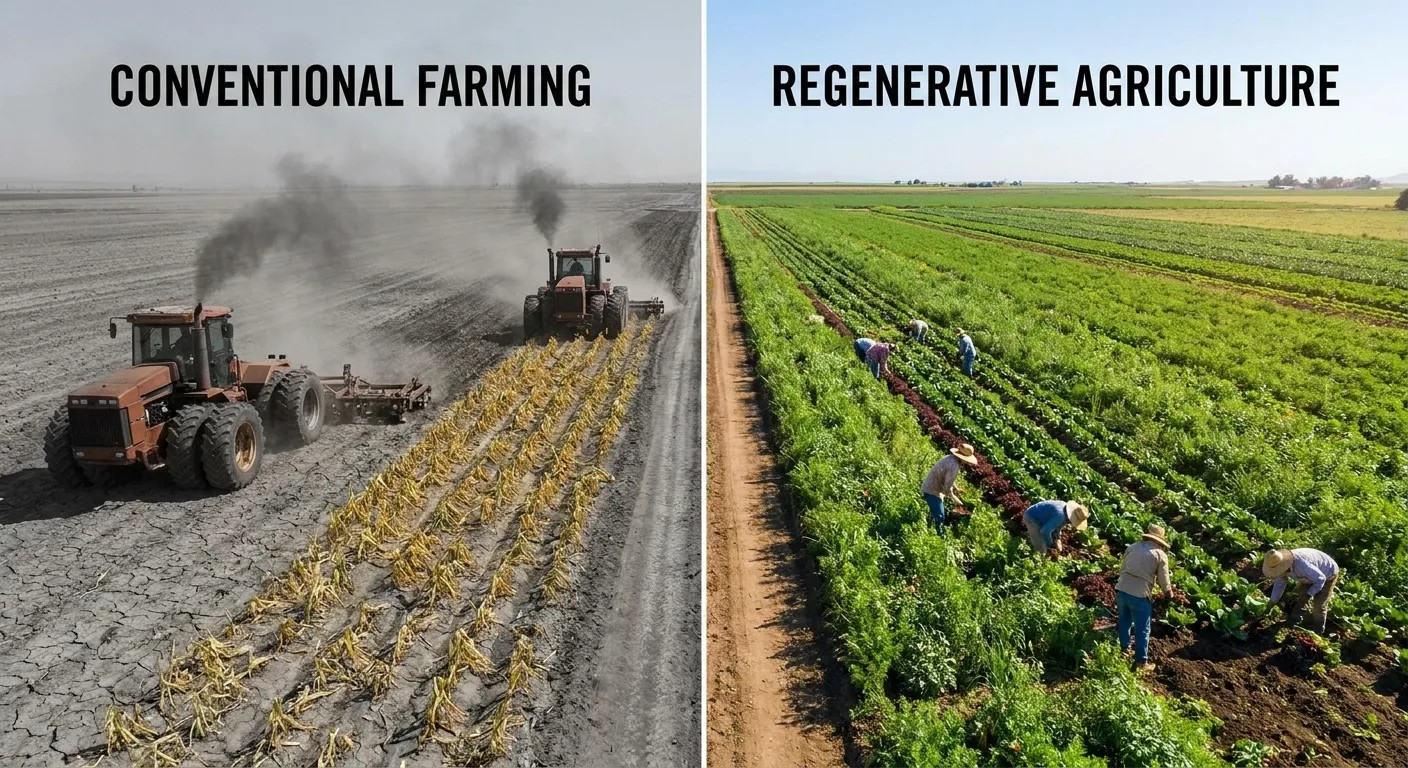
The textile and agriculture industries stand at a critical crossroads. Together, they contribute significantly to global greenhouse gas emissions, with conventional farming practices and textile production creating a carbon footprint that threatens our climate stability. According to the UN FAO, 33% of global soils are already degraded, releasing stored carbon into the atmosphere while simultaneously losing their capacity to sequester new carbon. This dual crisis demands immediate, transformative action.
Conventional agriculture's reliance on synthetic fertilizers, intensive tillage, and monoculture systems has created a carbon-intensive supply chain that extends from farm to fashion. The production of synthetic nitrogen fertilizers alone accounts for approximately 2% of global energy consumption, while soil degradation from conventional practices releases billions of tons of CO2 annually. For textile manufacturers and fashion brands committed to sustainability, understanding and addressing this carbon footprint has become not just an environmental imperative but a business necessity.
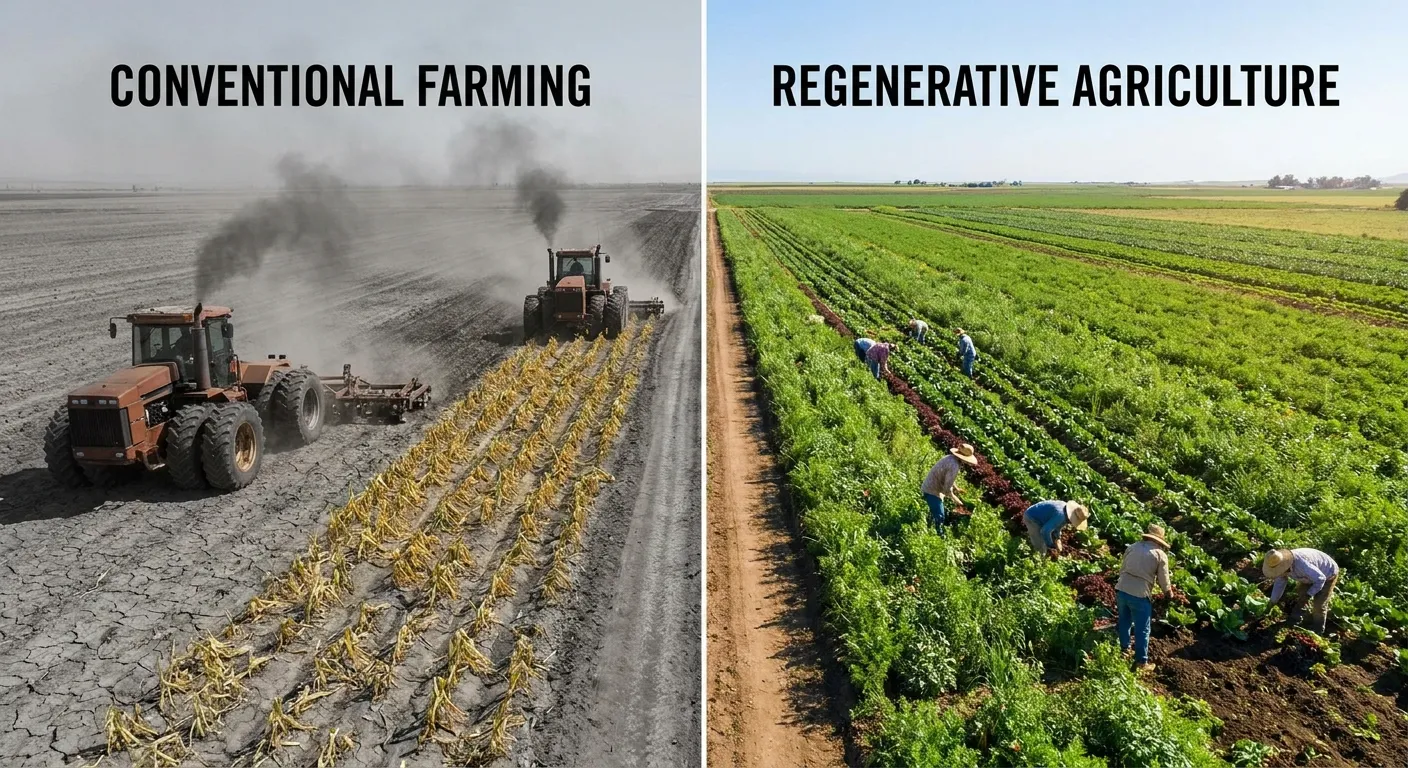
The urgency is clear: businesses across the textile supply chain must transition from carbon-intensive to carbon-negative systems. This transformation requires more than incremental improvements—it demands a fundamental reimagining of how we grow, process, and manufacture textile materials. Regenerative agriculture offers this pathway, providing proven methodologies that not only reduce emissions but actively remove carbon from the atmosphere while improving soil health, increasing crop yields, and enhancing farmer livelihoods.
Understanding Carbon Footprint in Agricultural Supply Chains
Before addressing solutions, it's essential to understand what constitutes the carbon footprint in agricultural supply chains. The carbon footprint represents the total greenhouse gas emissions produced directly and indirectly throughout the entire lifecycle of agricultural production, measured in carbon dioxide equivalents (CO2e).
In textile agriculture, particularly cotton production, the carbon footprint encompasses multiple emission sources. Synthetic fertilizer production and application contribute significantly, with nitrogen-based fertilizers releasing nitrous oxide—a greenhouse gas 300 times more potent than CO2. Diesel-powered machinery for tillage, planting, and harvesting adds substantial emissions. Irrigation systems, especially those powered by fossil fuels, further increase the carbon burden. Perhaps most critically, soil degradation from conventional practices releases stored soil organic carbon, transforming agricultural land from a carbon sink into a carbon source.
The textile industry measures carbon footprint per kilogram of fiber produced, providing a standardized metric for comparison and improvement. Conventional cotton production typically generates between 1.8 to 2.5 kg CO2e per kg of cotton fiber, depending on farming practices, input intensity, and regional factors. This measurement includes emissions from field preparation through harvest, but often excludes processing and transportation—meaning the true carbon footprint extends even further through the supply chain.
Understanding these emission sources is the first step toward transformation. Only by accurately measuring baseline carbon footprint can businesses identify the most impactful intervention points and track progress toward Net Zero goals. This data-driven approach enables targeted implementation of regenerative practices where they'll deliver maximum carbon reduction.
How Regenerative Agriculture Transforms Carbon Footprint
Regenerative agriculture represents a paradigm shift in how we approach farming and carbon management. Unlike conventional agriculture that depletes soil and releases carbon, regenerative practices actively rebuild soil health while sequestering atmospheric carbon. This transformation turns agricultural land from a climate liability into a climate solution, creating carbon-negative systems that remove more greenhouse gases than they emit.
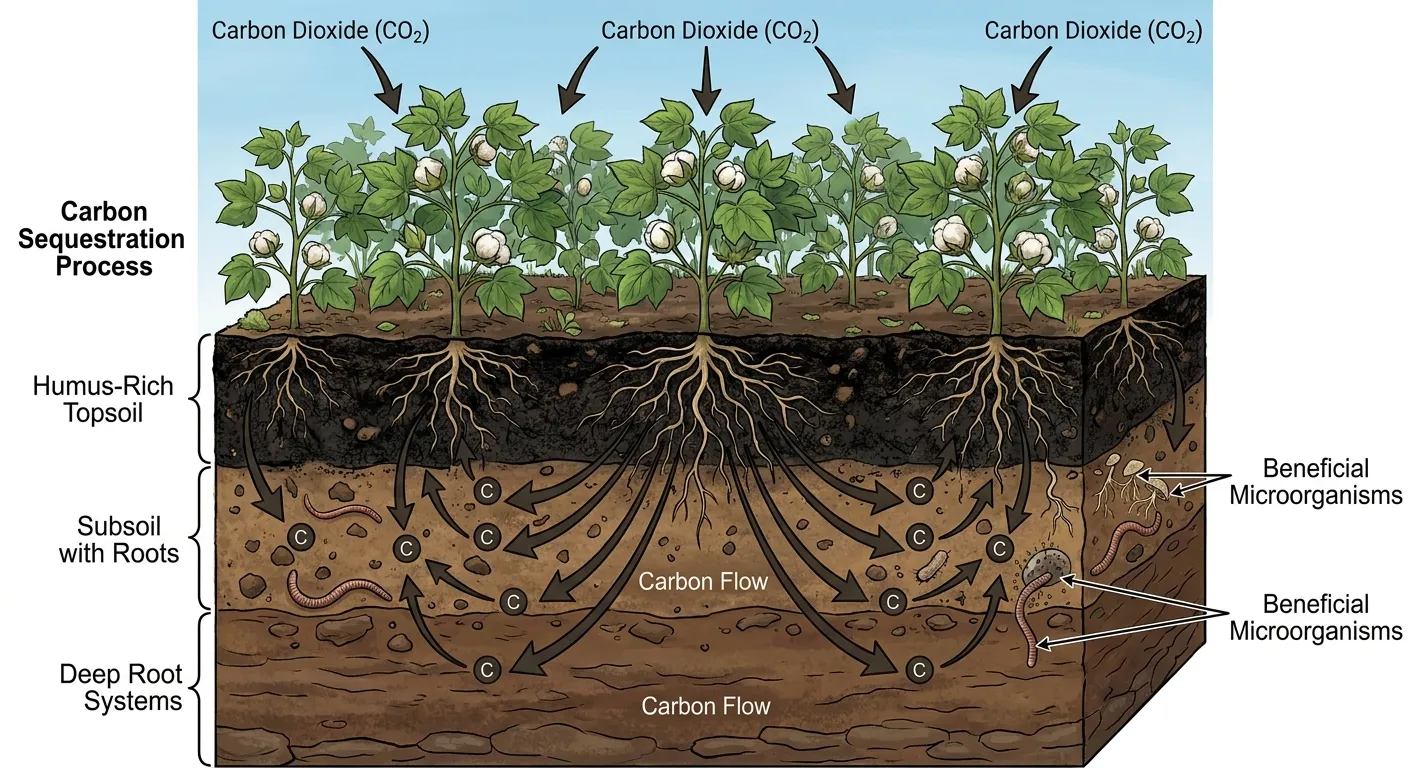
The foundation of regenerative agriculture's carbon reduction power lies in soil health restoration. Healthy soil acts as a massive carbon sink, storing carbon in stable organic forms that can remain sequestered for decades or even centuries. Through practices like minimal tillage, cover cropping, diverse crop rotations, and integrated livestock management, regenerative systems build soil organic matter—each 1% increase in soil organic matter represents approximately 8.5 tons of carbon sequestered per acre.
Nature-based solutions embedded in regenerative agriculture work synergistically to reduce carbon footprint across multiple pathways. Reduced tillage minimizes soil disturbance, preventing the oxidation of soil organic carbon that occurs when soil is exposed to air. Cover crops and diverse plantings keep living roots in the soil year-round, feeding soil microorganisms that build stable carbon compounds. Eliminating or drastically reducing synthetic inputs cuts emissions from fertilizer production and application. The result is a comprehensive carbon reduction strategy that addresses emissions at their source while actively removing CO2 from the atmosphere.
Research demonstrates that regenerative agriculture can sequester between 0.5 to 2 tons of carbon per acre annually, depending on climate, soil type, and specific practices implemented. For textile supply chains, this translates to dramatically reduced carbon footprint per kilogram of fiber, some regenerative cotton systems achieve carbon footprints below 0.5 kg CO2e per kg of fiber, representing a 70-80% reduction compared to conventional production. This transformation makes regenerative agriculture essential for any business pursuing meaningful climate action. Learn more about the complete framework in our guide to carbon sequestration in agriculture.
Biochar Application: Industrial Decarbonisation Through Agricultural Residues
Among the most powerful tools for reducing carbon footprint in agricultural systems is biochar, a stable form of carbon produced through pyrolysis of agricultural residues. Biochar application represents a breakthrough in industrial decarbonisation, transforming waste materials into long-term carbon storage while simultaneously improving soil fertility and water retention.
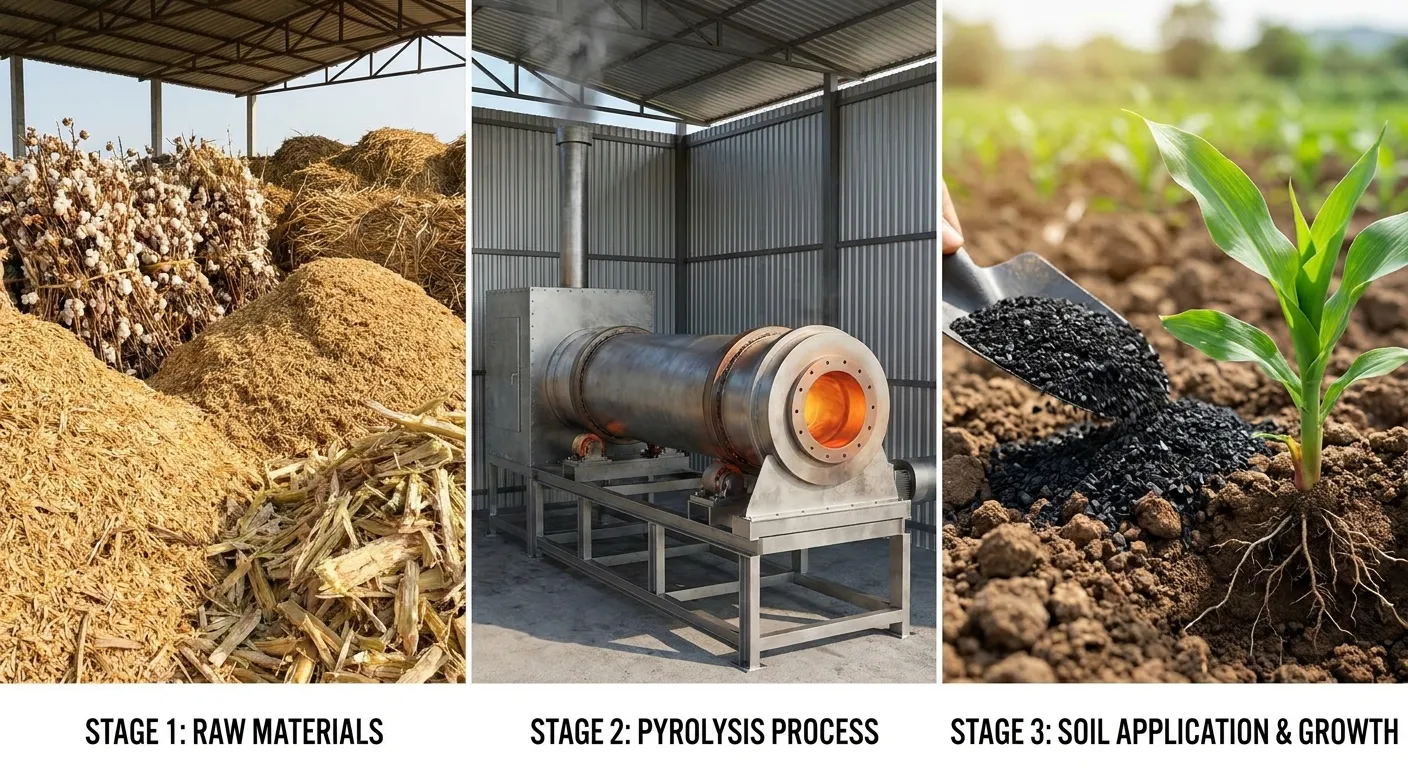
The biochar production process begins with agricultural residues that would otherwise decompose or be burned, releasing their stored carbon back into the atmosphere. Cotton stalks, sugarcane bagasse, and rice husks, abundant byproducts of textile and food agriculture, serve as ideal feedstocks. Through industrial pyrolysis, these materials are heated in low-oxygen environments at temperatures between 400-700°C, converting them into stable biochar while capturing energy that can power the process or be used for other industrial applications.
What makes biochar exceptional for carbon footprint reduction is its stability. While organic matter typically decomposes within years or decades, biochar can remain stable in soil for hundreds to thousands of years, representing permanent or near-permanent carbon sequestration. Each ton of biochar applied to soil sequesters approximately 3 tons of CO2 equivalent, a powerful climate mitigation tool that also delivers agronomic benefits.
Beyond carbon sequestration, biochar improves soil structure, increases water retention capacity by up to 18%, enhances nutrient availability, and supports beneficial soil microorganisms. These improvements translate to better crop performance with reduced input requirements, further decreasing the overall carbon footprint of agricultural production. For textile supply chains, biochar application in cotton fields can reduce irrigation needs, minimize fertilizer requirements, and improve fiber quality, creating multiple value streams from a single intervention.
Beetle Regen Solutions implements industrial pyrolysis systems that process agricultural residues at scale, creating biochar for soil application while generating renewable energy. This circular approach transforms waste into value, reduces emissions from residue burning, sequesters carbon long-term, and improves agricultural productivity, a comprehensive solution for businesses committed to industrial decarbonisation and carbon footprint reduction.
High-Density Plantation Systems (HDPS) for Carbon Footprint Reduction
High-Density Plantation Systems (HDPS) represent an innovative approach to reducing carbon footprint through improved resource efficiency and optimized crop yields. By strategically increasing plant density while implementing precision management techniques, HDPS dramatically reduces the CO2 emissions per kilogram of cotton fiber produced, a critical metric for textile supply chain sustainability.
Traditional cotton farming often uses suboptimal plant spacing that requires more land, water, and inputs to produce each unit of fiber. HDPS optimizes plant density based on variety characteristics, soil conditions, and climate factors, typically increasing plant populations by 20-40% compared to conventional systems. This intensification, when combined with precision nutrient management and irrigation optimization, produces significantly higher yields per acre without proportionally increasing inputs or emissions.
The carbon footprint benefits of HDPS are substantial and multifaceted. Higher yields per acre mean that fixed emissions, from land preparation, machinery operation, and infrastructure, are distributed across more production, reducing emissions intensity. Improved input use efficiency means less fertilizer, water, and pesticide per kilogram of fiber, cutting emissions from input production and application. Stronger, healthier plants with optimized spacing often show improved pest and disease resistance, further reducing chemical input requirements and associated emissions.
Farmer training programs are essential for successful HDPS implementation. Beetle Regen Solutions provides comprehensive capacity building that teaches farmers precision planting techniques, optimized irrigation scheduling, integrated nutrient management, and pest monitoring protocols specific to high-density systems. This collaborative knowledge building ensures farmers can successfully manage the increased complexity of HDPS while capturing the full economic and environmental benefits, including reduced carbon footprint, increased income from higher yields, and improved soil health from more efficient resource use.
Field data from HDPS implementations show carbon footprint reductions of 25-35% per kilogram of cotton fiber compared to conventional systems, while simultaneously increasing farmer profitability through higher yields and reduced input costs. This dual benefit makes HDPS a cornerstone strategy for textile businesses seeking to transform their supply chain sustainability. Discover more about yield improvements in our article on how regenerative agriculture increases crop yield.
Carbon Insetting Strategies for Supply Chain Transformation
While carbon offsetting involves purchasing credits from external projects, carbon insetting represents a more integrated and impactful approach, investing directly in carbon reduction and sequestration projects within your own supply chain. For textile and fashion businesses, carbon insetting through regenerative agriculture creates authentic sustainability transformation while building resilient, transparent supply chains that deliver measurable carbon footprint reduction.
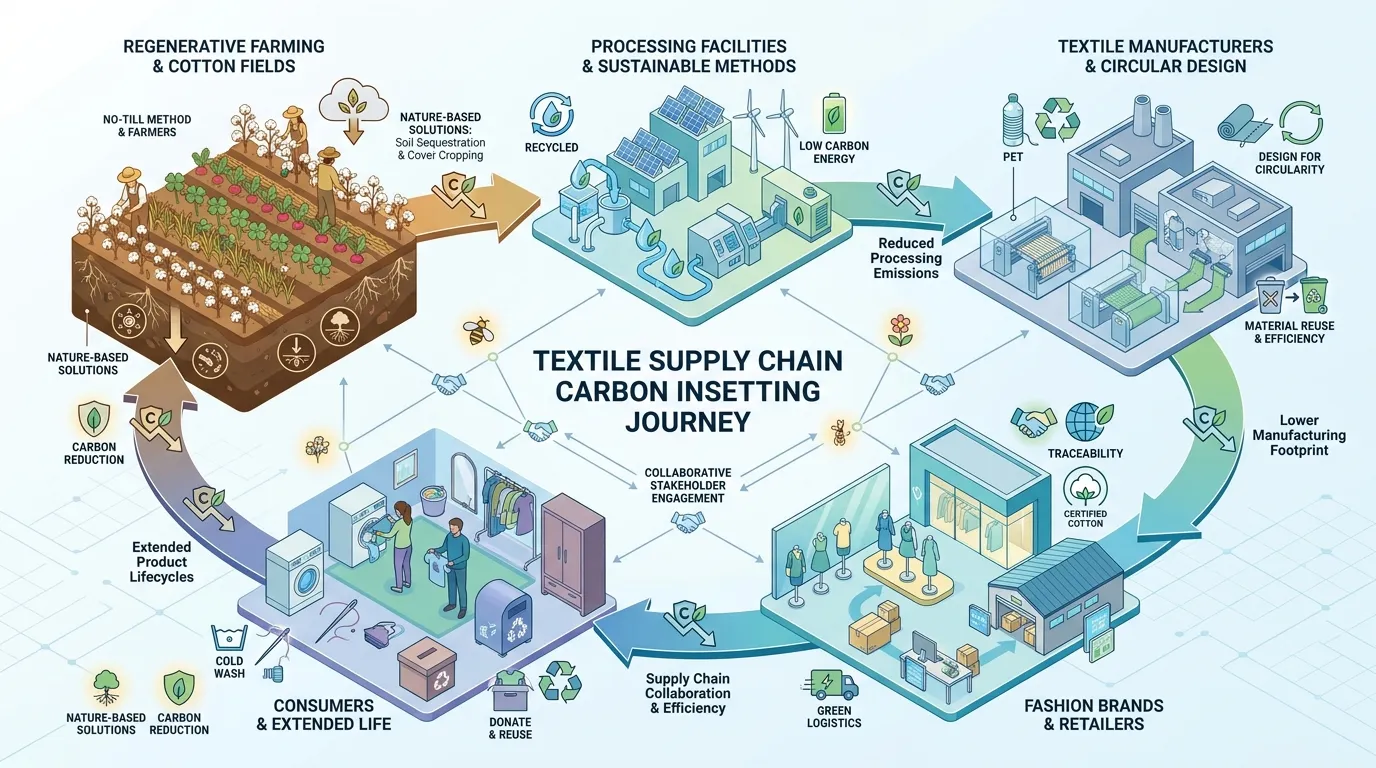
Carbon insetting in textile supply chains works by partnering directly with cotton farmers to implement regenerative practices that sequester carbon and reduce emissions. Rather than purchasing generic carbon credits from unrelated projects, businesses invest in their own agricultural suppliers, funding the transition to practices like biochar application, HDPS, cover cropping, and reduced tillage. This direct investment creates multiple value streams: verified carbon sequestration that counts toward Net Zero goals, improved fiber quality and supply chain resilience, enhanced farmer livelihoods and loyalty, and authentic sustainability stories that resonate with conscious consumers.
Implementing carbon insetting requires a structured approach that begins with baseline carbon footprint assessment across your supply chain. This measurement identifies current emissions and establishes the starting point for tracking progress. Next, businesses work with regenerative agriculture consultants to design intervention strategies tailored to specific farming contexts, crop types, and regional conditions. Farmer engagement and training programs ensure successful adoption of new practices, while monitoring and verification systems track carbon sequestration and emission reductions over time.
The economic model of carbon insetting creates shared value throughout the supply chain. Farmers receive training, technical support, and often premium pricing for regeneratively produced fiber. Manufacturers gain access to lower-carbon materials that meet increasingly stringent sustainability requirements. Brands can make credible climate claims backed by verified data from their own supply chains. Consumers benefit from products with dramatically reduced environmental impact. This alignment of incentives drives genuine transformation rather than superficial greenwashing.
Beetle Regen Solutions specializes in designing and implementing carbon insetting programs for textile businesses, providing end-to-end support from baseline assessment through farmer training, practice implementation, and carbon verification. Our collaborative platform connects all stakeholders, farmers, manufacturers, brands, and verification bodies, enabling transparent data sharing and continuous improvement. By embedding carbon reduction directly into your supply chain, carbon insetting delivers more reliable, verifiable, and impactful results than traditional offsetting approaches. Learn more about comprehensive supply chain transformation in our guide to supply chain transformation through regenerative agriculture consulting.
Additional Regenerative Practices That Reduce Carbon Footprint
Beyond biochar, HDPS, and carbon insetting, a suite of complementary regenerative practices further reduces carbon footprint while building resilient, productive agricultural systems. These nature-based solutions work synergistically, creating cumulative benefits that exceed the sum of individual interventions.
Alternate Wetting and Drying (AWD) for rice cultivation represents a significant opportunity for carbon reduction in regions where cotton and rice are grown in rotation. Traditional flooded rice paddies produce substantial methane emissions, a greenhouse gas 28 times more potent than CO2 over a 100-year timeframe. AWD involves periodically draining rice fields rather than maintaining continuous flooding, reducing methane emissions by 30-70% while saving water and often improving yields. For textile businesses sourcing from regions with rice-cotton rotations, supporting AWD adoption delivers measurable carbon footprint reduction beyond cotton production itself.
Cover cropping and crop rotation keep living roots in the soil throughout the year, feeding soil microorganisms that build stable carbon compounds while preventing erosion and suppressing weeds. Cover crops like legumes also fix atmospheric nitrogen, reducing or eliminating synthetic fertilizer requirements and their associated emissions. Multi-year crop rotations break pest and disease cycles, reducing pesticide needs while building soil organic matter through diverse root systems and plant residues.
Reduced tillage and no-till farming minimize soil disturbance, preventing the oxidation of soil organic carbon that occurs when soil aggregates are broken apart and exposed to air. No-till systems can sequester 0.3-0.5 tons of carbon per acre annually while reducing fuel consumption from tractor operations, cutting both direct and indirect emissions. These practices also improve soil structure, water infiltration, and moisture retention, building climate resilience alongside carbon reduction.
Integrated pest management (IPM) reduces reliance on synthetic pesticides through biological controls, habitat management for beneficial insects, and targeted interventions based on pest monitoring. Reducing pesticide use cuts emissions from chemical production and application while protecting beneficial soil organisms that support carbon sequestration and nutrient cycling.
Agroforestry and biodiversity enhancement integrate trees, shrubs, and diverse plant species into agricultural landscapes, creating additional carbon sinks while providing habitat for pollinators and natural pest predators. Trees sequester carbon in both biomass and soil, while diverse plantings create more resilient ecosystems better able to withstand climate variability.
Each of these practices contributes to overall carbon footprint reduction while delivering co-benefits for soil health, water quality, biodiversity, and farm profitability. The most effective regenerative agriculture programs combine multiple practices tailored to specific farm conditions, creating comprehensive systems that transform agricultural land from carbon source to carbon sink. Explore the full range of practices in our complete guide to sustainable farming.
Achieving Net Zero Goals Through Regenerative Agriculture
For businesses committed to Net Zero targets, regenerative agriculture provides a credible, verifiable pathway to achieve ambitious climate goals while strengthening supply chain sustainability. Unlike purchased offsets that may lack transparency or permanence, regenerative agriculture delivers measurable carbon sequestration within your own operations and supply chains, creating authentic climate action that withstands scrutiny from stakeholders, investors, and consumers.
Aligning regenerative agriculture with Net Zero commitments requires a strategic framework that addresses three key components: reducing emissions from current operations, sequestering carbon through regenerative practices, and generating verified carbon credits that can offset remaining unavoidable emissions. This comprehensive approach ensures businesses make genuine progress toward climate neutrality rather than relying solely on purchased offsets.
Carbon credits generated from regenerative agriculture projects provide additional economic incentives for farmers while creating revenue streams that can fund further sustainability investments. When farmers implement verified regenerative practices that sequester carbon or reduce emissions, they can generate carbon credits that businesses can purchase to offset their own emissions. This creates a virtuous cycle where climate action generates economic value that funds additional climate action, accelerating the transition to regenerative systems at scale.
Data integration and transparent reporting are essential for credible Net Zero claims. Businesses must implement robust monitoring systems that track carbon sequestration, emission reductions, and practice adoption across their supply chains. Digital platforms that integrate data from soil testing, satellite imagery, farm management records, and third-party verification provide the transparency and accountability that stakeholders demand. This data infrastructure also enables continuous improvement, identifying which practices deliver the greatest carbon reduction in specific contexts and allowing adaptive management that optimizes results over time.
Stakeholder engagement across the entire supply chain ensures successful Net Zero implementation. Farmers need training and support to adopt new practices. Manufacturers require reliable supplies of low-carbon materials. Brands must communicate authentic sustainability stories to consumers. Investors and regulators demand verified data and credible progress toward stated goals. Collaborative platforms that connect all stakeholders, facilitate knowledge sharing, and enable transparent data exchange are essential infrastructure for Net Zero agriculture. Learn more about effective collaboration in our article on stakeholder engagement in regenerative agriculture.
Beetle Regen Solutions provides comprehensive support for businesses pursuing Net Zero goals through regenerative agriculture, from baseline carbon footprint assessment and target setting through practice implementation, monitoring, verification, and reporting. Our collaborative approach ensures all stakeholders benefit from the transition, creating shared value that drives genuine transformation rather than superficial compliance.
Implementation Roadmap: Transitioning Your Supply Chain
Transforming your agricultural supply chain from carbon-intensive to carbon-negative requires a structured implementation approach that balances ambition with practicality. This roadmap provides a proven framework for businesses ready to reduce their carbon footprint through regenerative agriculture.
Step 1: Baseline Carbon Footprint Assessment, Begin by measuring current emissions across your agricultural supply chain. This assessment should include direct emissions from farming operations (fuel, fertilizers, pesticides), indirect emissions from input production and transportation, and soil carbon changes from current management practices. Accurate baseline measurement is essential for setting realistic targets, identifying priority intervention areas, and tracking progress over time. Work with experienced consultants who understand agricultural carbon accounting and can provide verified, credible data that withstands stakeholder scrutiny.
Step 2: Farmer Training and Capacity Building Programs, Successful regenerative agriculture implementation depends on farmer knowledge and buy-in. Develop comprehensive training programs that teach regenerative practices through hands-on demonstrations, peer learning, and ongoing technical support. Training should cover the agronomic principles behind regenerative practices, practical implementation techniques, economic benefits and risk management, and monitoring protocols that track progress. Collaborative knowledge building that respects farmer expertise while introducing new approaches creates the foundation for lasting transformation.
Step 3: Implementing Regenerative Practices at Scale, Begin with pilot projects that test regenerative practices in diverse farm contexts, gathering data on effectiveness, challenges, and farmer acceptance. Use pilot results to refine approaches before scaling to larger farm populations. Provide farmers with necessary resources, seeds for cover crops, biochar for soil application, equipment for precision planting, or financial support during the transition period when yields may temporarily dip. Phased implementation that starts with the most accessible, highest-impact practices builds momentum and confidence before tackling more complex interventions.
Step 4: Monitoring, Verification, and Reporting, Establish robust systems for tracking practice adoption, measuring carbon sequestration and emission reductions, and verifying results through third-party audits. Monitoring should combine farmer self-reporting, field inspections, soil testing, and remote sensing technologies that provide comprehensive, cost-effective data. Verification by accredited third parties ensures credibility and may be required for carbon credit generation or sustainability certifications. Regular reporting to internal and external stakeholders demonstrates progress and maintains accountability.
Step 5: Continuous Improvement and Stakeholder Collaboration, Regenerative agriculture is not a one-time project but an ongoing journey of learning and adaptation. Establish feedback loops that capture lessons from farmers, agronomists, and supply chain partners, using this knowledge to continuously refine practices and improve results. Regular stakeholder convenings, bringing together farmers, manufacturers, brands, researchers, and policymakers, foster innovation and address emerging challenges collaboratively. This adaptive management approach ensures your regenerative agriculture program remains effective as conditions change and knowledge advances.
Throughout this implementation journey, partnering with experienced regenerative agriculture consultants accelerates progress and reduces risk. Beetle Regen Solutions guides businesses through each step, providing technical expertise, farmer training programs, monitoring systems, and stakeholder engagement platforms that ensure successful transformation. Our experience across diverse agricultural contexts and textile supply chains enables us to tailor approaches to your specific needs, delivering measurable carbon footprint reduction while building supply chain resilience and farmer prosperity.
Economic Benefits Beyond Carbon Reduction
While carbon footprint reduction drives initial interest in regenerative agriculture, the economic benefits extend far beyond climate impact, creating compelling business cases that strengthen supply chains and improve profitability throughout the value chain.
For farmers, regenerative practices typically improve net income through multiple pathways. Higher crop yields from improved soil health increase revenue per acre. Reduced input costs from lower fertilizer, pesticide, and irrigation requirements improve margins. Premium pricing for regeneratively produced cotton, often 10-20% above conventional prices, rewards farmers for sustainable practices. Improved soil resilience reduces crop losses from drought, flooding, and extreme weather, stabilizing income across variable seasons. These economic benefits make regenerative agriculture attractive to farmers beyond environmental motivations, driving adoption and long-term commitment.
Manufacturers and brands gain competitive advantages through regenerative supply chains. Access to premium, low-carbon materials meets growing consumer demand for sustainable products and helps brands differentiate in crowded markets. Reduced supply chain risk from more resilient farming systems protects against climate-related disruptions. Enhanced brand reputation and consumer trust from authentic sustainability stories drive customer loyalty and premium pricing power. Compliance with increasingly stringent environmental regulations and corporate sustainability requirements becomes easier with verified low-carbon materials.
Long-term cost savings accumulate as regenerative systems mature. Healthier soils require fewer external inputs year after year, reducing ongoing costs. Improved water infiltration and retention reduce irrigation needs and costs. Enhanced pest and disease resistance from diverse, healthy ecosystems minimize pesticide expenses. These savings compound over time, making regenerative systems increasingly cost-competitive with conventional agriculture even before accounting for carbon credits or premium pricing.
The circular economy benefits of regenerative agriculture create additional value streams. Agricultural residues transformed into biochar generate revenue while solving waste management challenges. Carbon credits from verified sequestration provide new income for farmers and offset opportunities for businesses. Improved soil health increases land values and creates intergenerational wealth for farming communities. These circular flows transform linear, extractive supply chains into regenerative systems that create value at every stage. Explore how these principles connect in our article on the circular economy in fashion.
Perhaps most importantly, regenerative agriculture builds social capital and stakeholder relationships that deliver long-term business value. Farmers who receive training, fair pricing, and genuine partnership become loyal suppliers committed to your success. Communities that benefit from improved livelihoods and environmental health become advocates for your brand. Investors and customers who see authentic commitment to sustainability become long-term supporters. This social infrastructure creates resilient business relationships that weather market volatility and competitive pressures.
Frequently Asked Questions About Carbon Footprint and Regenerative Agriculture
How much can regenerative agriculture reduce carbon footprint?
Regenerative agriculture can reduce carbon footprint by 50-80% compared to conventional farming systems, depending on specific practices implemented and baseline conditions. Some regenerative cotton systems achieve carbon footprints below 0.5 kg CO2e per kg of fiber, compared to 1.8-2.5 kg CO2e for conventional cotton. Beyond emission reductions, regenerative systems actively sequester 0.5-2 tons of carbon per acre annually, potentially making agricultural production carbon-negative. The exact reduction depends on factors including soil type, climate, crop type, and which regenerative practices are adopted.
What is the difference between carbon sequestration and carbon reduction?
Carbon reduction refers to decreasing greenhouse gas emissions from agricultural activities, using less fertilizer, reducing tillage, optimizing irrigation, and minimizing fossil fuel use. Carbon sequestration involves actively removing CO2 from the atmosphere and storing it in stable forms, primarily as soil organic matter. Regenerative agriculture delivers both: it reduces emissions from farming operations while simultaneously sequestering atmospheric carbon in soil. This dual action makes regenerative systems far more powerful for climate mitigation than approaches that focus solely on emission reduction.
How long does it take to see carbon footprint improvements?
Some carbon footprint improvements appear immediately, reduced fertilizer use cuts emissions from the first season. However, significant soil carbon sequestration typically requires 3-5 years of consistent regenerative management before measurable increases in soil organic matter become evident. The rate of improvement depends on starting soil conditions, climate, and practice intensity. Degraded soils often show faster initial gains as they rebuild from depleted baselines, while already-healthy soils improve more gradually. Long-term commitment is essential, soil carbon continues accumulating for 10-20 years or more before reaching new equilibrium levels.
Can small-scale farmers participate in carbon insetting programs?
Yes, small-scale farmers can and should participate in carbon insetting programs. Aggregation models that group multiple small farms into single projects make participation economically viable by spreading verification and administrative costs across larger areas. Cooperative structures and farmer organizations facilitate group participation, training, and benefit sharing. Digital monitoring tools reduce the cost of tracking practice adoption and carbon sequestration across dispersed small farms. Many successful carbon insetting programs specifically target smallholder farmers, recognizing that they manage significant agricultural land area and that their participation is essential for achieving landscape-scale carbon reduction.
What data is needed to track carbon footprint reduction?
Tracking carbon footprint reduction requires data across several categories. Farm management data includes input use (fertilizers, pesticides, fuel), tillage practices, crop rotations, and yields. Soil data from periodic testing measures organic carbon content, bulk density, and other indicators of soil health. Practice adoption data tracks which regenerative techniques farmers implement and to what extent. Remote sensing data from satellites provides landscape-level monitoring of vegetation health, land use changes, and practice verification. Economic data on costs and revenues demonstrates financial viability alongside environmental impact. Integrated digital platforms that collect, analyze, and report this data enable transparent, verifiable carbon accounting that supports credible climate claims. Learn more about effective data management in our guide to integrating regenerative agriculture data across supply chains.
Transform Your Supply Chain Carbon Footprint Today
The climate crisis demands urgent action, and the textile industry's agricultural supply chains represent both a significant challenge and an extraordinary opportunity. Conventional farming practices contribute substantially to global carbon footprint, but regenerative agriculture provides proven methodologies to transform these same supply chains into powerful climate solutions. Through biochar application, high-density plantation systems, carbon insetting strategies, and comprehensive regenerative practices, businesses can achieve dramatic carbon footprint reduction while building more resilient, profitable, and equitable supply chains.
The transition to regenerative agriculture is not merely an environmental imperative, it's a strategic business opportunity that delivers competitive advantages, risk mitigation, and authentic sustainability credentials that resonate with increasingly conscious consumers and investors. Farmers benefit from improved livelihoods and soil health. Manufacturers gain access to premium, low-carbon materials. Brands build trust and differentiation. Communities thrive as agricultural systems regenerate rather than degrade their natural resource base.
Beetle Regen Solutions partners with textile businesses, agricultural enterprises, and sustainability leaders to design and implement comprehensive regenerative agriculture programs that deliver measurable carbon footprint reduction and Net Zero progress. Our collaborative approach brings together farmers, manufacturers, brands, and verification bodies on a shared platform for transparent data integration, continuous learning, and collective climate action. From baseline assessment through farmer training, practice implementation, and carbon verification, we provide end-to-end support that ensures your regenerative agriculture program succeeds.
The journey to reduce your supply chain's carbon footprint begins with a single step. Whether you're exploring regenerative agriculture for the first time or ready to scale existing programs, our team brings the technical expertise, farmer networks, and implementation experience to accelerate your progress. Contact us to discuss how regenerative agriculture can transform your carbon footprint, strengthen your supply chain, and position your business as a leader in climate action. Together, we can build agricultural systems that nourish people, regenerate ecosystems, and stabilize our climate for generations to come.