
How to Integrate Regenerative Agriculture Data Across Supply Chains
The textile and agricultural industries face a critical challenge in 2026: how to effectively track, verify, and communicate the environmental impact of regenerative farming practices across complex global supply chains. As businesses commit to Net Zero targets and consumers demand transparency, data integration has become the backbone of credible sustainability claims. Yet many organizations struggle with fragmented systems where farm-level soil health data, carbon sequestration measurements, and supply chain traceability exist in disconnected silos.
This comprehensive guide explores seven essential tools and workflows that enable seamless data integration for regenerative agriculture programs. Whether you're a textile manufacturer sourcing regenerative cotton, an agricultural enterprise transitioning to sustainable farming practices, or a corporate sustainability team building carbon neutral supply chains, these strategies will help you connect the dots from farm to finished product.
Why Data Integration Matters for Regenerative Agriculture
The regenerative agriculture movement has gained tremendous momentum, with the UN FAO reporting that 33% of global soils are degraded and urgently need restoration. However, the promise of regenerative practices—improved soil health, enhanced carbon sequestration, increased crop yield, and reduced environmental impact—can only be validated through robust data systems.

Without proper data integration, businesses face several critical challenges. First, they cannot verify sustainability claims with the rigor required by stakeholders, investors, and regulatory bodies. Second, they miss opportunities to optimize farming practices based on real-time insights. Third, they struggle to connect farm-level improvements to corporate ESG reporting frameworks. Finally, they cannot effectively participate in carbon credits markets that require verified sequestration data.
For textile industry businesses, integrated data systems enable traceability from regenerative cotton fields through manufacturing to retail, supporting circular economy initiatives and consumer transparency. For farmers, these systems provide access to training resources, performance benchmarks, and financial incentives tied to measurable environmental outcomes. For corporate sustainability teams, data integration transforms regenerative agriculture from a theoretical commitment into a quantifiable strategy for achieving carbon neutral and Net Zero goals.
Understanding the Regenerative Agriculture Data Landscape
Before implementing integration strategies, it's essential to understand the diverse data types generated across regenerative agriculture systems. At the farm level, practitioners collect soil health metrics including organic matter content, microbial activity, water retention capacity, and nutrient density. These measurements provide the foundation for tracking soil degradation reversal and fertility improvements over time.
Carbon sequestration data represents another critical category, encompassing baseline carbon measurements, ongoing sequestration rates, and verification protocols required for carbon credits programs. This data must meet rigorous standards set by certification bodies and carbon marketplaces, making accuracy and consistency paramount.
Crop yield information connects regenerative practices to economic outcomes, demonstrating that sustainable farming methods can enhance productivity while reducing environmental impact. Yield data, combined with input costs and market prices, enables ROI calculations that help farmers justify the transition to regenerative methods.
Throughout the supply chain, additional data layers emerge: processing and manufacturing metrics, transportation and logistics information, certification and compliance documentation, and stakeholder engagement records. Each data type serves specific audiences—farmers need actionable field insights, consultants require aggregated performance data, manufacturers demand traceability documentation, and corporate partners seek ESG reporting metrics. Effective data integration must serve all these needs simultaneously while maintaining data integrity and security.
1. Establish a Centralized Data Repository
The foundation of successful data integration begins with a centralized data repository that serves as the single source of truth for all regenerative agriculture information. Cloud-based platforms offer the scalability, accessibility, and security required for multi-stakeholder agricultural systems operating across geographic regions.
When selecting a data repository platform, prioritize solutions that support agricultural data standards and can accommodate diverse data types, from numerical soil measurements to qualitative farmer observations, from IoT sensor streams to document uploads. The platform should offer robust API capabilities that enable integration with existing enterprise resource planning (ERP) systems, supply chain management software, and sustainability reporting tools.
Data standardization protocols are essential for ensuring consistency across different farms, regions, and collection methods. Establish clear definitions for key metrics like soil organic carbon, biodiversity indicators, and water use efficiency. Create standardized data entry templates that guide farmers and field technicians through consistent collection processes. Implement validation rules that flag anomalies and ensure data quality at the point of entry.
Access controls must balance transparency with privacy, allowing farmers to maintain ownership of their data while sharing relevant information with supply chain partners. Role-based permissions enable different stakeholder groups to access appropriate data subsets, farmers see their individual farm performance, consultants view aggregated regional trends, and corporate partners access supply chain traceability information without exposing sensitive farm-level details.
Integration with existing business systems is crucial for adoption. Your centralized repository should connect seamlessly with procurement systems used by textile manufacturers, financial platforms that process carbon credits payments, and corporate sustainability dashboards that aggregate ESG metrics. These integrations eliminate manual data transfer, reduce errors, and ensure that regenerative agriculture data flows automatically to where it's needed.
2. Implement IoT Sensors and Field Data Collection Tools
Modern data integration for regenerative agriculture relies heavily on Internet of Things (IoT) technology that automates field data collection and transmits real-time information to central systems. Soil sensors represent the most critical IoT investment, continuously monitoring moisture levels, temperature, pH, electrical conductivity, and nutrient availability. These devices provide the granular, frequent measurements needed to track soil health improvements over seasons and years.
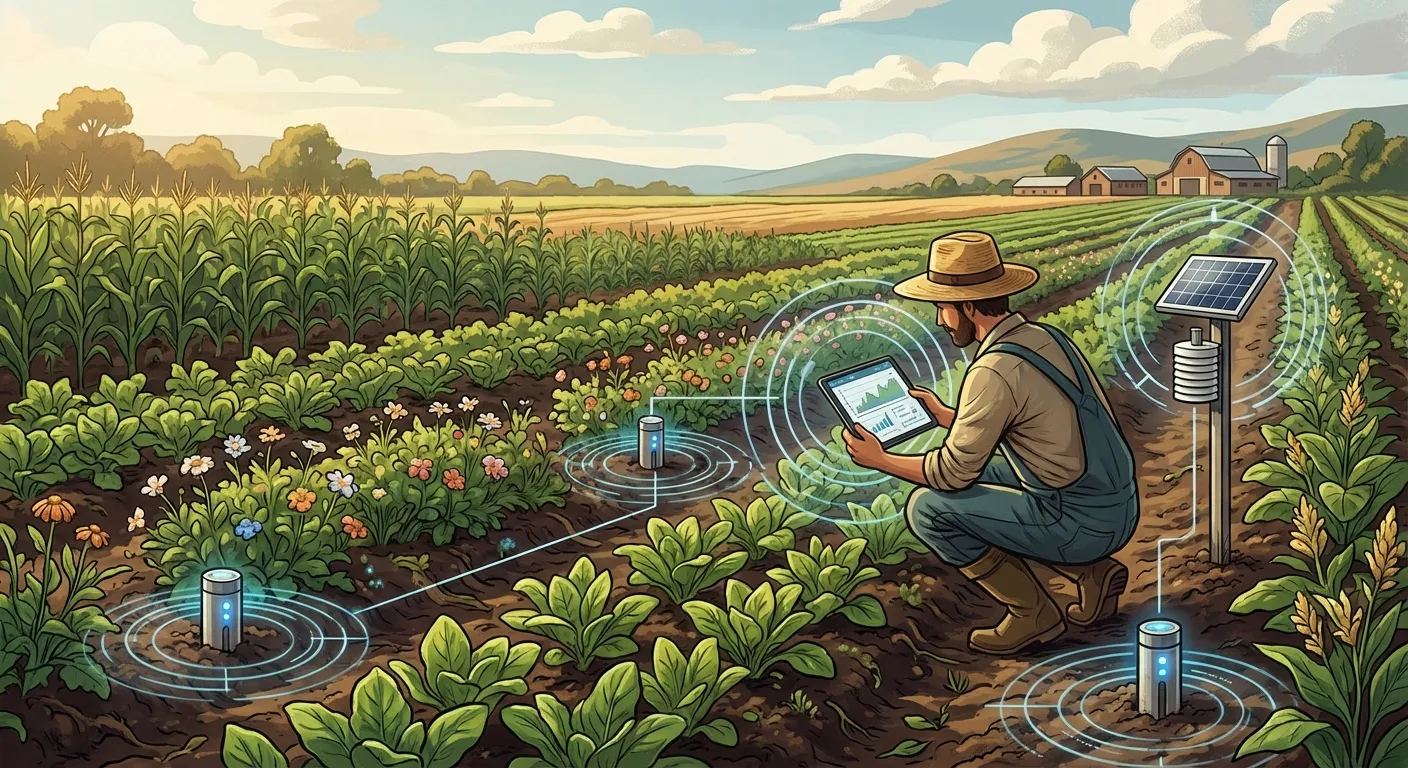
Weather stations equipped with sensors for temperature, humidity, rainfall, wind speed, and solar radiation provide environmental context for farm performance data. This information helps distinguish between outcomes driven by regenerative practices versus those influenced by weather patterns, enabling more accurate assessment of farming method effectiveness.
Mobile applications bridge the gap between high-tech sensors and practical farmer needs. Well-designed apps enable farmers to input observational data, pest pressure, crop health assessments, management activities, that complement automated sensor readings. These apps should work offline in areas with limited connectivity, syncing data automatically when internet access becomes available. Integration with farmer training programs allows the same mobile platform to deliver educational content, creating a unified tool for both learning and data collection.
The key to successful IoT implementation lies in seamless connectivity between field devices and your centralized data repository. Select sensors and devices that support standard communication protocols like LoRaWAN, NB-IoT, or cellular connectivity. Implement edge computing capabilities that process data locally before transmission, reducing bandwidth requirements and enabling real-time alerts even in low-connectivity environments. Ensure that all IoT data streams automatically populate your central database without manual intervention, creating a continuous flow of information from field to decision-makers.
3. Connect Carbon Sequestration Tracking Systems
Carbon sequestration represents both an environmental imperative and an economic opportunity for regenerative agriculture programs. Effective data integration of carbon tracking systems enables businesses to verify climate impact, participate in carbon credits markets, and demonstrate progress toward Net Zero commitments.
Begin by implementing standardized carbon measurement methodologies that align with recognized protocols such as those developed by Verra, Gold Standard, or regional certification bodies. These methodologies define baseline measurement procedures, ongoing monitoring requirements, and verification standards. Your data systems must capture all required information, initial soil carbon assessments, land management practices, periodic re-measurements, and supporting documentation, in formats that meet certification requirements.
Integration with carbon credits marketplaces enables automated verification and monetization of sequestration achievements. Connect your carbon tracking data to platforms that facilitate credit issuance, trading, and retirement. This integration transforms raw soil carbon measurements into tradable assets, creating financial incentives for farmers while providing corporate buyers with verified carbon offsets. For businesses working toward carbon neutral operations, these integrated systems provide transparent documentation of offset purchases and their environmental impact.
Automated carbon footprint calculations extend beyond sequestration to encompass the full lifecycle of agricultural products. Integrate data on farm inputs (fertilizers, fuel, water), processing energy consumption, transportation emissions, and end-of-life disposal. These comprehensive calculations enable textile manufacturers to report accurate product-level carbon footprints and identify opportunities for emissions reduction throughout the supply chain. Learn more about comprehensive approaches in our guide to carbon sequestration in agriculture.
Link farm-level carbon data directly to corporate ESG reporting systems, ensuring that regenerative agriculture investments automatically populate sustainability dashboards and annual reports. This integration eliminates manual data compilation, reduces reporting errors, and provides real-time visibility into progress toward climate goals.
4. Build Supply Chain Traceability Workflows
For textile industry businesses, data integration must extend beyond the farm to create end-to-end traceability from regenerative cotton fields to finished garments. This transparency supports sustainability claims, enables circular economy initiatives, and meets growing consumer demand for ethical sourcing information.
Implement batch tracking systems that assign unique identifiers to cotton harvested from regenerative farms. These identifiers travel with the material through ginning, spinning, weaving, dyeing, and garment manufacturing, creating an unbroken chain of custody. Your data integration platform should capture key information at each stage, processing facility details, transformation processes, quality metrics, and sustainability certifications, linking this supply chain data back to the original farm-level regenerative agriculture metrics.
Blockchain and distributed ledger technologies offer powerful solutions for immutable traceability records. While not essential for all applications, blockchain integration provides tamper-proof documentation that enhances credibility with skeptical stakeholders. Evaluate whether the added complexity and cost of blockchain implementation aligns with your transparency goals and stakeholder requirements.
QR codes and product-level traceability enable consumer engagement at the point of sale. Generate unique codes for finished products that link to digital transparency pages displaying the regenerative agriculture story, farm locations, soil health improvements, carbon sequestration achievements, and farmer profiles. These consumer-facing integrations transform abstract sustainability commitments into tangible stories that drive brand loyalty and purchasing decisions.
Connect farmer data to retail sustainability claims through automated verification workflows. When a brand makes claims about regenerative sourcing, carbon neutral production, or soil health impact, these assertions should automatically link to verified data from your integrated systems. This connection protects brands from greenwashing accusations while providing the evidence needed to support premium pricing for sustainably produced textiles. Explore how this fits into broader circular economy strategies in fashion.
5. Automate ESG Reporting and Compliance Documentation
Corporate sustainability teams face increasing pressure to report environmental, social, and governance (ESG) metrics with accuracy and transparency. Data integration transforms regenerative agriculture programs from isolated initiatives into core components of comprehensive ESG strategies.
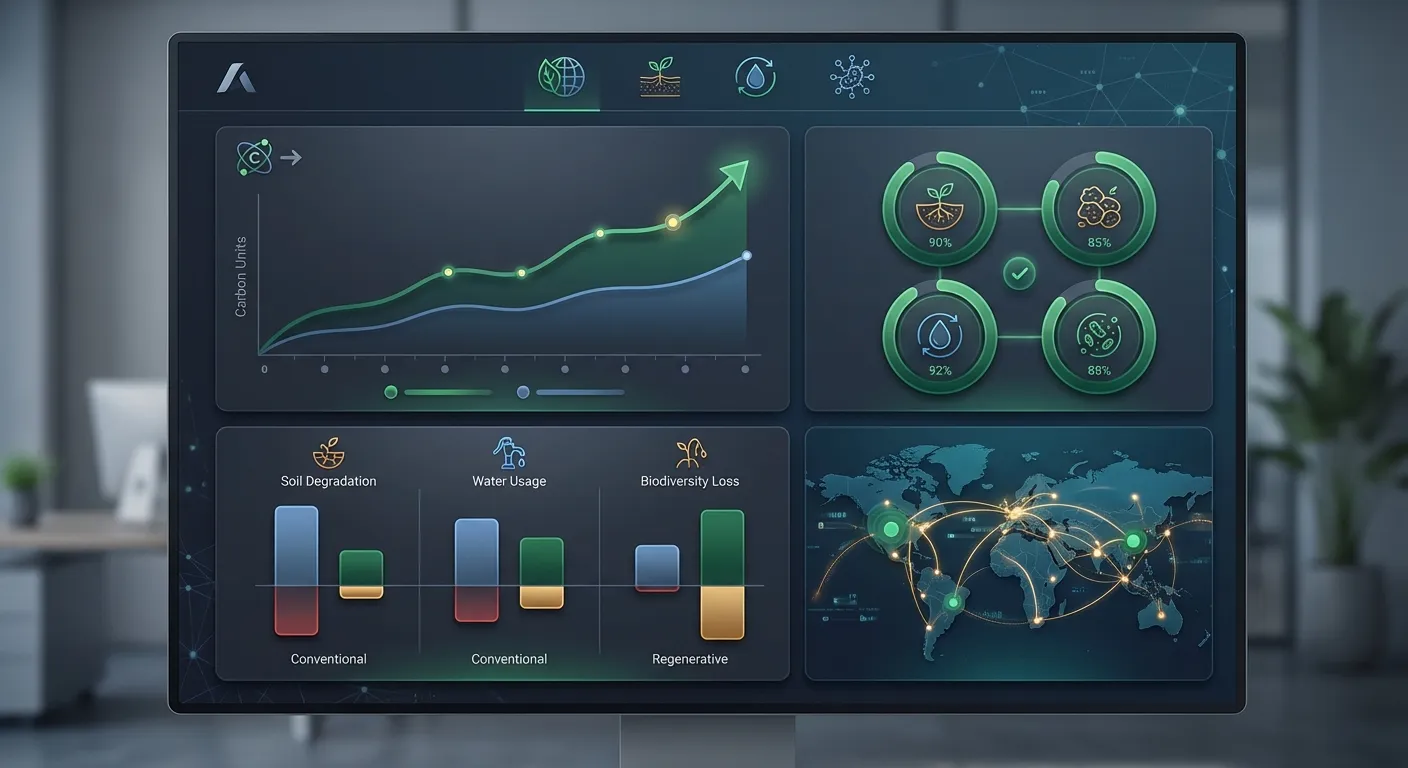
Connect your regenerative agriculture data systems to ESG reporting frameworks including GRI (Global Reporting Initiative), SASB (Sustainability Accounting Standards Board), and TCFD (Task Force on Climate-related Financial Disclosures). Map farm-level metrics to relevant ESG indicators, soil health improvements support biodiversity and ecosystem restoration metrics, carbon sequestration contributes to climate impact reduction, and farmer training programs demonstrate social responsibility and stakeholder engagement.
Automated report generation eliminates the manual compilation that traditionally makes ESG reporting time-consuming and error-prone. Configure your integrated systems to automatically populate report templates with current data, calculate required metrics, and generate visualizations that communicate impact to diverse audiences. Schedule regular report generation aligned with quarterly board meetings, annual sustainability reports, and investor communications.
Organic certification and compliance tracking benefit significantly from integrated data systems. Connect field management records, input documentation, and inspection reports to certification databases. Automated alerts notify farmers and consultants when certification renewal deadlines approach or when practices deviate from organic standards. This integration reduces certification costs, minimizes compliance risks, and ensures that organic premiums remain accessible to participating farmers. For comprehensive sustainability terminology, reference our modern ESG dictionary.
Integration with corporate sustainability dashboards provides real-time visibility into regenerative agriculture program performance. Executives and sustainability teams can monitor key performance indicators, acres under regenerative management, tons of carbon sequestered, farmers trained, supply chain transparency scores, without requesting custom reports. This visibility elevates regenerative agriculture from an operational detail to a strategic initiative with board-level attention.
6. Create Collaborative Platforms for Stakeholder Engagement
Successful regenerative agriculture programs depend on effective collaboration among diverse stakeholders, farmers, agricultural consultants, textile manufacturers, retailers, policy makers, and climate think tanks. Data integration should facilitate this collaboration through shared platforms that enable knowledge exchange, transparent communication, and collective problem-solving.
Knowledge-sharing portals serve as central hubs for farmer training programs and capacity building initiatives. Integrate educational content, video tutorials, best practice guides, case studies, with performance data that helps farmers benchmark their progress against peers. Discussion forums and expert Q&A features foster community learning, while integration with mobile apps ensures that training resources reach farmers in the field where they're most needed.
Data visualization dashboards must serve different stakeholder groups with tailored views of integrated information. Farmers need actionable insights about their specific fields, soil health trends, yield comparisons, financial performance. Consultants require aggregated regional data that reveals patterns and informs recommendations. Corporate partners want supply chain overviews that demonstrate program impact and identify risks. Design your integration architecture to support multiple dashboard views from a single underlying data repository.
Communication tools that connect farmers, consultants, and businesses streamline program management and problem resolution. Integrate messaging capabilities, task management, and alert systems that enable rapid response to field challenges. When a farmer observes unexpected pest pressure or soil conditions, they should be able to instantly connect with agronomic experts through the same platform that houses their farm data, enabling context-aware support.
Integration with collaborative initiatives like the Climate Action Textile Forum creates opportunities for industry-wide learning and standard-setting. Share anonymized, aggregated data that demonstrates regenerative agriculture impact at scale, informing policy makers and climate think tanks working on agricultural and textile sector transformation. These integrations position your organization as a thought leader while contributing to the broader movement toward sustainable farming practices.
7. Implement Predictive Analytics and Decision Support Systems
The ultimate value of data integration emerges when historical and real-time data feed predictive analytics that guide future decisions. Machine learning models trained on integrated datasets can identify patterns invisible to human observers, optimizing regenerative agriculture outcomes while reducing risks.
Crop yield optimization models analyze relationships between soil health metrics, weather patterns, management practices, and harvest outcomes. These models recommend optimal planting dates, cover crop selections, and intervention timing that maximize both yield and environmental benefits. As your integrated dataset grows over seasons and across farms, prediction accuracy improves, creating a virtuous cycle of data-driven improvement. Discover more about yield benefits in our article on how regenerative agriculture increases crop yield.
Predictive soil degradation alerts identify fields at risk of erosion, nutrient depletion, or compaction before visible damage occurs. By analyzing trends in soil sensor data, satellite imagery, and management records, these systems enable proactive interventions that prevent degradation rather than reacting to problems after they emerge. This predictive capability is particularly valuable for preventing the soil degradation that affects one-third of global agricultural lands.
Data-driven recommendations for sustainable farming practices personalize guidance based on specific farm conditions, regional climate patterns, and crop types. Rather than generic best practices, farmers receive tailored advice—"Based on your soil moisture trends and upcoming weather forecast, delay tillage by five days" or "Your soil carbon measurements suggest increasing cover crop diversity would accelerate sequestration." These specific, timely recommendations drive adoption of regenerative methods by demonstrating clear connections between practices and outcomes.
ROI calculators for regenerative agriculture transitions help farmers and businesses evaluate the financial implications of sustainable farming adoption. Integrate cost data (inputs, labor, equipment), revenue information (crop sales, carbon credits, premium pricing), and environmental metrics (soil health, carbon sequestration) to project financial performance over multi-year transition periods. These calculators address the primary barrier to regenerative agriculture adoption, uncertainty about economic viability, with data-driven projections. Compare financial outcomes in our analysis of regenerative agriculture vs. conventional farming ROI.
Overcoming Common Data Integration Challenges
While the benefits of data integration for regenerative agriculture are substantial, implementation inevitably encounters obstacles. Understanding these challenges and their solutions increases the likelihood of successful integration projects.
Data quality and consistency issues arise when multiple parties collect information using different methods, equipment, and standards. Address this challenge through comprehensive training programs that ensure all data collectors understand protocols and use calibrated equipment. Implement automated validation rules that flag suspicious values for review. Establish regular data quality audits that identify systematic issues before they compromise analysis. Most importantly, foster a culture that values data accuracy as essential to program success, not as bureaucratic overhead.
Integration costs can seem prohibitive, particularly for small-scale farmers operating on thin margins. Mitigate this barrier through phased implementation that prioritizes high-value integrations first. Begin with simple mobile apps and cloud storage before investing in expensive IoT sensors. Explore cost-sharing models where textile manufacturers or corporate partners subsidize integration infrastructure in exchange for supply chain transparency. Leverage government programs and NGO initiatives that provide technology grants for sustainable agriculture adoption.
Data privacy and security concerns require careful attention, particularly when farm-level information has competitive or financial implications. Implement robust encryption for data in transit and at rest. Establish clear data ownership policies that give farmers control over their information. Use anonymization and aggregation techniques when sharing data for research or industry benchmarking. Comply with relevant data protection regulations including India's Digital Personal Data Protection Act. Build trust through transparency about data usage and by demonstrating tangible benefits that justify data sharing.
Training farmers and stakeholders on new systems represents an ongoing investment, not a one-time event. Develop multi-modal training programs that accommodate different learning styles, in-person workshops, video tutorials, written guides, and peer mentoring. Provide training in local languages and contexts relevant to specific regions. Design user interfaces that minimize complexity and align with existing workflows. Offer ongoing technical support through helpdesks, field visits, and online resources. Recognize that technology adoption is a gradual process requiring patience and continuous improvement.
Maintaining system interoperability across different platforms prevents vendor lock-in and ensures long-term flexibility. Prioritize open standards and APIs that enable data exchange between systems. Avoid proprietary formats that trap data within specific platforms. Participate in industry initiatives developing agricultural data standards. Build integration architectures that use middleware and data transformation layers, making it easier to swap individual components without rebuilding entire systems.
Measuring Success: Key Performance Indicators for Data Integration
Effective data integration initiatives require clear metrics that demonstrate value and guide continuous improvement. Establish key performance indicators (KPIs) across multiple dimensions of integration success.
Data completeness and accuracy metrics track the percentage of required data fields populated, the frequency of data collection relative to protocols, and error rates in data entry and transmission. Set targets for improvement, for example, achieving 95% completeness for critical soil health metrics within six months of implementation. Monitor these metrics by farm, region, and data type to identify specific areas requiring attention.
Time savings from automation quantify efficiency gains that justify integration investments. Measure hours previously spent on manual data compilation, report generation, and information requests. Compare these baseline figures to time requirements after integration implementation. Calculate the financial value of time savings by multiplying hours saved by labor costs, demonstrating ROI in concrete terms.
Improved decision-making speed tracks how quickly stakeholders can access information and act on insights. Measure the time from data collection to availability in decision-support dashboards. Track response times for farmer questions and support requests. Monitor the lag between field observations and management interventions. Faster decision cycles lead to better outcomes, catching pest outbreaks earlier, optimizing input timing, and preventing soil degradation.
Enhanced supply chain transparency scores assess the percentage of products with complete traceability documentation, the number of supply chain stages with integrated data, and the availability of farm-level information for consumer-facing transparency initiatives. These metrics directly support brand value and premium pricing for sustainably produced textiles.
Carbon sequestration verification rates measure the percentage of sequestered carbon that meets certification standards for carbon credits issuance. Higher verification rates indicate that your integrated data systems capture the documentation required by carbon marketplaces, maximizing the financial returns from regenerative agriculture investments.
The Future of Data Integration in Regenerative Agriculture
As we look beyond 2026, emerging technologies promise to further transform data integration capabilities for regenerative agriculture. Artificial intelligence and machine learning will evolve from descriptive analytics to prescriptive recommendations, autonomously optimizing farming practices based on integrated data streams. Computer vision systems will analyze crop health and soil conditions from smartphone photos, making sophisticated assessments accessible without expensive equipment.
Satellite imagery and remote sensing technologies continue advancing in resolution, frequency, and affordability. Integration of satellite data with ground-based sensors will enable comprehensive monitoring of large agricultural areas, detecting changes in vegetation health, soil moisture, and carbon sequestration at scales previously impossible. These remote sensing integrations will be particularly valuable for verifying regenerative practices across dispersed supply chains.
Industry standards and interoperability initiatives are gaining momentum as more organizations recognize the limitations of fragmented data systems. Collaborative efforts among technology providers, agricultural organizations, and industry associations are developing common data formats, API standards, and integration protocols. Participation in these standardization efforts will become increasingly important for organizations seeking to future-proof their data integration investments.
Policy makers and climate think tanks are recognizing the critical role of integrated data systems in achieving agricultural sector transformation. Government programs increasingly require data-driven verification of environmental claims, creating regulatory drivers for integration adoption. Ministries of agriculture, textile, and environment are developing digital infrastructure initiatives that support data sharing and transparency. Organizations that build robust data integration capabilities now will be well-positioned to participate in these emerging policy frameworks and funding opportunities.
The convergence of regenerative agriculture data with circular economy systems represents perhaps the most exciting frontier. Integrated data will enable closed-loop systems where textile products are designed for regeneration, tracked through use and collection, and returned to agricultural systems as soil amendments. This vision of true circularity depends on seamless data integration connecting agriculture, manufacturing, retail, consumer use, and end-of-life processing. Learn more about these connections in our guide to supply chain transformation through regenerative agriculture consulting.
The path to comprehensive data integration for regenerative agriculture requires commitment, investment, and collaboration across diverse stakeholders. Yet the benefits, verified environmental impact, optimized farming practices, transparent supply chains, and credible progress toward Net Zero goals, make this journey essential for textile and agricultural businesses committed to sustainability leadership in 2026 and beyond.
Beetle Regen Solutions specializes in helping businesses navigate this complex landscape through evidence-based, data-led approaches to regenerative agriculture implementation. Our collaborative programs connect farmers, consultants, and corporate partners through integrated platforms that transform sustainability commitments into measurable outcomes. Whether you're beginning your regenerative agriculture journey or seeking to enhance existing programs with better data integration, our team brings the expertise and tools needed to achieve your environmental and business goals. Contact us to discuss how integrated data systems can accelerate your transition to regenerative agriculture and support your path to carbon neutral operations.