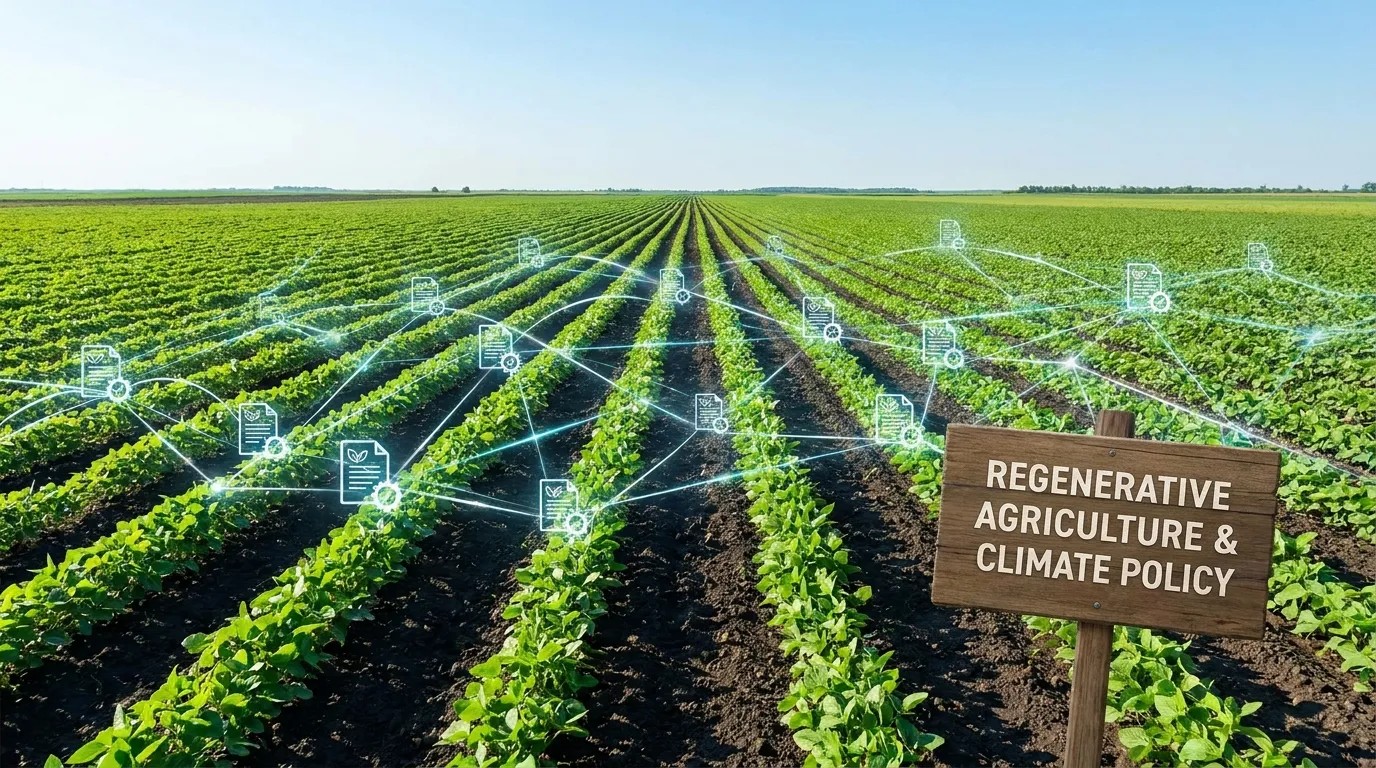
How Regenerative Agriculture Aligns with Climate Policy
As nations worldwide intensify their commitment to climate action in 2026, the agricultural sector has emerged as both a significant contributor to greenhouse gas emissions and a powerful solution for carbon mitigation. For policymakers, climate think tanks, and government ministries focused on agriculture, textiles, and environment, understanding how regenerative agriculture aligns with climate policy goals is no longer optional—it's essential. This comprehensive guide explores the critical intersection between regenerative farming practices and climate policy frameworks, offering actionable insights for integrating sustainable agriculture into national and international climate strategies.
Regenerative agriculture represents a paradigm shift from extractive farming methods to restorative practices that rebuild soil health, sequester carbon, and enhance ecosystem resilience. As countries refine their Nationally Determined Contributions (NDCs) and pursue ambitious carbon reduction targets, regenerative agriculture offers a scientifically validated pathway to transform the agricultural sector from a climate liability into a climate solution. This guide examines the policy mechanisms, implementation strategies, and collaborative frameworks necessary to scale regenerative practices across diverse agricultural landscapes.
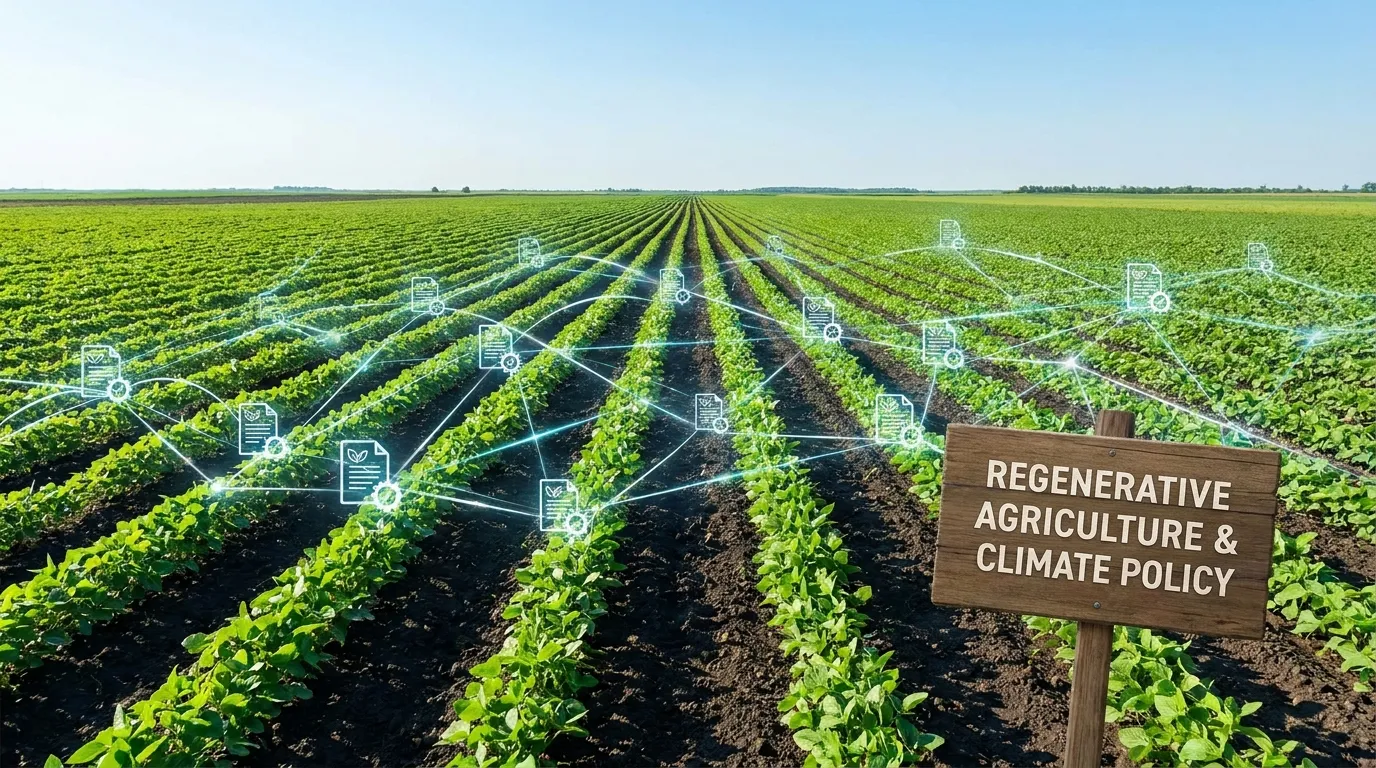
Understanding the Intersection of Regenerative Agriculture and Climate Policy
Regenerative agriculture encompasses a suite of farming practices designed to restore and enhance the health of agricultural ecosystems. Unlike conventional agriculture, which often depletes soil organic matter and relies heavily on synthetic inputs, regenerative systems focus on building soil carbon, increasing biodiversity, improving water retention, and reducing dependence on chemical fertilizers and pesticides. These practices include cover cropping, crop rotation, reduced tillage, integrated livestock management, and agroforestry—all of which contribute to climate mitigation and adaptation.
The climate policy landscape in 2026 reflects growing recognition that agriculture must play a central role in achieving global climate targets. The Paris Agreement established a framework for limiting global temperature rise to well below 2°C, with efforts to limit it to 1.5°C. Agriculture accounts for approximately 24% of global greenhouse gas emissions when including land use change, making it impossible to achieve climate goals without transforming farming systems. Current climate policy frameworks increasingly incorporate agricultural sector reforms, carbon pricing mechanisms, and incentives for sustainable land management practices.
The urgency of agricultural transformation cannot be overstated. According to the UN Food and Agriculture Organization, 33% of global soils are already degraded, compromising their capacity to produce food and sequester carbon. Conventional farming practices contribute to this degradation through soil erosion, nutrient depletion, and loss of organic matter. Meanwhile, the textile industry—particularly cotton production—represents one of the most resource-intensive agricultural sectors, consuming vast quantities of water and agrochemicals while contributing significantly to agricultural emissions.
For policymakers, the challenge lies in creating frameworks that incentivize the transition to regenerative practices while maintaining food security and supporting farmer livelihoods. This requires understanding both the climate benefits of regenerative agriculture and the policy instruments that can accelerate adoption at scale. Organizations like Beetle Regen Solutions demonstrate how targeted interventions, including farmer training programs, supply chain integration, and carbon credit mechanisms, can bridge the gap between climate policy objectives and on-the-ground implementation.
How Climate Policy Frameworks Address Agricultural Emissions
Nationally Determined Contributions (NDCs) represent each country's commitment to reducing greenhouse gas emissions under the Paris Agreement. As nations submit updated NDCs in 2026, agricultural sector commitments have become increasingly prominent. Many countries now include specific targets for reducing agricultural emissions, enhancing carbon sequestration in soils, and transitioning to sustainable farming practices. These commitments reflect recognition that achieving national climate goals requires comprehensive agricultural sector transformation.
The Paris Agreement's goal of limiting global warming to 1.5°C necessitates rapid decarbonization across all sectors, including agriculture. Agricultural emissions primarily stem from three sources: enteric fermentation from livestock, synthetic fertilizer use, and land use change. Climate policy frameworks address these emissions through various mechanisms, including emissions reduction targets, carbon pricing, regulatory standards, and financial incentives for sustainable practices. The agricultural sector's unique position as both an emissions source and a carbon sink makes it central to climate policy design.
National carbon reduction targets increasingly incorporate agriculture-specific metrics. Countries are setting goals for soil carbon sequestration, methane reduction from rice cultivation, and decreased nitrous oxide emissions from fertilizer application. For example, India's climate policy framework emphasizes sustainable agriculture as a key component of its NDC commitments, with specific focus on improving soil health, promoting organic farming, and enhancing water use efficiency. These targets create policy demand for regenerative agriculture practices that deliver measurable climate benefits.
Policy mechanisms for agricultural transformation include both regulatory approaches and market-based instruments. Regulatory frameworks may establish standards for soil health, restrict certain agrochemical uses, or mandate sustainable land management practices. Market-based mechanisms include carbon credit programs, payments for ecosystem services, and subsidies for regenerative practice adoption. The most effective climate policy frameworks combine multiple instruments, creating a supportive ecosystem that makes regenerative agriculture economically viable and technically accessible for farmers across diverse contexts.
Core Regenerative Agriculture Practices That Support Climate Policy Goals
Carbon sequestration through soil health improvement stands as the most significant climate benefit of regenerative agriculture. Healthy soils rich in organic matter act as carbon sinks, drawing atmospheric CO2 into the ground through photosynthesis and storing it in stable soil organic carbon pools. Practices such as cover cropping, reduced tillage, and compost application increase soil carbon stocks, directly contributing to climate policy goals for carbon removal. Research indicates that regenerative agriculture can sequester 0.5 to 2 tons of CO2 equivalent per hectare annually, making it a scalable climate solution.

Reduced emissions from synthetic inputs represent another critical climate benefit. Conventional agriculture relies heavily on synthetic nitrogen fertilizers, which require energy-intensive production processes and release nitrous oxide, a greenhouse gas 300 times more potent than CO2, when applied to fields. Regenerative systems reduce or eliminate synthetic fertilizer use through practices like legume integration, composting, and biological nitrogen fixation. This reduction in synthetic inputs directly decreases agricultural emissions while improving soil health and reducing input costs for farmers.
Water conservation and alternate wetting and drying (AWD) methods for rice cultivation offer substantial climate benefits. Traditional rice farming involves continuous flooding, which creates anaerobic conditions that produce methane, a potent greenhouse gas. AWD techniques, which Beetle Regen Solutions implements in their farmer training programs, involve periodic drainage of rice fields, significantly reducing methane emissions while maintaining or even improving yields. This practice aligns perfectly with climate policy goals for agricultural emissions reduction while addressing water scarcity concerns.
Biochar application and industrial decarbonization through agricultural residue utilization represent innovative approaches to climate mitigation. Biochar, produced through pyrolysis of agricultural waste materials like cotton stalks, sugarcane bagasse, and rice husks, sequesters carbon in a stable form while improving soil fertility. Beetle Regen Solutions' work in industrial pyrolysis for decarbonization demonstrates how agricultural residues can be transformed from waste products into climate solutions. This approach addresses both agricultural emissions and industrial decarbonization, creating synergies across sectors.
High-density plantation systems (HDPS) improve input use efficiency and reduce the carbon footprint per unit of agricultural output. By optimizing plant spacing and management practices, HDPS increases crop yields while reducing water, fertilizer, and pesticide requirements. For cotton production, a particularly resource-intensive crop, HDPS can significantly decrease the CO2 footprint per kilogram of fiber produced. This efficiency gain is crucial for climate policy frameworks that emphasize emissions intensity reduction alongside absolute emissions cuts.
Carbon Sequestration: The Bridge Between Farming and Climate Policy
Understanding the mechanisms of carbon capture in regenerative systems is essential for policymakers designing climate interventions. Plants capture atmospheric CO2 through photosynthesis, converting it into sugars that fuel plant growth. A significant portion of these carbon compounds is transferred to soil through root exudates, decomposing plant material, and microbial activity. In healthy regenerative systems, soil microorganisms transform this carbon into stable organic matter that can persist for decades or centuries. This biological carbon pump represents agriculture's unique capacity to actively remove CO2 from the atmosphere.
Quantifying carbon sequestration for policy reporting requires robust measurement, reporting, and verification (MRV) systems. Climate policy frameworks demand accurate data on carbon stocks and flows to track progress toward NDC commitments and carbon reduction targets. Soil carbon measurement involves baseline assessments, periodic monitoring, and standardized protocols that ensure data comparability across regions and farming systems. Advanced technologies including remote sensing, soil spectroscopy, and modeling tools are making carbon quantification more accessible and cost-effective, enabling broader participation in carbon programs.
Carbon credits and carbon insetting programs create economic incentives for regenerative agriculture adoption while supporting climate policy objectives. Carbon credit markets allow farmers to generate revenue by sequestering carbon and reducing emissions, providing financial returns that can offset transition costs. Carbon insetting, where companies invest in carbon sequestration within their own supply chains, offers particular promise for agricultural sectors. Beetle Regen Solutions' work as a carbon credits supplier demonstrates how these mechanisms can be integrated into textile and agricultural supply chains, creating value for farmers while helping companies achieve their Net Zero commitments.
Data integration for transparent climate accounting connects farm-level practices to national and international climate reporting. Climate policy frameworks require aggregating data from thousands or millions of individual farms to assess sector-wide progress. This necessitates integrated data systems that capture practice adoption, carbon sequestration rates, and emissions reductions across diverse agricultural landscapes. Transparent, verifiable data builds credibility for agricultural climate solutions and enables evidence-based policy refinement.
Policy Instruments That Enable Regenerative Agriculture Adoption
Subsidies and financial incentives for sustainable farming represent the most direct policy mechanism for encouraging regenerative agriculture adoption. Many countries provide payments to farmers who implement specific conservation practices, such as cover cropping, reduced tillage, or riparian buffer establishment. These subsidies can offset the transition costs and potential short-term yield reductions that sometimes accompany the shift to regenerative systems. Effective subsidy programs are designed with sufficient payment levels to motivate behavior change, clear eligibility criteria, and streamlined application processes that minimize administrative burden.
Regulatory frameworks supporting soil health establish minimum standards for agricultural land management. These may include restrictions on tillage intensity, requirements for maintaining soil cover, or mandates for nutrient management planning. While regulatory approaches can be politically challenging, they ensure baseline environmental protection and create level playing fields where sustainable practices are the norm rather than the exception. Soil health regulations work best when combined with technical assistance and financial support that help farmers meet compliance requirements.
Carbon pricing mechanisms and agricultural markets create economic signals that value climate-positive farming practices. Carbon taxes on agricultural emissions or cap-and-trade systems that include agriculture can incentivize emissions reduction. Conversely, carbon credit markets reward farmers for sequestration and emissions avoidance. The effectiveness of carbon pricing depends on accurate emissions accounting, fair price levels that reflect the true social cost of carbon, and mechanisms that ensure smallholder farmers can participate without prohibitive transaction costs.
Capacity building and farmer training programs address the knowledge gap that often constrains regenerative agriculture adoption. Many farmers lack familiarity with regenerative practices or uncertainty about their effectiveness in local conditions. Comprehensive training programs, like those provided by Beetle Regen Solutions, offer hands-on learning, peer-to-peer knowledge exchange, and ongoing technical support. Climate policy frameworks that invest in agricultural extension services and farmer education create the human capital necessary for successful sector transformation.
Public-private partnerships for implementation leverage resources and expertise from both government and private sectors. Governments provide policy frameworks, public funding, and regulatory oversight, while private companies contribute technical knowledge, market access, and additional financing. These partnerships are particularly valuable in agricultural supply chains, where companies have direct relationships with farmers and strong incentives to ensure sustainable sourcing. Collaborative platforms like Beetle Regen Solutions' Climate Action Textile Forum demonstrate how multi-stakeholder partnerships can accelerate regenerative agriculture adoption while advancing climate policy goals.
Sector-Specific Climate Policy Applications: Textile and Agriculture Industries
The textile industry's role in agricultural emissions is substantial yet often overlooked in climate policy discussions. Cotton production, the foundation of much textile manufacturing, is among the most resource-intensive forms of agriculture, consuming approximately 16% of global insecticides and significant quantities of water and synthetic fertilizers. Conventional cotton farming contributes to soil degradation, water pollution, and greenhouse gas emissions throughout the supply chain. Climate policy frameworks that address textile industry emissions must therefore include agricultural production as a critical intervention point.
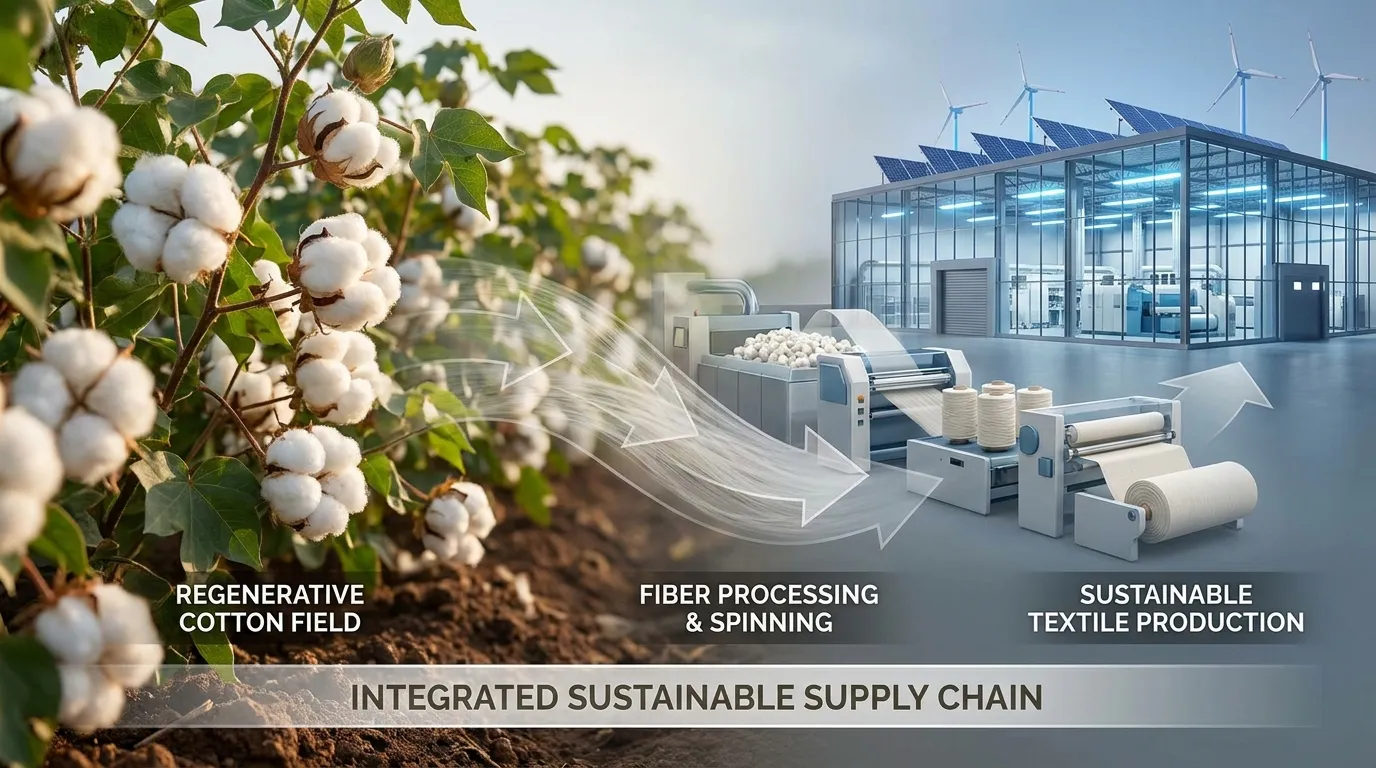
Supply chain decarbonization through regenerative cotton offers a pathway for textile companies to reduce their Scope 3 emissions, the indirect emissions from their value chain that often constitute the majority of their carbon footprint. By sourcing cotton grown using regenerative practices, textile manufacturers can significantly decrease the emissions intensity of their products while supporting soil health and farmer livelihoods. Beetle Regen Solutions' work as a premium regenerative cotton supplier demonstrates how supply chain transformation can align business objectives with climate policy goals, creating market demand for sustainable agricultural practices.
Circular economy principles in fashion and agriculture create closed-loop systems that minimize waste and maximize resource efficiency. In the textile sector, this includes designing for durability and recyclability, establishing take-back programs, and utilizing agricultural waste streams. Agricultural residues from cotton production, such as cotton stalks, can be transformed into valuable products through industrial pyrolysis, producing biochar for soil amendment and renewable energy. This circular approach aligns with climate policy objectives by reducing both agricultural and industrial emissions while creating economic value from materials that would otherwise be wasted.
Industrial pyrolysis using agricultural residues represents an innovative climate solution at the intersection of agriculture and industry. Cotton stalks, sugarcane bagasse, and rice husks, typically burned in fields or left to decompose, can be converted through pyrolysis into biochar, bio-oil, and syngas. This process sequesters carbon in stable biochar while displacing fossil fuels with renewable energy. Beetle Regen Solutions' expertise in this area demonstrates how climate policy can incentivize technologies that address multiple environmental challenges simultaneously, creating synergies between agricultural waste management, industrial decarbonization, and carbon sequestration.
Case applications in India's textile and agriculture sectors illustrate the practical implementation of these concepts. India is both a major cotton producer and a significant textile exporter, making the country's agricultural practices critical to global textile supply chain sustainability. Climate policy initiatives in India increasingly focus on sustainable cotton production, with programs supporting organic and regenerative farming methods. Beetle Regen Solutions' work in extra-long staple, contamination-free, and trash-free cotton demonstrates how quality improvements can accompany sustainability gains, creating market premiums that incentivize regenerative practice adoption while supporting India's climate policy commitments.
Measuring Impact: Data Integration and Stakeholder Engagement for Climate Policy Compliance
ESG reporting requirements for agricultural businesses are driving demand for comprehensive sustainability data. As investors, consumers, and regulators increasingly scrutinize environmental performance, agricultural companies must demonstrate progress on climate-related metrics. This includes reporting on greenhouse gas emissions, carbon sequestration, soil health indicators, water use efficiency, and biodiversity impacts. Climate policy frameworks that mandate or incentivize ESG disclosure create transparency that enables informed decision-making and accountability for climate commitments.
Monitoring and verification systems ensure the credibility of climate claims and the integrity of carbon markets. For regenerative agriculture to contribute meaningfully to climate policy goals, the carbon sequestration and emissions reductions must be real, additional, permanent, and verifiable. This requires standardized protocols for soil sampling, emissions measurement, and practice verification. Third-party certification programs and digital monitoring technologies, including satellite imagery, IoT sensors, and blockchain-based tracking, are making verification more robust and cost-effective, building confidence in agricultural climate solutions.
Stakeholder engagement across the value chain is essential for successful climate policy implementation. Agricultural supply chains involve diverse actors, farmers, input suppliers, processors, manufacturers, retailers, and consumers, each with distinct interests and capabilities. Effective climate policy creates mechanisms for these stakeholders to collaborate, share information, and align incentives. Multi-stakeholder platforms facilitate knowledge exchange, coordinate investments, and ensure that climate interventions address the needs and constraints of all participants, particularly smallholder farmers who may lack resources to transition independently.
Transparent data collection methodologies build trust and enable continuous improvement. Climate policy frameworks benefit from open-source protocols, publicly accessible data, and clear documentation of measurement approaches. Transparency allows independent verification, facilitates peer learning, and enables adaptive management as new scientific insights emerge. For agricultural climate solutions, transparent methodologies also help identify which practices deliver the greatest climate benefits in specific contexts, enabling targeted policy interventions and resource allocation.
Aligning farm-level data with national climate reporting connects individual farmer actions to country-level climate commitments. NDCs and national greenhouse gas inventories require aggregated data on agricultural emissions and carbon sequestration. This necessitates systems that can scale from individual fields to regional and national levels while maintaining data quality and consistency. Digital platforms that integrate farm management data with national reporting systems streamline this process, reducing administrative burden while providing policymakers with real-time insights into agricultural sector performance against climate targets.
Implementing Regenerative Agriculture Within Climate Policy Frameworks: A Roadmap for Policymakers
Assessment of current agricultural practices and emissions baseline establishes the starting point for climate policy interventions. Policymakers must understand the current state of agricultural systems, including dominant farming practices, soil health status, emissions profiles, and farmer demographics. Baseline assessments identify the greatest opportunities for emissions reduction and carbon sequestration, enabling targeted policy design. This diagnostic phase should include stakeholder consultations to understand farmer perspectives, constraints, and priorities, ensuring that policies are grounded in agricultural realities.

Setting measurable targets aligned with NDCs translates national climate commitments into actionable agricultural sector goals. These targets should be specific, measurable, achievable, relevant, and time-bound (SMART). Examples include: "Increase soil organic carbon by 0.4% annually across 1 million hectares by 2030," or "Reduce methane emissions from rice cultivation by 25% by 2028 through AWD adoption on 500,000 hectares." Clear targets provide direction for policy interventions, enable progress tracking, and create accountability for climate action in the agricultural sector.
Designing incentive structures for farmer adoption requires understanding the economic and practical barriers to regenerative agriculture. Effective incentives address transition costs, provide technical assistance, reduce risk, and create market opportunities for sustainably produced commodities. Payment structures should reflect the public benefits of regenerative practices, carbon sequestration, water quality improvement, biodiversity enhancement, that farmers cannot capture through market prices alone. Incentive programs work best when they are simple to access, provide timely payments, and offer multi-year support that recognizes the time required for regenerative systems to mature.
Building collaborative platforms for knowledge sharing accelerates learning and innovation. Regenerative agriculture is knowledge-intensive, requiring farmers to understand soil biology, ecological relationships, and adaptive management. Peer-to-peer learning networks, demonstration farms, and digital knowledge platforms facilitate the exchange of practical insights and locally adapted solutions. Beetle Regen Solutions' collaborative capacity building programs exemplify this approach, bringing together farmers, agronomists, researchers, and industry partners to co-create solutions that work in real-world conditions. Climate policy frameworks that invest in these collaborative platforms build the social infrastructure necessary for sustained agricultural transformation.
Monitoring progress and adaptive policy management ensures that climate interventions remain effective as conditions evolve. Agricultural systems are complex and context-dependent, meaning that policies must be flexible enough to accommodate local variation and responsive to emerging evidence. Regular monitoring of adoption rates, practice effectiveness, and farmer outcomes enables policymakers to identify what's working and what needs adjustment. Adaptive management approaches, which treat policies as experiments and incorporate feedback loops, allow continuous improvement and increase the likelihood of achieving climate policy goals in the agricultural sector.
Challenges and Solutions in Aligning Regenerative Agriculture with Climate Policy
Barriers to farmer adoption include financial constraints, knowledge gaps, risk aversion, and lack of market access. Transitioning to regenerative agriculture often requires upfront investments in new equipment, seeds, or soil amendments, which can be prohibitive for smallholder farmers. There may also be a transition period during which yields temporarily decline as soil health rebuilds. Climate policy can address these barriers through targeted financial support, crop insurance programs that cover transition risks, and guaranteed markets for regeneratively produced commodities. Technical assistance programs that provide hands-on training and ongoing support help farmers navigate the learning curve associated with new practices.
Financing gaps represent a significant constraint on scaling regenerative agriculture. While the long-term benefits of regenerative practices are well-documented, the upfront costs and delayed returns create financing challenges. Innovative funding mechanisms, including blended finance that combines public and private capital, results-based payments tied to verified outcomes, and supply chain financing where buyers provide advance payments or low-interest loans, can bridge this gap. Climate policy frameworks that facilitate access to agricultural credit and de-risk investments in regenerative agriculture enable broader participation and faster scaling.
Knowledge transfer and capacity building needs are substantial, particularly in regions where regenerative practices are unfamiliar. Effective knowledge transfer requires more than information dissemination; it demands experiential learning, peer networks, and ongoing technical support. Climate policy should invest in agricultural extension services, farmer field schools, and digital platforms that connect farmers with expertise. Partnerships with organizations like Beetle Regen Solutions, which specialize in regenerative agriculture training, can accelerate knowledge transfer by leveraging existing expertise and established farmer networks.
Balancing food security with climate goals is a critical policy challenge. Some stakeholders worry that transitioning to regenerative agriculture might reduce yields and compromise food production. However, research increasingly shows that well-managed regenerative systems can maintain or increase yields while improving resilience to climate stresses like drought and extreme weather. Climate policy frameworks must communicate this evidence clearly and ensure that agricultural transformation strategies explicitly address food security objectives. Integrated approaches that enhance both productivity and sustainability, such as HDPS for cotton, demonstrate that climate action and food security can be mutually reinforcing.
Scaling regenerative practices across diverse geographies requires context-specific approaches. Agricultural systems vary enormously based on climate, soil type, crop selection, and socioeconomic conditions. Practices that work well in one region may require significant adaptation elsewhere. Climate policy frameworks should support regional experimentation and local innovation rather than imposing one-size-fits-all solutions. Decentralized implementation with strong local stakeholder engagement ensures that regenerative agriculture strategies are tailored to specific contexts while contributing to national climate policy goals.
The Future of Climate Policy and Regenerative Agriculture: Trends for 2026 and Beyond
Emerging policy innovations in agricultural climate action reflect growing sophistication in how governments approach sector transformation. Results-based climate finance, where payments are tied to verified outcomes rather than practice adoption, is gaining traction as monitoring technologies improve. Jurisdictional approaches that coordinate climate action across entire regions or watersheds are enabling landscape-scale interventions that address ecosystem-level processes. Policy innovations also include integrating agricultural climate action with other sustainability objectives, such as water quality, biodiversity conservation, and rural development, creating synergies that maximize public investment efficiency.
Technology integration for monitoring and verification is transforming the feasibility and cost-effectiveness of agricultural climate programs. Satellite imagery enables remote monitoring of land use change, vegetation health, and practice adoption across vast areas. Soil sensors provide real-time data on moisture, temperature, and carbon content. Blockchain technology creates tamper-proof records of agricultural practices and carbon credits. Artificial intelligence analyzes complex datasets to predict carbon sequestration potential and optimize practice recommendations. These technologies are making it possible to implement climate policy at scales previously unimaginable, while reducing verification costs that have historically limited participation in carbon programs.
Growing corporate commitments to Net Zero through agriculture are creating market demand for regenerative practices. Major food and textile companies are setting ambitious targets to eliminate supply chain emissions, driving investment in sustainable sourcing. These corporate commitments complement government climate policy, creating multiple incentives for farmer adoption. Companies are increasingly recognizing that achieving Net Zero requires addressing agricultural emissions, leading to investments in regenerative agriculture programs, carbon insetting initiatives, and supply chain transformation. This private sector engagement accelerates the pace of change beyond what policy alone could achieve.
International cooperation and knowledge exchange are essential for addressing the global nature of climate change and agricultural systems. Climate policy frameworks benefit from sharing best practices, coordinating research priorities, and aligning standards across borders. International initiatives like the "4 per 1000" program, which aims to increase soil carbon stocks by 0.4% annually, create platforms for collaboration and knowledge sharing. As countries update their NDCs and implement agricultural climate strategies, international cooperation ensures that lessons learned in one context inform policy development elsewhere, accelerating global progress toward climate goals.
The path toward resilient, climate-positive food systems requires integrating regenerative agriculture into the core of climate policy frameworks. This means moving beyond treating agriculture as a peripheral concern to recognizing it as central to climate solutions. Future climate policy will increasingly emphasize the co-benefits of regenerative agriculture, not only carbon sequestration and emissions reduction, but also improved water quality, enhanced biodiversity, increased resilience to climate impacts, and strengthened rural livelihoods. This holistic perspective recognizes that sustainable farming is not just about climate mitigation; it's about creating agricultural systems that can sustain human civilization in a changing climate.
As we look beyond 2026, the integration of regenerative agriculture and climate policy will deepen. Policymakers who understand this intersection and act decisively to support agricultural transformation will position their countries to meet climate commitments while building more resilient food systems. The tools, knowledge, and technologies necessary for this transformation are available today. What's needed is the political will to implement comprehensive climate policy frameworks that recognize agriculture's unique role as both a climate solution and a foundation for human wellbeing.
For climate think tanks, policymakers, and government ministries working at the intersection of agriculture, textiles, and environment, the opportunity is clear: regenerative agriculture offers a scientifically validated, economically viable pathway to achieving climate policy goals while delivering multiple co-benefits. By designing policy frameworks that incentivize adoption, building capacity for implementation, and creating transparent systems for measuring impact, governments can unlock agriculture's potential as a climate solution. The transition to regenerative agriculture is not just an environmental imperative, it's an economic opportunity and a pathway to more resilient, equitable, and sustainable agricultural systems that can support thriving communities and a stable climate for generations to come.
Organizations like Beetle Regen Solutions demonstrate that the integration of regenerative agriculture and climate policy is already happening on the ground, with proven methodologies for carbon sequestration, farmer training, and supply chain transformation. The question for policymakers is not whether regenerative agriculture can support climate policy goals, the evidence is clear that it can, but rather how quickly and comprehensively these practices can be scaled to meet the urgency of the climate crisis. The time for action is now, and the pathway forward is clear. By aligning climate policy with regenerative agriculture, we can transform our food systems from a source of emissions into a powerful force for climate stability and ecological restoration.
If your organization is working on climate policy development, agricultural sector reform, or supply chain sustainability, now is the time to explore how regenerative agriculture can support your climate goals. Contact us to learn how collaborative approaches to farmer training, carbon sequestration, and supply chain transformation can help you achieve measurable climate outcomes while supporting farmer livelihoods and building resilient agricultural systems. Together, we can create the policy frameworks and implementation pathways that will define successful climate action in the agricultural sector for decades to come.