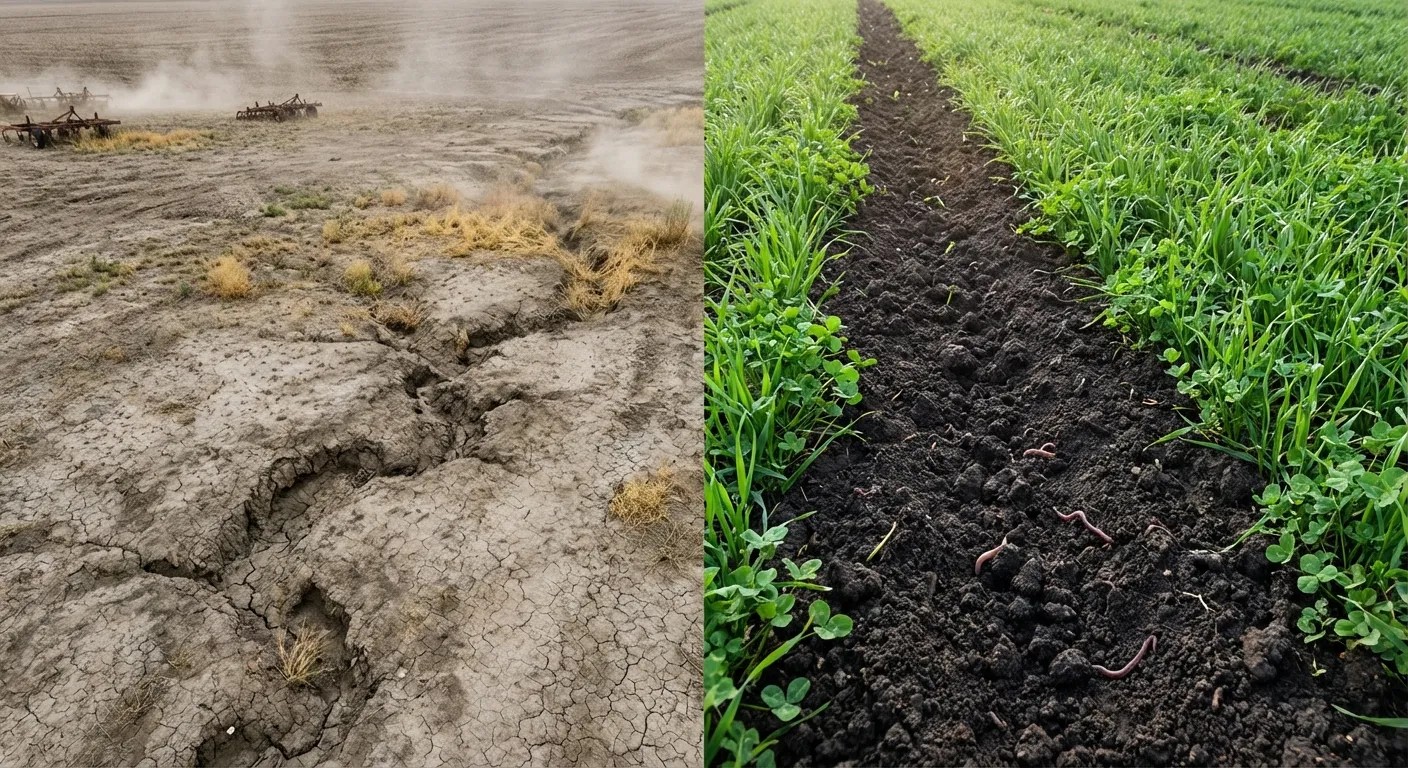
Soil Degradation: How Regenerative Farming Reverses Damage
The ground beneath our feet is disappearing. According to the United Nations Food and Agriculture Organization (FAO), 33% of the world's soils are already degraded, threatening food security, agricultural productivity, and our collective ability to combat climate change. Soil degradation represents one of the most pressing environmental challenges of our time, yet it remains largely invisible to those not directly working the land. For textile manufacturers, agricultural businesses, and corporate sustainability teams, understanding and addressing soil degradation is no longer optional—it's essential for achieving carbon neutral goals and ensuring long-term supply chain resilience.
The consequences of soil degradation extend far beyond reduced crop yields. Degraded soils release stored carbon into the atmosphere, exacerbating climate change. They lose their ability to retain water, leading to increased flooding and drought vulnerability. For the textile industry, which depends heavily on cotton and other fiber crops, soil degradation threatens the very foundation of raw material sourcing. The good news? Regenerative agriculture practices offer proven solutions that can reverse soil degradation, sequester carbon, and create economic benefits throughout the supply chain from farmers to manufacturers and retailers.
The Global Crisis of Soil Degradation
Soil degradation occurs when the biological, chemical, or physical quality of soil deteriorates to the point where it can no longer support healthy plant growth or perform essential ecosystem functions. This crisis manifests in multiple forms: erosion removes topsoil at rates far exceeding natural regeneration, nutrient depletion exhausts the soil's fertility, compaction reduces water infiltration and root penetration, salinization increases salt concentrations to toxic levels, and contamination introduces harmful chemicals that disrupt soil biology.
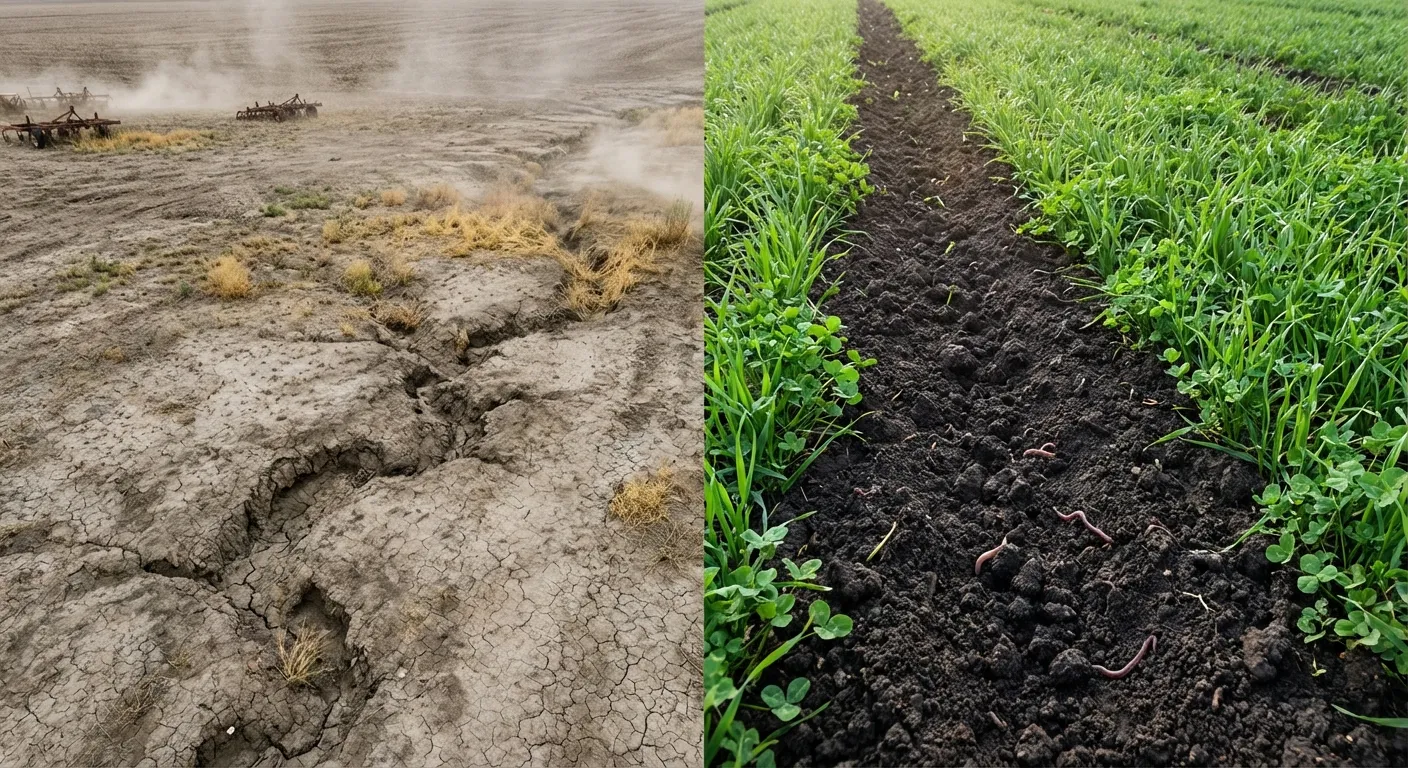
The scale of this problem is staggering. The FAO estimates that 24 billion tons of fertile soil are lost annually through erosion alone—equivalent to losing an area the size of a football field every five seconds. In agricultural regions across India and globally, decades of intensive farming have stripped soils of organic matter, reduced microbial diversity, and compromised the natural systems that sustain crop production. For businesses in the textile and agriculture sectors, this translates directly to supply chain vulnerability and increased operational risks.
Climate change and soil degradation exist in a destructive feedback loop. Degraded soils release carbon dioxide and nitrous oxide into the atmosphere, contributing to global warming. Rising temperatures and changing precipitation patterns then accelerate soil degradation through increased erosion, desertification, and loss of soil organic matter. Breaking this cycle requires urgent action from all stakeholders—farmers, businesses, policymakers, and consumers alike.
The textile industry faces particular challenges related to soil degradation. Cotton production, which supplies approximately 25% of global textile fibers, is highly dependent on soil health. As soils degrade in major cotton-growing regions, yields decline and production costs increase. Manufacturers seeking to reduce their environmental footprint must look upstream to the agricultural practices that produce their raw materials. This is where regenerative agriculture becomes not just an environmental imperative but a business necessity.
Understanding the Root Causes of Soil Degradation
To reverse soil degradation, we must first understand what causes it. The primary driver is conventional agricultural practices that prioritize short-term yields over long-term soil health. Intensive tillage, which has been standard practice for generations, disrupts soil structure, exposes organic matter to oxidation, and destroys the networks of fungi and bacteria that maintain soil fertility. Each time a plow turns the soil, it releases stored carbon and damages the biological communities that plants depend on.
Monoculture farming—growing the same crop year after year on the same land, depletes specific nutrients while allowing pests and diseases to proliferate. This practice forces farmers into a cycle of increasing chemical inputs. Synthetic fertilizers provide a quick nutrient boost but do nothing to build soil organic matter or support soil biology. Over time, soils become dependent on these inputs, losing their natural fertility. The result is a system that requires ever-increasing amounts of chemicals to maintain yields, while the underlying soil health continues to decline.
Pesticides and herbicides, while controlling immediate threats to crops, have devastating effects on soil ecosystems. These chemicals kill not only target pests but also beneficial organisms including earthworms, beetles, and microorganisms that decompose organic matter and cycle nutrients. Research shows that soils treated with conventional pesticides have significantly reduced microbial diversity compared to organically managed soils. This loss of biological activity impairs the soil's ability to suppress diseases, retain nutrients, and maintain structure.
Beyond farming practices, broader land use changes contribute to soil degradation. Deforestation removes the protective cover that shields soil from erosion. Poor water management leads to waterlogging in some areas and drought stress in others. Overgrazing by livestock compacts soil and removes vegetation faster than it can regenerate. In many regions, population pressure and economic demands have pushed agriculture onto marginal lands ill-suited for intensive cultivation, accelerating degradation in vulnerable ecosystems.
Climate change acts as a threat multiplier, intensifying all these degradation processes. Extreme weather events, droughts, floods, heat waves, stress both crops and soils. Changing rainfall patterns disrupt traditional farming calendars and increase erosion risk. For businesses planning long-term sourcing strategies, understanding these interconnected causes of soil degradation is essential for developing effective solutions.
The True Cost: How Soil Degradation Impacts Agriculture and Climate
The economic impact of soil degradation is profound and far-reaching. Globally, soil degradation causes an estimated $400 billion in annual losses through reduced agricultural productivity. Farmers face declining yields that force them to either increase inputs, raising costs and environmental impacts, or accept lower incomes. For smallholder farmers in India and other developing nations, this can mean the difference between economic viability and poverty. The textile industry, which relies on millions of farmers for cotton and other natural fibers, cannot ignore these economic realities.
Crop yields decline progressively as soils degrade. Studies show that severely degraded soils can experience yield reductions of 30-50% compared to healthy soils. This productivity loss threatens food security for growing populations and increases pressure to convert forests and grasslands to agriculture, creating a vicious cycle of environmental destruction. For businesses committed to sustainable sourcing, degraded soils in supplier regions represent a material risk to supply chain stability and product quality.
The climate implications of soil degradation are equally serious. Healthy soils are one of the planet's largest carbon sinks, storing more carbon than the atmosphere and all plant life combined. When soils degrade, this stored carbon is released as carbon dioxide, contributing to global warming. The FAO estimates that agricultural soils have lost 50-70% of their original carbon stocks due to conventional farming practices. Reversing this carbon loss through regenerative practices offers one of the most cost-effective strategies for climate change mitigation.
Water-related impacts extend beyond the farm. Degraded soils have reduced water infiltration capacity, meaning more rainfall runs off the surface rather than soaking in. This increases flooding downstream while reducing groundwater recharge. Eroded soil particles carry nutrients and chemicals into waterways, causing pollution and eutrophication. For textile manufacturers concerned about water stewardship throughout their supply chains, addressing soil degradation is inseparable from water management.
Biodiversity loss represents another critical cost of soil degradation. Healthy soils teem with life, bacteria, fungi, insects, worms, and countless other organisms that form complex food webs. These organisms provide essential ecosystem services including nutrient cycling, pest control, and disease suppression. As soils degrade, this biological diversity collapses, making agricultural systems more vulnerable and less resilient. The loss of pollinators and beneficial insects affects not just the degraded fields but entire landscapes.
For corporate sustainability teams working toward Net Zero goals, soil degradation presents both a challenge and an opportunity. Degraded soils in supply chains contribute to Scope 3 emissions through carbon release and increased input requirements. However, investing in soil health restoration can generate carbon credits, reduce supply chain emissions, and demonstrate meaningful climate action. The business case for addressing soil degradation grows stronger as stakeholder expectations and regulatory requirements around environmental performance continue to evolve.
Regenerative Agriculture: The Solution to Soil Degradation
Regenerative agriculture offers a fundamentally different approach to farming, one that works with natural systems rather than against them. Unlike conventional agriculture, which extracts value from soil until it's depleted, regenerative agriculture actively builds soil health, increases biodiversity, and enhances ecosystem function. The goal is not merely to sustain current conditions but to regenerate degraded landscapes and create agricultural systems that improve over time.

At its core, regenerative agriculture is built on several key principles. First, minimize soil disturbance by reducing or eliminating tillage, which preserves soil structure and protects the biological communities that maintain fertility. Second, keep soil covered year-round with living plants or mulch to prevent erosion, retain moisture, and feed soil organisms. Third, maximize crop diversity through rotations, intercropping, and cover crops to break pest cycles and provide varied nutrition to soil biology. Fourth, maintain living roots in the soil as long as possible to support mycorrhizal fungi and other beneficial organisms. Fifth, integrate livestock thoughtfully to cycle nutrients and stimulate plant growth through managed grazing.
The mechanism by which regenerative agriculture reverses soil degradation centers on carbon sequestration. Through photosynthesis, plants capture carbon dioxide from the atmosphere and convert it to sugars. A significant portion of these sugars, up to 40%—is transferred through roots to soil microorganisms in exchange for nutrients. This carbon becomes part of the soil organic matter, the foundation of soil health. As organic matter increases, soil structure improves, water retention increases, nutrient cycling accelerates, and biological activity flourishes. This creates a positive feedback loop where healthier soils support more productive plants, which in turn build more soil organic matter.
Compared to conventional farming, regenerative agriculture represents a paradigm shift. Conventional systems view soil as an inert growing medium requiring external inputs. Regenerative systems recognize soil as a living ecosystem that, when properly managed, provides most of what plants need. Conventional farming focuses on maximizing yields in the current season. Regenerative farming optimizes for long-term productivity and resilience. This difference in perspective leads to dramatically different outcomes for soil health, environmental impact, and economic sustainability.
For businesses in the textile and agriculture sectors, regenerative agriculture offers a pathway to achieve multiple objectives simultaneously. It addresses soil degradation at its source, reduces supply chain environmental impacts, creates opportunities for carbon credit revenue, and aligns with consumer demand for sustainable products. Organizations like Beetle Regen Solutions specialize in helping businesses navigate this transition through evidence-based carbon sequestration frameworks and collaborative training programs that build capacity throughout the supply chain.
The transition to regenerative agriculture requires knowledge, support, and patience. Soils don't regenerate overnight, meaningful improvements typically take three to five years, with continued gains over decades. However, farmers often see benefits much sooner, including reduced input costs, improved drought resilience, and better crop quality. For businesses making sourcing commitments, understanding this timeline is essential for setting realistic expectations and providing adequate support to farming partners.
Proven Regenerative Practices That Reverse Soil Degradation
Implementing regenerative agriculture involves adopting specific practices tailored to local conditions, crops, and farmer capabilities. Cover cropping stands as one of the most powerful tools for soil regeneration. Cover crops are planted between cash crop seasons to keep soil covered and roots active. They prevent erosion, suppress weeds, fix nitrogen (in the case of legumes), and add organic matter when terminated. A diverse cover crop mix, combining grasses, legumes, and broadleaf species, provides multiple benefits and feeds a wider range of soil organisms than single-species covers.
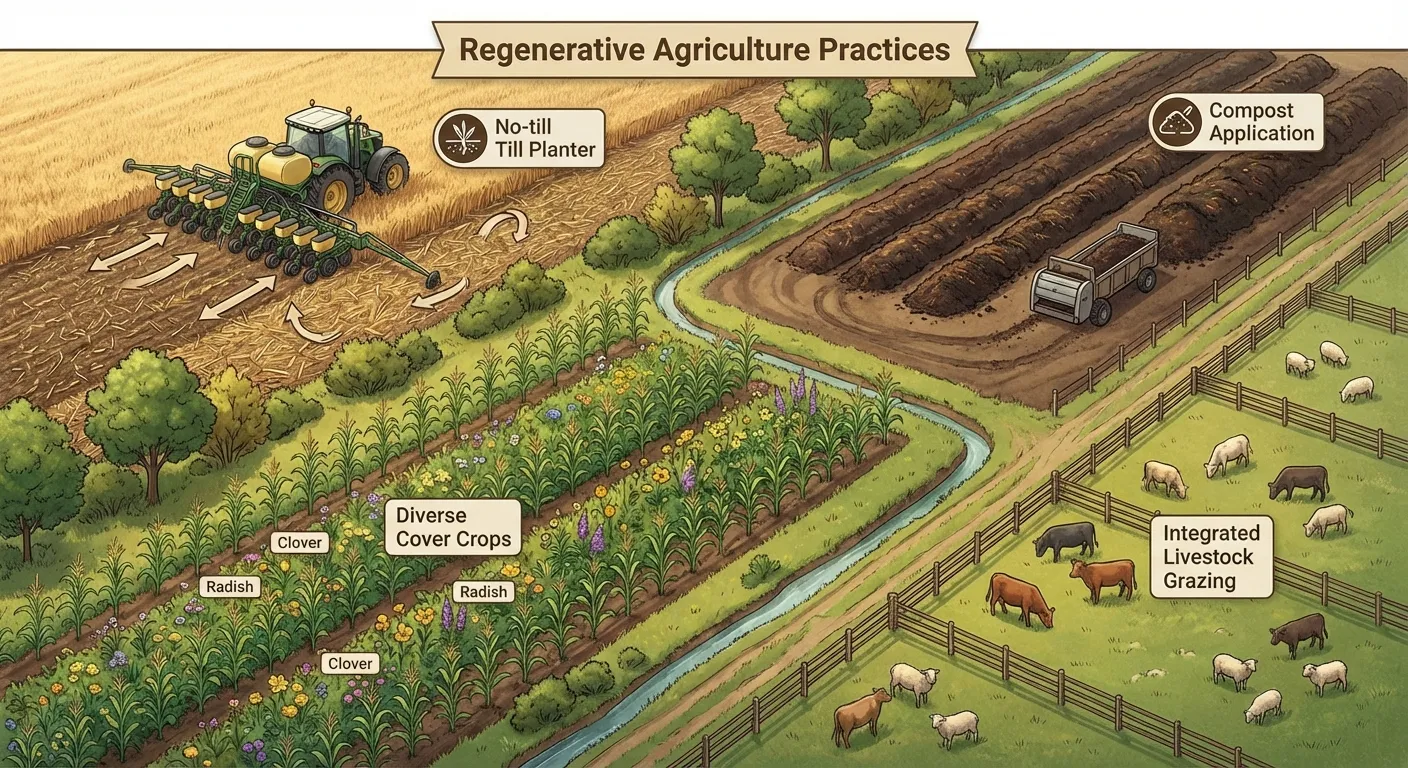
Crop rotation and diversification break the monoculture trap. By rotating different crop families through fields, farmers disrupt pest and disease cycles, balance nutrient demands, and support diverse soil biology. In cotton production, rotating with legumes, small grains, or vegetables can dramatically improve soil health while providing additional income streams. Intercropping, growing multiple crops simultaneously in the same field, takes this further by mimicking natural plant communities and maximizing resource use efficiency.
Reduced tillage or no-till farming preserves soil structure and protects the biological networks that conventional plowing destroys. Instead of turning the entire soil profile, no-till farmers plant directly into crop residue using specialized equipment. This approach keeps carbon in the soil, reduces erosion by up to 90%, improves water infiltration, and cuts fuel costs. While transitioning to no-till requires new equipment and skills, the long-term benefits for soil health and farm economics are substantial.
Composting and organic matter management transform waste into valuable soil amendments. High-quality compost adds organic matter, beneficial microorganisms, and slow-release nutrients to soil. For textile businesses, this creates opportunities for circular economy initiatives, using processing waste to create compost for supplier farms. Farmers can also generate compost from crop residues, animal manures, and other organic materials, reducing dependence on synthetic fertilizers while building soil health.
Integrated pest management (IPM) reduces reliance on chemical pesticides by using biological controls, crop rotation, resistant varieties, and targeted interventions only when necessary. This approach protects beneficial insects and soil organisms while controlling pests. As soil health improves through regenerative practices, plants become more resilient and less susceptible to pest damage, creating a positive cycle that further reduces chemical needs.
Agroforestry integrates trees and shrubs into agricultural landscapes, providing multiple benefits for soil health. Tree roots access deep soil layers, bringing up nutrients and improving soil structure. Leaf litter adds organic matter. Trees provide shade, windbreaks, and habitat for beneficial organisms. In cotton-growing regions, strategic tree planting can reduce erosion, improve microclimates, and diversify farm income through fruit, timber, or fodder production.
For livestock operations, rotational grazing mimics natural grazing patterns where animals move frequently, allowing pastures to recover between grazing events. This stimulates plant growth, builds soil organic matter through root turnover, and distributes manure evenly. Properly managed grazing can actually improve soil health and sequester significant amounts of carbon, turning livestock from a climate problem into part of the solution.
Implementing these practices requires farmer training and ongoing support. Beetle Regen Solutions provides capacity building programs that equip farmers with the knowledge and skills to adopt regenerative methods successfully. These collaborative programs recognize that farmers are not just implementers but innovators who adapt practices to their specific contexts. By combining traditional knowledge with modern science, these training initiatives create lasting change that benefits farmers, businesses, and the environment.
Economic Benefits: Why Regenerative Farming Makes Business Sense
The economic case for regenerative agriculture strengthens as more data emerges from farms worldwide. While initial transitions may involve learning curves and temporary yield fluctuations, the long-term financial benefits are compelling. Increased crop yields represent one of the most significant advantages. Studies show that after three to five years of regenerative management, farms often achieve yields equal to or exceeding conventional systems, with some reporting increases of 10-20%. These gains come from improved soil health, better water retention, and enhanced plant resilience.
Input cost reductions provide immediate financial relief for farmers. Regenerative practices reduce or eliminate expensive synthetic fertilizers and pesticides. Cover crops fix nitrogen naturally, reducing fertilizer needs by 50-100 pounds per acre or more. Improved soil biology suppresses diseases and pests, cutting pesticide requirements. Better soil structure reduces irrigation needs. For farmers operating on thin margins, these savings can mean the difference between profit and loss. A comprehensive ROI analysis comparing regenerative and conventional farming demonstrates these financial advantages across multiple crop systems.
Carbon credit opportunities create new revenue streams for farmers practicing regenerative agriculture. As businesses and governments seek to offset emissions and achieve Net Zero goals, demand for high-quality carbon credits continues to grow. Farmers who sequester carbon through soil health practices can monetize this environmental service. While carbon markets are still developing, early adopters are already generating significant income from carbon credits, in some cases, $20-40 per acre annually. Organizations like Beetle Regen Solutions help farmers access these markets by providing the measurement, verification, and certification required for carbon credit programs.
Premium pricing for regenerative products offers another economic incentive. Consumers increasingly seek products with verified sustainability credentials. Textile brands can command premium prices for clothing made from regenerative cotton and other fibers. This value flows back through the supply chain, allowing manufacturers to pay farmers more for regeneratively grown crops. Several major fashion brands have already committed to sourcing regenerative materials, creating market pull that benefits early adopters.
Supply chain resilience represents a less tangible but equally important economic benefit. Farms with healthy soils are more resilient to climate variability, pest outbreaks, and other disruptions. For businesses dependent on agricultural supply chains, this resilience reduces risk and ensures more stable sourcing. The 2026 business environment, characterized by increasing climate volatility and supply chain disruptions, makes this resilience particularly valuable.
The ROI timeline for regenerative agriculture varies by context but typically follows a predictable pattern. In the first year, farmers may see reduced input costs but potentially lower yields as soil biology rebuilds. Years two and three bring continued cost savings and improving yields. By years four and five, most farms achieve yields matching or exceeding their conventional baseline while maintaining lower input costs. Carbon credit revenue and premium pricing add to profitability. Over a decade, the cumulative financial advantage of regenerative systems becomes substantial.
Implementation Roadmap: Transitioning from Conventional to Regenerative Farming
Successfully transitioning to regenerative agriculture requires a structured approach that addresses technical, financial, and knowledge barriers. The first step is comprehensive assessment. This includes soil testing to establish baseline conditions, measuring organic matter content, nutrient levels, pH, and biological activity. Understanding current soil health provides a starting point for tracking improvements and demonstrates the value of regenerative practices over time. Beetle Regen Solutions employs a data-led approach that uses this baseline information to design customized regeneration plans for each farm and region.
Farmer training and capacity building form the foundation of successful transitions. Regenerative agriculture requires different skills and knowledge than conventional farming. Farmers need to understand soil biology, cover crop selection, pest ecology, and adaptive management. Effective training programs combine classroom learning with hands-on field demonstrations and peer-to-peer knowledge sharing. Beetle Regen Solutions' collaborative programs bring together farmers, agronomists, and industry experts to build this capacity systematically. These programs recognize that sustainable change happens when farmers understand the "why" behind practices, not just the "how."
A phased implementation approach reduces risk and allows farmers to learn progressively. Rather than transforming entire operations overnight, farmers can start with pilot areas, perhaps 10-20% of their land, to test practices and build confidence. As they see results and refine techniques, they expand regenerative practices to more acreage. This gradual approach also spreads financial risk and allows farmers to maintain income while transitioning.
Stakeholder engagement across the supply chain ensures that all parties understand their roles and benefits. For textile manufacturers, this means working with ginners, traders, and farmers to create aligned incentives. Retailers need to communicate value to consumers. Financial institutions may need to adjust lending criteria to support regenerative transitions. Policy makers can create enabling conditions through subsidies, technical support, and regulatory frameworks. Beetle Regen Solutions facilitates this stakeholder engagement through platforms like the Climate Action Textile Forum, which brings together diverse actors to collaborate on sustainable solutions.
Data integration and monitoring systems track progress and demonstrate impact. Modern technology, including soil sensors, satellite imagery, and mobile apps, enables farmers and businesses to monitor soil health improvements, carbon sequestration, and crop performance. This data serves multiple purposes: guiding adaptive management decisions, verifying carbon credits, reporting on ESG commitments, and building the evidence base for regenerative agriculture. Transparent, verifiable data builds trust among supply chain partners and enables continuous improvement.
Certification pathways provide market recognition for regenerative practices. Various standards exist, organic certification, Regenerative Organic Certified, and others, each with specific requirements. While certification involves costs and paperwork, it opens access to premium markets and provides third-party verification of practices. Businesses should work with farmers to determine which certifications align with their market goals and provide support for the certification process.
Financial planning and support mechanisms address the economic challenges of transition. Farmers may need access to credit for new equipment, technical assistance, or income support during the transition period. Businesses can provide advance payments, price premiums, or direct investment in farm improvements. Government programs and development organizations often offer grants or subsidized loans for sustainable agriculture. Creating a financial package that works for individual farmers is essential for successful transitions.
Industry Applications: Regenerative Solutions for Textile and Agriculture Sectors
The textile industry stands at a critical juncture. As one of the world's most resource-intensive industries, it faces mounting pressure to reduce environmental impacts and demonstrate genuine sustainability. Regenerative cotton and fiber sourcing offers a pathway forward. Unlike conventional cotton, which contributes to soil degradation and requires intensive chemical inputs, regenerative cotton builds soil health while producing high-quality fiber. Forward-thinking brands are already making commitments to source regenerative materials, recognizing that true sustainability must start at the soil level.
Supply chain transformation through regenerative agriculture requires coordination across multiple tiers. Beetle Regen Solutions specializes in supply chain transformation consulting that addresses this complexity. This involves mapping current supply chains, identifying opportunities for regenerative sourcing, building farmer networks, establishing traceability systems, and creating value-sharing mechanisms that reward farmers for environmental stewardship. The result is a more resilient, transparent, and sustainable supply chain that benefits all participants.
Achieving carbon neutral and Net Zero goals increasingly depends on addressing agricultural emissions and leveraging carbon sequestration opportunities. For companies with significant agricultural supply chains, Scope 3 emissions from farming often represent the largest portion of their carbon footprint. Transitioning suppliers to regenerative practices reduces these emissions while sequestering additional carbon in soils. This dual benefit, emission reduction plus carbon removal, makes regenerative agriculture one of the most effective strategies for corporate climate action.
Collaborative platforms facilitate the knowledge sharing and coordination required for industry-wide transformation. Beetle Regen Solutions' Climate Action Textile Forum brings together manufacturers, retailers, farmers, researchers, and policy makers to share best practices, address common challenges, and accelerate the adoption of regenerative practices. These collaborative approaches recognize that systemic problems require collective solutions and that competition on sustainability undermines everyone's progress.
Corporate sustainability teams need practical tools and frameworks to integrate regenerative agriculture into their strategies. This includes setting science-based targets for soil health and carbon sequestration, developing procurement policies that prioritize regenerative materials, creating internal capacity to evaluate agricultural sustainability, and reporting transparently on progress and challenges. Beetle Regen Solutions provides the expertise and support that sustainability teams need to navigate this complex landscape effectively.
Policy implications extend beyond individual businesses. Governments play a crucial role in creating enabling conditions for regenerative agriculture through agricultural subsidies, research funding, extension services, and regulatory frameworks. Ministries of agriculture, textiles, and environment need to align their policies to support the transition from extractive to regenerative systems. Climate think tanks and advocacy organizations can help shape these policies by demonstrating the climate, economic, and social benefits of regenerative approaches. Beetle Regen Solutions' work with farmers and businesses generates evidence that informs policy development and demonstrates what's possible when stakeholders collaborate toward shared goals.
Taking Action: Your Next Steps Toward Soil Health
The challenge of soil degradation is urgent, but the solutions are proven and available. For businesses in the textile and agriculture sectors, the time to act is now. Waiting for perfect conditions or complete certainty means missing the opportunity to lead in an increasingly sustainability-focused marketplace. The first step is education, understanding how soil degradation affects your supply chain and what regenerative agriculture can offer. This article provides a foundation, but deeper engagement with experts and practitioners will build the knowledge needed for effective action.
For agricultural businesses and farmers, immediate actions include conducting soil health assessments on your land, connecting with regenerative agriculture training programs, starting small with pilot projects on a portion of your acreage, and joining farmer networks to learn from peers who have already made the transition. The learning curve is real, but so are the benefits. Farmers who have embraced regenerative practices consistently report not just environmental improvements but also better quality of life, reduced stress from input costs, and greater satisfaction from working with nature rather than fighting against it.
Textile manufacturers and retailers should begin by mapping their fiber supply chains to understand where materials originate and what farming practices are currently used. Engage with suppliers about soil health and regenerative practices. Consider pilot programs with a subset of suppliers to test regenerative sourcing models. Invest in traceability systems that allow you to verify and communicate the sustainability of your materials. Most importantly, recognize that supporting farmers through the transition, with training, technical assistance, and fair pricing, is essential for success.
Corporate sustainability teams working toward Net Zero goals should evaluate how regenerative agriculture fits into their climate strategies. Calculate the potential carbon sequestration from transitioning agricultural supply chains. Explore carbon credit opportunities that could offset costs and generate revenue. Develop metrics and reporting frameworks that capture soil health improvements and their climate benefits. Engage stakeholders across your organization to build support for agricultural sustainability initiatives.
Partnership with experienced regenerative agriculture consultants accelerates progress and reduces risk. Organizations like Beetle Regen Solutions bring expertise in farmer training, supply chain transformation, carbon sequestration methodologies, and stakeholder engagement. Their collaborative approach ensures that solutions are tailored to your specific context, whether you're a cotton manufacturer in India, a global fashion brand, or a policy maker working on agricultural sustainability. The evidence-based, data-led methods they employ provide the rigor needed to demonstrate real impact and achieve meaningful results.
The path from degraded soils to regenerative systems is not always easy, but it is necessary and ultimately rewarding. Every hectare of soil restored represents carbon sequestered, water protected, biodiversity enhanced, and livelihoods improved. For businesses, it represents supply chain resilience, reduced environmental impact, and alignment with the values that increasingly drive consumer choices and investor decisions. For farmers, it represents healthier land, lower costs, and the satisfaction of leaving the soil better than they found it.
Soil degradation has brought us to a critical moment, but regenerative agriculture offers a way forward that benefits people, planet, and prosperity. The question is not whether to act, but how quickly we can scale these solutions to meet the urgency of the challenge. Your next step starts with a conversation. Contact Beetle Regen Solutions to explore how regenerative agriculture can transform your supply chain, reverse soil degradation, and contribute to your carbon neutral goals. Together, we can build agricultural systems that regenerate the land, support thriving communities, and create a sustainable future for the textile and agriculture industries.