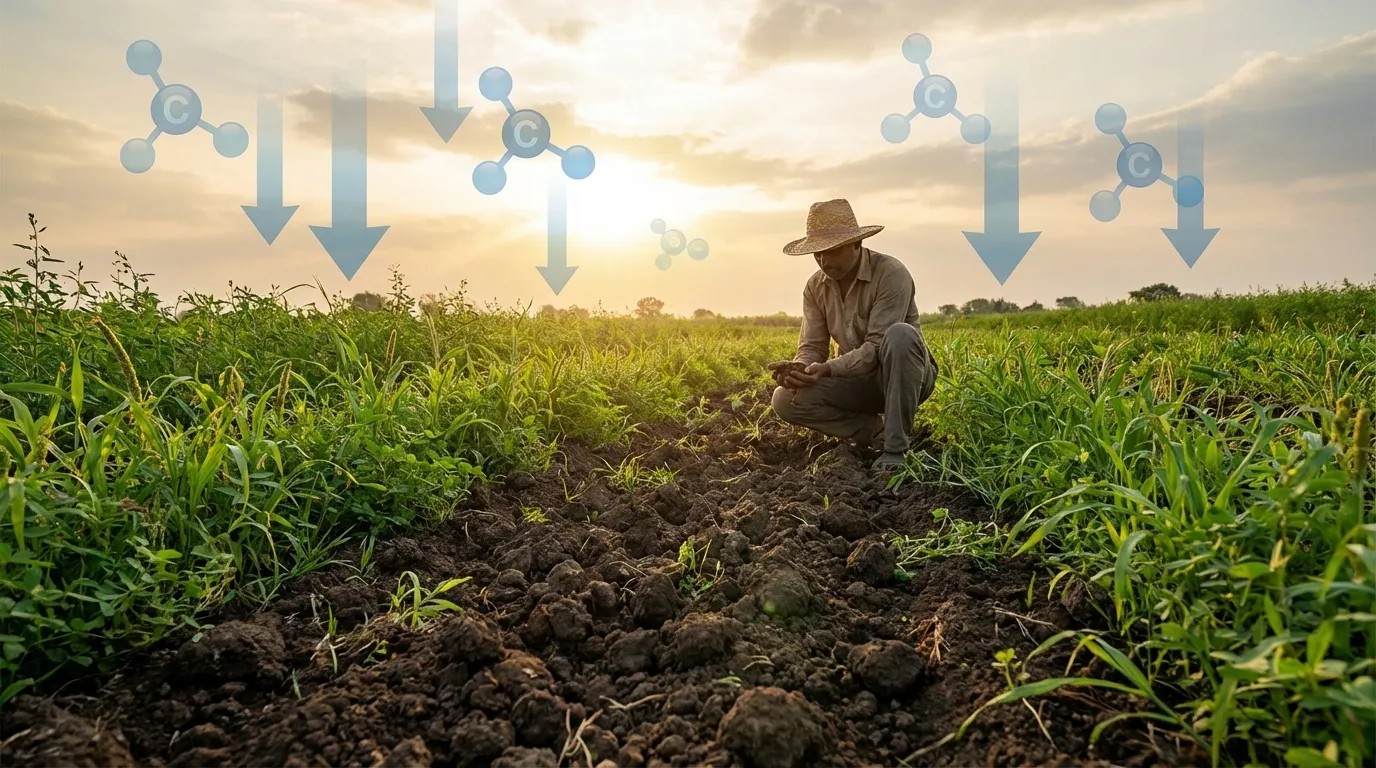
How Carbon Credits Transform Regenerative Agriculture
The global agricultural sector stands at a critical crossroads. With 33% of the world's soils degraded according to UN FAO data, and agriculture contributing significantly to greenhouse gas emissions, businesses across industries are searching for solutions that address both environmental and economic challenges. Carbon credits in regenerative agriculture offer a transformative pathway—one that not only combats climate change but also creates tangible economic value throughout the supply chain.
For businesses in the textile and agriculture industries, carbon credits represent more than just a compliance mechanism. They are a strategic tool for achieving Net Zero goals, enhancing supply chain sustainability, and building stakeholder trust. This comprehensive guide explores how carbon credits work within regenerative agriculture systems, the methodologies for generating them, and the practical steps businesses can take to leverage these opportunities.
Understanding Carbon Credits in Regenerative Agriculture
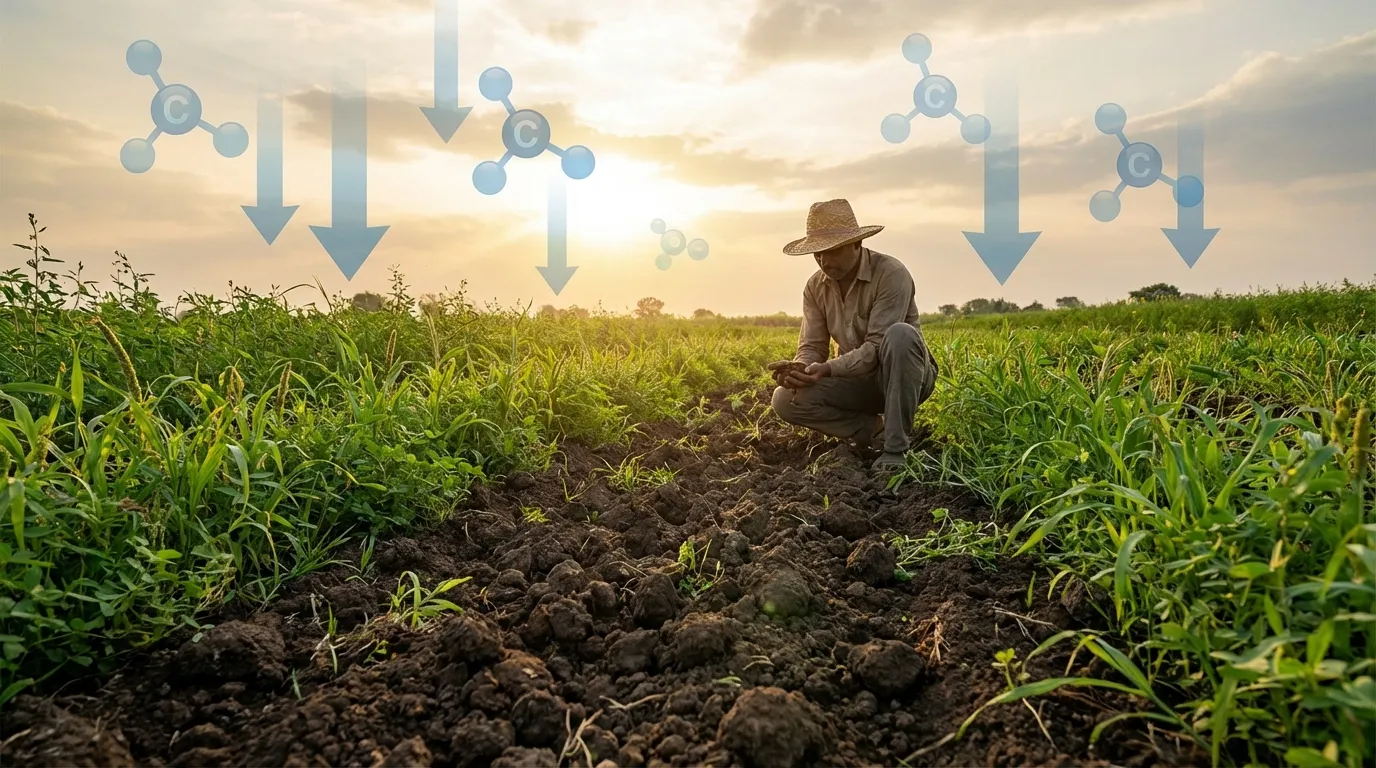
Carbon credits are tradable certificates representing the removal or avoidance of one metric ton of carbon dioxide equivalent from the atmosphere. In the context of regenerative agriculture, these credits are generated when farming practices actively sequester atmospheric carbon into soil organic matter, creating a measurable climate benefit.
The connection between regenerative agriculture and carbon sequestration is fundamental. Unlike conventional farming methods that deplete soil organic matter and release stored carbon, regenerative practices rebuild soil health through techniques like cover cropping, reduced tillage, and diverse crop rotations. These methods enhance the soil's capacity to capture and store atmospheric carbon dioxide through photosynthesis and root systems.
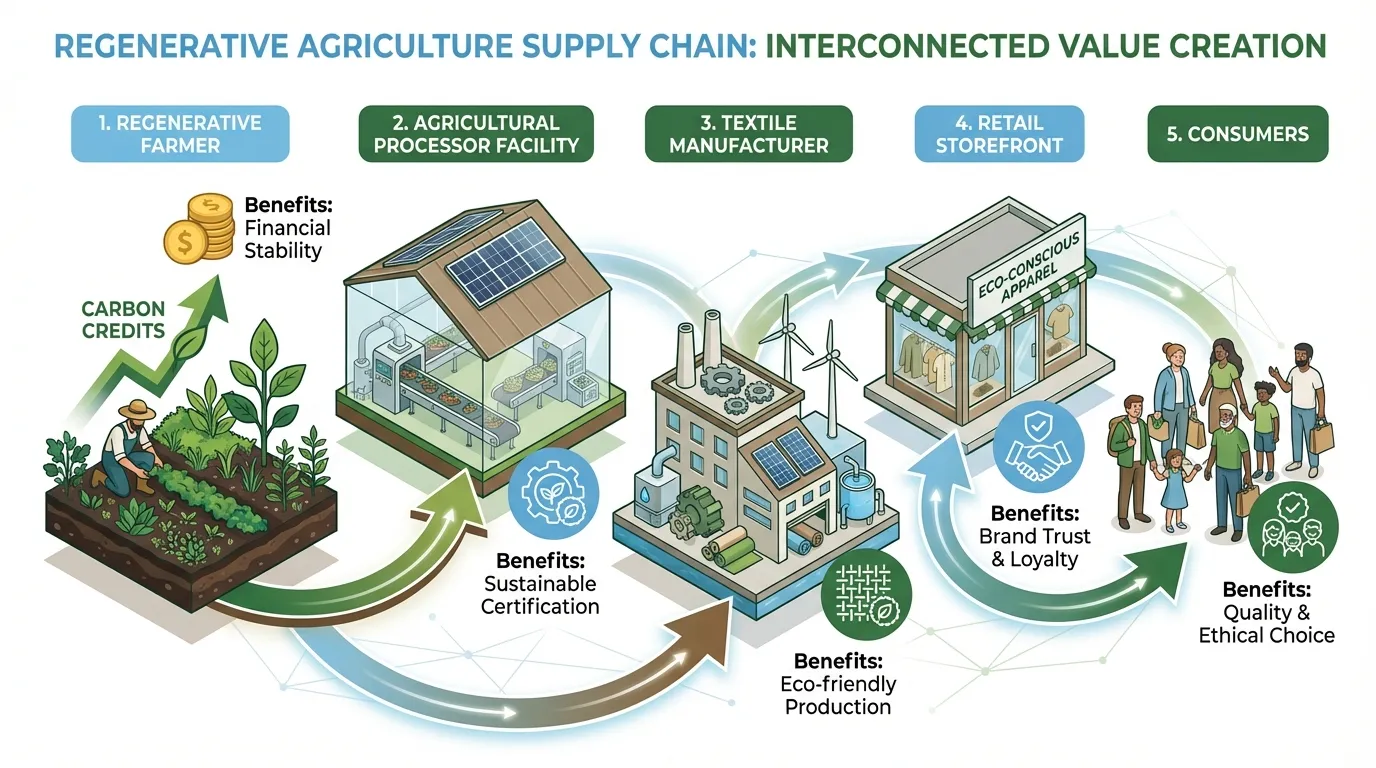
The economic value proposition is compelling for all stakeholders. Farmers gain new revenue streams beyond traditional crop sales, manufacturers secure sustainable supply chains that support ESG reporting, and retailers can make credible carbon neutral claims. This creates a circular economy where environmental stewardship directly translates to financial benefit.
The urgency cannot be overstated. Soil degradation threatens global food security and accelerates climate change. The textile industry, one of the most resource-intensive sectors, faces mounting pressure to reduce its environmental footprint. Carbon credits in regenerative agriculture provide a nature-based solution that addresses both challenges simultaneously, turning agricultural land into active carbon sinks while improving crop yield and soil fertility.
How Carbon Credits Work: The Complete Framework
Understanding the carbon credit lifecycle is essential for businesses seeking to participate in these markets. The process begins with carbon sequestration—the physical capture of atmospheric CO2 through plant photosynthesis and its storage in soil organic matter and biomass. This captured carbon must be measured, verified, and certified before it can be issued as tradable credits.
The measurement and verification process follows rigorous scientific protocols. Baseline soil carbon levels are established through soil sampling and analysis. As regenerative practices are implemented, periodic measurements track the increase in soil organic carbon over time. Third-party verification bodies audit this data to ensure accuracy and compliance with established methodologies.
Carbon credit registries serve as the official record-keeping systems. Major registries include Verra's Verified Carbon Standard (VCS), Gold Standard, and the Climate Action Reserve. These organizations maintain standards for project registration, credit issuance, and retirement. When a business purchases and retires carbon credits, they are permanently removed from circulation, representing a verified climate benefit.
There are two primary types of carbon credits. Removal credits represent carbon actively removed from the atmosphere and stored, as occurs in regenerative agriculture. Avoidance credits prevent emissions that would otherwise occur. Removal credits are generally considered higher quality because they create a net-negative carbon impact rather than simply maintaining the status quo.
Third-party verification bodies play a crucial role in maintaining market integrity. These independent organizations conduct field audits, review monitoring data, and certify that carbon sequestration claims meet established standards. This verification process ensures additionality—that the carbon sequestration would not have occurred without the carbon credit incentive—and permanence, confirming that stored carbon will remain sequestered for a specified period.
Carbon Sequestration Methodologies in Regenerative Farming
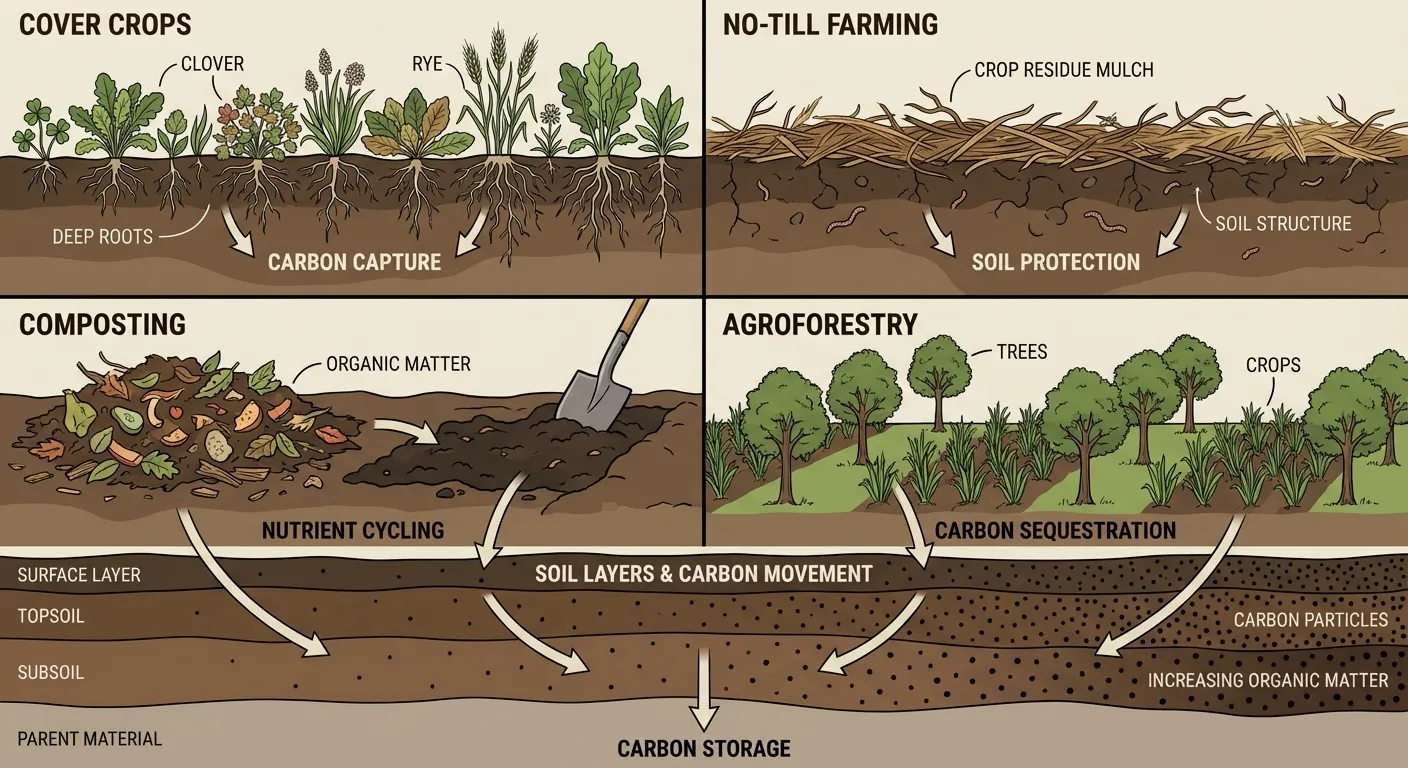
Regenerative agriculture encompasses a suite of practices designed to enhance soil health and maximize carbon sequestration. Each methodology contributes to building soil organic matter while improving agricultural productivity and resilience.
Cover Cropping and Crop Rotation Strategies
Cover crops are non-commercial crops planted between cash crop seasons to protect and enrich soil. Species like legumes, grasses, and brassicas add organic matter, fix nitrogen, and maintain living roots in the soil year-round. This continuous photosynthetic activity drives carbon sequestration while preventing erosion and suppressing weeds. Diverse crop rotations further enhance soil biology and carbon storage by varying root structures and nutrient demands across seasons.
No-Till and Reduced Tillage Practices
Conventional tillage disrupts soil structure and exposes organic matter to oxygen, causing rapid carbon loss through microbial decomposition. No-till and reduced tillage practices minimize soil disturbance, preserving soil aggregates and protecting stored carbon. These methods also reduce fuel consumption and labor costs while improving water infiltration and retention. The transition to no-till systems can sequester significant amounts of carbon, with studies showing increases of 0.5 to 1 metric ton of carbon per hectare annually.
Composting and Organic Matter Integration
Adding compost and other organic amendments directly increases soil carbon stocks. Compost provides stable organic matter that resists decomposition while feeding beneficial soil microorganisms. This practice is particularly effective in degraded soils with low baseline carbon levels. Integrating crop residues, animal manures, and green waste creates a closed-loop system that recycles nutrients and builds soil fertility over time.
Agroforestry and Perennial Systems
Integrating trees and perennial plants into agricultural landscapes creates multiple carbon storage pools. Trees sequester carbon in both above-ground biomass and deep root systems, while their leaf litter contributes to soil organic matter. Agroforestry systems also provide additional benefits including biodiversity habitat, windbreaks, and diversified income sources. Perennial crops like regenerative cotton maintain living roots year-round, maximizing carbon sequestration potential.
Measurement Protocols and Soil Sampling Techniques
Accurate measurement is the foundation of credible carbon credits. Soil sampling follows standardized protocols that specify sampling depth (typically 0-30 cm), sampling density (number of samples per hectare), and timing (consistent seasonal periods). Samples are analyzed for total organic carbon, bulk density, and other soil health indicators. Remote sensing technologies and modeling tools complement field measurements, providing cost-effective monitoring at scale. Data integration platforms track this information over time, creating transparent records for verification and stakeholder engagement.
The Process: Generating Carbon Credits Through Sustainable Farming
Generating carbon credits through regenerative agriculture follows a structured process that ensures environmental integrity and market credibility. Understanding each step helps businesses plan realistic timelines and resource requirements.
Step 1: Baseline Assessment and Soil Health Evaluation
The journey begins with comprehensive baseline assessment. Soil samples are collected across the project area to establish current carbon stocks and soil health conditions. This baseline serves as the reference point for measuring future carbon sequestration. Historical land management practices are documented to demonstrate additionality, proving that the regenerative practices represent a genuine change from business-as-usual operations.
Step 2: Implementing Regenerative Practices with Farmer Training
Successful implementation requires knowledge transfer and capacity building. Farmer training programs teach regenerative techniques adapted to local conditions and crop systems. This collaborative approach ensures that farmers understand not just the "how" but the "why" behind each practice. Training covers practical skills like cover crop selection, compost application, and integrated pest management. Ongoing support helps farmers navigate the transition period when yields may temporarily fluctuate as soil biology rebuilds.
Step 3: Monitoring and Data Collection
Continuous monitoring tracks carbon sequestration progress and practice implementation. Periodic soil sampling, typically annually or biennially, measures changes in soil organic carbon. Digital tools and mobile applications facilitate data collection, allowing farmers to record management activities and observations. This data-led approach provides transparency and enables adaptive management, allowing practices to be refined based on results.
Step 4: Verification and Certification
After a monitoring period (usually 1-5 years depending on the methodology), third-party verifiers audit the project. Verifiers review monitoring data, conduct field inspections, and interview farmers to confirm that practices were implemented as claimed. They assess whether carbon sequestration calculations follow approved methodologies and whether the project meets additionality and permanence requirements. Successful verification leads to certification and credit issuance.
Step 5: Credit Issuance and Market Entry
Once verified, carbon credits are issued by the registry and can be sold in voluntary or compliance markets. Credits are typically issued in batches corresponding to monitoring periods. The project developer or farmer can sell credits directly to buyers, work through aggregators who pool credits from multiple farms, or list credits on carbon marketplaces. Proceeds from credit sales provide the economic return that incentivizes continued regenerative practice adoption.
Timeline Expectations and Investment Requirements
Businesses should expect a 2-4 year timeline from project initiation to first credit issuance. Upfront investments include baseline assessment, farmer training, practice implementation support, and monitoring systems. Verification costs typically range from several thousand to tens of thousands of dollars depending on project scale. However, these investments are offset by credit revenues, improved crop yields, and reduced input costs over time. For businesses seeking to achieve Net Zero goals, the return on investment extends beyond financial metrics to include supply chain resilience and brand value.
Trading Carbon Credits: Market Mechanisms and Opportunities
Carbon credit markets provide the economic infrastructure that connects carbon sequestration projects with businesses seeking to offset their emissions. Understanding market dynamics helps organizations make informed purchasing decisions and develop effective carbon strategies.
Voluntary vs. Compliance Carbon Markets
The carbon market divides into two main segments. Compliance markets are created by regulatory requirements, such as emissions trading schemes that mandate carbon reductions for certain industries. Voluntary markets allow businesses to purchase credits voluntarily to meet corporate sustainability goals, achieve carbon neutral status, or demonstrate environmental leadership. Regenerative agriculture carbon credits primarily trade in voluntary markets, where buyers value co-benefits like soil health improvement and rural community support alongside carbon sequestration.
Pricing Dynamics and Market Trends in 2026
Carbon credit prices vary widely based on credit quality, co-benefits, and market demand. In 2026, high-quality removal credits from regenerative agriculture typically command premium prices compared to avoidance credits. Prices reflect factors including verification standards, permanence guarantees, and additional environmental or social benefits. The textile and fashion industries are driving increased demand for agriculture-based credits that align with supply chain sustainability goals, creating upward price pressure for credits with strong traceability and stakeholder engagement.
How Businesses Can Purchase and Retire Credits
Businesses have multiple pathways to acquire carbon credits. They can purchase credits through online marketplaces, work with carbon brokers who facilitate transactions, or engage directly with project developers. When credits are purchased to offset emissions, they should be retired, permanently removed from circulation and recorded in the registry. This retirement prevents double-counting and ensures the climate benefit is claimed only once. Transparent reporting of credit purchases and retirements is essential for credible carbon neutral claims and ESG reporting.
Direct Farmer-to-Business Partnerships
An increasingly popular model involves direct partnerships between businesses and farming communities. Textile manufacturers, for example, can work with cotton farmers in their supply chain to implement regenerative practices and purchase the resulting carbon credits. This approach creates supply chain integration, ensures credit quality, and builds long-term relationships. Direct partnerships also enable businesses to tell compelling sustainability stories that resonate with consumers and stakeholders.
The Role of Aggregators and Intermediaries
Aggregators pool carbon credits from multiple small-scale projects, reducing transaction costs and providing market access for farmers who lack the resources to navigate markets independently. These intermediaries handle verification coordination, credit marketing, and buyer relationships. For businesses, aggregators offer diversified credit portfolios and simplified procurement. However, direct partnerships often provide greater transparency and supply chain alignment when feasible.
Benefits Throughout the Supply Chain: From Farmers to Retailers
The transformative power of carbon credits in regenerative agriculture lies in their ability to create value for every stakeholder in the supply chain. This collaborative approach aligns economic incentives with environmental outcomes, driving systemic change.
Economic Benefits for Farmers: New Revenue Streams and Improved Yields
Farmers are the foundation of carbon credit programs, and they receive multiple benefits. Carbon credit sales provide additional income that can represent 10-30% of traditional crop revenue, depending on sequestration rates and market prices. Beyond credit sales, regenerative practices improve soil health, leading to increased crop yields over time. Reduced input costs for synthetic fertilizers and pesticides further enhance profitability. Farmers also gain resilience against climate variability, as healthy soils better withstand drought and extreme weather.
Advantages for Manufacturers: Supply Chain Sustainability and ESG Reporting
Manufacturers benefit from secure, sustainable raw material supplies. Integrating regenerative agriculture into supply chains reduces Scope 3 emissions, the indirect emissions from purchased goods and services that often represent the largest portion of a company's carbon footprint. This supports ESG reporting and demonstrates progress toward Net Zero goals. Manufacturers can also differentiate their products with sustainability credentials, appealing to environmentally conscious business customers and meeting increasing regulatory requirements for supply chain transparency.
Value for Retailers and Brands: Carbon Neutral Claims and Consumer Trust
Retailers and brands leverage carbon credits to make credible carbon neutral or climate positive claims. In the textile and fashion industry, where consumers increasingly demand sustainable products, regenerative agriculture provides an authentic sustainability story. Brands can communicate their environmental commitment through transparent reporting of carbon credit purchases and regenerative practice support. This builds consumer trust and brand loyalty while mitigating reputational risks associated with greenwashing.
Benefits for the Environment and Communities
The environmental benefits extend far beyond carbon sequestration. Regenerative practices improve water quality by reducing runoff and nutrient pollution. Biodiversity increases as diverse crop rotations and reduced chemical use create habitat for beneficial insects and wildlife. Soil degradation is reversed, protecting long-term agricultural productivity. Rural communities benefit from improved farmer livelihoods, knowledge transfer through training programs, and the economic multiplier effects of increased farm income.
Case Examples from Textile and Agriculture Industries
The textile industry is increasingly embracing regenerative agriculture carbon credits. Fashion brands are partnering with cotton farmers to transition to regenerative practices, purchasing carbon credits while securing sustainable fiber supplies. These programs often include farmer training on soil health, organic certification pathways, and data integration systems that track environmental outcomes. Agricultural businesses are implementing similar programs across diverse crop systems, demonstrating that carbon credits can drive regenerative transitions at scale while maintaining commercial viability.
Implementing Carbon Credit Programs: A Strategic Roadmap for Businesses
Successfully implementing carbon credit programs requires strategic planning and cross-functional collaboration. This roadmap guides businesses through the key steps for integrating carbon credits into their sustainability strategies.
Assessing Your Organization's Carbon Footprint and Net Zero Goals
Begin with a comprehensive carbon footprint assessment covering Scope 1 (direct emissions), Scope 2 (purchased energy), and Scope 3 (supply chain) emissions. For most businesses, Scope 3 emissions dominate, making supply chain interventions critical. Define clear Net Zero goals with interim targets and timelines. Determine what portion of emissions can be reduced through operational changes versus offset through carbon credits. This assessment provides the foundation for sizing carbon credit needs and identifying priority supply chain segments for regenerative agriculture integration.
Identifying Supply Chain Opportunities for Regenerative Agriculture Integration
Map your supply chain to identify agricultural inputs and their sources. For textile businesses, this includes cotton, wool, and other natural fibers. For food companies, it encompasses all agricultural commodities. Assess which supply chain segments offer the greatest potential for regenerative transitions based on factors like supplier relationships, geographic concentration, and baseline farming practices. Prioritize opportunities where regenerative agriculture can deliver both carbon sequestration and supply chain resilience.
Building Collaborative Programs with Farmers and Stakeholders
Successful programs require genuine collaboration rather than top-down mandates. Engage farmers early to understand their needs, constraints, and motivations. Design programs that provide adequate financial incentives, technical support, and risk mitigation. Involve agronomists, extension services, and local agricultural organizations to ensure practices are adapted to regional conditions. Build stakeholder engagement across your organization, securing buy-in from procurement, sustainability, and executive teams. This collaborative approach creates shared ownership and increases program success rates.
Data Integration and Tracking Systems
Implement robust data systems to track practice implementation, carbon sequestration, and program outcomes. Digital platforms can integrate soil sampling data, farmer activity logs, and verification records. This data transparency supports credible ESG reporting and enables adaptive management. Look for systems that provide farmer-friendly interfaces while generating the detailed documentation required for verification. Data integration also facilitates supply chain traceability, allowing businesses to connect specific products to regenerative farming practices.
Stakeholder Engagement Strategies
Communicate program goals and progress to internal and external stakeholders. Internally, educate employees about the connection between regenerative agriculture and corporate sustainability goals. Externally, share stories about farmer partnerships and environmental outcomes through sustainability reports, marketing materials, and stakeholder presentations. Transparent communication builds credibility and demonstrates authentic commitment to climate action. Engage with industry associations, policy makers, and climate think tanks to contribute to broader sectoral transformation.
Aligning with ESG Frameworks and Reporting Requirements
Ensure your carbon credit program aligns with recognized ESG frameworks such as the Global Reporting Initiative (GRI), Sustainability Accounting Standards Board (SASB), and Task Force on Climate-related Financial Disclosures (TCFD). Document carbon credit purchases, retirements, and associated emissions reductions in accordance with these standards. Maintain clear records distinguishing between emissions reductions from operational changes and offsets from carbon credits. This alignment ensures your program meets investor expectations and regulatory requirements while supporting broader sustainability goals.
For businesses seeking expert guidance on implementing regenerative agriculture carbon credit programs, reach out to explore collaborative solutions tailored to your supply chain and sustainability objectives.
Overcoming Challenges and Ensuring Program Success
While carbon credits in regenerative agriculture offer significant opportunities, businesses must navigate several challenges to ensure program success and maintain credibility.
Common Barriers: Knowledge Gaps, Upfront Costs, Verification Complexity
Knowledge gaps represent a primary barrier. Many farmers lack familiarity with regenerative practices and carbon markets. Upfront costs for transitioning to new practices can be prohibitive, particularly for smallholder farmers operating on thin margins. Verification complexity and associated costs can make carbon credit programs economically unviable for small-scale projects. Transaction costs in carbon markets can consume a significant portion of credit value, reducing farmer returns.
Solutions: Capacity Building Programs and Collaborative Platforms
Capacity building programs address knowledge barriers through farmer training and ongoing technical support. Collaborative platforms bring together farmers, businesses, agronomists, and verification bodies to share knowledge and reduce transaction costs. Aggregation models pool multiple farms into single verification projects, spreading fixed costs across larger carbon volumes. Financial mechanisms like advance payments or practice implementation subsidies help farmers cover upfront costs before credit revenues materialize. These solutions make carbon credit programs accessible and economically viable for diverse farming operations.
Ensuring Additionality and Permanence
Additionality, proving that carbon sequestration would not have occurred without the carbon credit incentive, is essential for market credibility. Programs must demonstrate that regenerative practices represent a genuine change from baseline management. Permanence addresses the risk that sequestered carbon could be released back to the atmosphere through future land use changes or natural disturbances. Solutions include long-term contracts with farmers, buffer pools that set aside a portion of credits to cover potential reversals, and monitoring systems that detect and address carbon losses.
Avoiding Greenwashing and Maintaining Credibility
Greenwashing, making misleading environmental claims, poses reputational risks. Businesses must ensure carbon credit claims are accurate, verifiable, and transparent. Use credits from reputable registries with rigorous verification standards. Clearly communicate the role of carbon credits within broader emissions reduction strategies, emphasizing that credits complement rather than replace operational emissions reductions. Avoid exaggerated claims about carbon neutrality without transparent disclosure of underlying calculations and assumptions. Third-party verification and public reporting enhance credibility and demonstrate authentic commitment to climate action.
The Importance of Evidence-Based, Data-Led Approaches
Evidence-based approaches grounded in scientific research and rigorous data collection ensure program effectiveness. Soil sampling protocols must follow established methodologies to produce credible carbon sequestration measurements. Monitoring systems should track not just carbon but also co-benefits like soil health indicators, crop yields, and biodiversity metrics. This comprehensive data demonstrates program value beyond carbon credits alone. Research partnerships with universities and agricultural research institutions can validate practices and refine methodologies. Data transparency builds stakeholder trust and supports continuous improvement.
The Future of Carbon Credits in Regenerative Agriculture
The intersection of carbon credits and regenerative agriculture is rapidly evolving, driven by technological innovation, policy developments, and growing market demand. Understanding emerging trends helps businesses position themselves for long-term success.

Emerging Trends in Carbon Markets and Policy Developments
Carbon markets are maturing with increased standardization and transparency. Governments worldwide are developing policies that support agricultural carbon sequestration, including subsidies for regenerative practice adoption and integration of agriculture into national climate strategies. India's focus on climate action and sustainable agriculture positions the country as a leader in regenerative transitions. Policy makers are increasingly recognizing agriculture's dual role in climate mitigation and adaptation, creating supportive regulatory environments for carbon credit programs.
Technology Innovations for Measurement and Verification
Technology is reducing the cost and complexity of carbon credit programs. Remote sensing using satellite imagery and drone technology enables cost-effective monitoring of vegetation cover and soil conditions. Soil sensors provide real-time data on soil moisture and carbon content. Artificial intelligence and machine learning models predict carbon sequestration based on practice implementation and environmental conditions, reducing the need for intensive soil sampling. Blockchain technology enhances traceability and transparency in carbon credit transactions. These innovations make carbon credit programs accessible to more farmers and businesses while improving data quality.
Growing Demand from Textile and Fashion Industries
The textile and fashion industries are driving significant demand for regenerative agriculture carbon credits. Major brands are committing to Net Zero goals and seeking supply chain solutions that deliver measurable environmental benefits. Regenerative cotton and other natural fibers offer a pathway to reduce Scope 3 emissions while supporting textile sustainability goals. This demand creates market opportunities for farmers and businesses that invest in regenerative transitions. The integration of circular economy principles with regenerative agriculture further enhances value, creating closed-loop systems that minimize waste and maximize resource efficiency.
The Role of Circular Economy Principles
Circular economy thinking complements regenerative agriculture by emphasizing resource cycling and waste elimination. Textile waste can be composted and returned to agricultural soils, closing nutrient loops. Crop residues and agricultural byproducts become inputs for manufacturing processes. This systems-level integration creates synergies where carbon credits are one component of broader sustainability strategies. Businesses that embrace circular economy principles alongside regenerative agriculture position themselves as leaders in sustainable innovation.
How Collaborative Action Drives Systemic Change
Systemic transformation requires collaboration across the entire value chain. Farmers, manufacturers, retailers, consumers, policy makers, and civil society organizations all play essential roles. Collaborative platforms facilitate knowledge sharing, coordinate action, and align incentives. Industry associations and multi-stakeholder initiatives scale best practices and advocate for supportive policies. This collective approach accelerates the transition to regenerative systems that benefit people, planet, and prosperity. The future of carbon credits in regenerative agriculture depends on continued collaboration and shared commitment to climate action.
Taking Action: Your Next Steps Toward Carbon Credit Integration
Carbon credits in regenerative agriculture represent a powerful tool for businesses committed to achieving Net Zero goals while creating positive environmental and social impacts. The evidence is clear: regenerative practices sequester significant amounts of carbon, improve soil health, enhance crop yields, and generate economic value throughout the supply chain.
For businesses in the textile and agriculture industries, the opportunity is immediate. Supply chains built on regenerative agriculture principles are more resilient, sustainable, and aligned with stakeholder expectations. Carbon credits provide the economic mechanism that makes regenerative transitions financially viable while supporting credible climate claims.
Success requires strategic planning, collaborative partnerships, and commitment to evidence-based approaches. Begin by assessing your carbon footprint and identifying supply chain opportunities for regenerative integration. Engage farmers and stakeholders in designing programs that deliver mutual benefits. Implement robust data systems that track outcomes and support transparent reporting. Navigate challenges through capacity building, aggregation models, and partnerships with experienced organizations.
The future of agriculture and climate action depends on collective commitment to regenerative systems. Carbon credits are not just a compliance mechanism or offset tool, they are a catalyst for transforming how we produce food and fiber while healing the planet's degraded soils. By integrating carbon credits into your sustainability strategy, you join a growing movement of businesses, farmers, and communities working toward a regenerative future.
Whether you're a textile manufacturer seeking sustainable fiber sources, an agricultural business exploring new revenue streams, or a corporate sustainability team developing Net Zero strategies, regenerative agriculture carbon credits offer a proven pathway forward. The time to act is now. Take the first step toward supply chain transformation and climate leadership by exploring how carbon credits can support your organization's sustainability goals. Connect with regenerative agriculture experts to develop a customized carbon credit strategy that delivers measurable environmental and economic results for your business and farming partners.
Learn more about the science behind these practices in our complete framework on carbon sequestration in agriculture, explore the financial returns of regenerative versus conventional farming, and understand key sustainability terminology in our modern ESG dictionary. For businesses ready to transform their supply chains, discover how regenerative agriculture consulting drives supply chain transformation.