Beetle Bulletin #4
'From Beauty Campaigns to Soil Chemistry'
December 1, 2025
 From carbon to community, from roots to resilience—Beetle Bulletin brings stories that power the regenerative revolution. 🐞
 From Beauty Campaigns to Soil Chemistry- my journey into Regenerative Marketing
By Priyanka Singh, Marketing Lead, Beetle Regen Solutions
When I joined Beetle a year ago, I thought I was coming here to tell stories about sustainability. What I didn't realize was that I'd end up living them…
Coming from a world of lifestyle and beauty brands, my marketing lens was trained to look for perfection- flawless-looking models, polished retouched visuals, catchy hooks…But Beetle changed that.
Regenerative agriculture and real impact stories aren't glossy - they're raw, patient, and deeply human. Somewhere along the way, I realised that sustainability isn't what campaigns and magazines have sold us. It's what the soil, the farmer, and the field quietly teach us - if we're willing to listen.
The first time I visited the field, I saw what change actually looks like -farmers experimenting with new practices, talking about soil like it's alive, preparing biochar in open cone pits under the scorching sun, sending their soil samples to labs for testing, using apps for tracking and audits..and lots more..
No set, no script. Just the truth.
That's when it struck me-this isn't just about branding agriculture or sustainability. It's about rebuilding trust. About giving a face, a voice, and dignity to the people who make regeneration real and help secure our future.
This one year has been a journey of unlearning and relearning- of understanding that good marketing in this space isn't about selling a product; it's about making impact visible, credible, and human.
Working at Beetle has changed the way I see the world and my work. Once you've seen the power of soil, data, and stories coming together to restore life, there's no going back.
Because this isn't about marketing a brand or selling a story anymore - it's about being part of a movement where regeneration is real, and climate action isn't just a PR rhetoric, it's all collective responsibility in action.
Beetle Buzz: What's New
🌱 Beetle Expands to Bangladesh
We have extended our regenerative journey to Bangladesh, working closely with local partners, farmers, and rural communities to restore soil health, strengthen climate resilience, and build transparent, future-ready textile supply chains. From introducing biochar and regenerative practices to co-creating farmer-first solutions, our mission remains clear: enable sustainable livelihoods while reducing the carbon footprint of the textile ecosystem.
Stay tuned for more field updates and farmer stories from Bangladesh…
🌱 Partnership with ICAC (International Cotton Advisory Committee)
We formalised our association with the International Cotton Advisory Committee, deepening technical collaboration on regenerative cotton, soil science, and GHG/LCA tools. This partnership anchors Beetle's work in globally recognised science and best practices while advancing climate-smart cotton pathways for India and beyond.
🌱 Beetle X Remove India Accelerator
Beetle has been chosen for the prestigious Remove India Accelerator Program -bringing global expertise, validation, and market access for scalable carbon removal solutions. This recognition reinforces confidence in our regenerative and carbon-sequestration approach rooted in smallholder systems.
🌱 Partnership with TEXPROCIL for Kasturi Climate-Positive Cotton
We are also partnering with TEXPROCIL to integrate regenerative agriculture principles into Kasturi cotton production, ensuring soil-positive farm practices, traceability, and premium climate-aligned value chains. This initiative reinforces India's ambition to lead in sustainable cotton and positions farmers at the center of the future of textiles.
Data, Trust and Regeneration: How Beetle Builds MRV Systems That Work
Ravikumar Ganesan - Senior Advisor, MEL, Beetle Regen
When you work in regenerative agriculture, ambition alone won't do -it needs proof. Not just proof for partners or buyers, but credible, real-time data that is visible to every stakeholder and actionable for the people who matter most: farmers.
In June 2024, we decided to build a robust data management system for our operations. We knew it would be a long journey, and that the system would only succeed if it was practical for field teams, resilient to operational challenges, and genuinely useful in everyday decision-making.
We believe that Digital Tools for traceability and transparency do more than just record actions; they make accountability possible. By capturing verifiable, time-stamped field data and linking it to supply-chain records, these systems prove where impact happened, who benefited, and how carbon outcomes were achieved for every kg of regenerative cotton linked to supply chains. That unlocks market trust, policy engagement, and premium value for farmers while enabling scalable, data-driven pathways for true regenerative transformation.
A year later today, the effort has paid off. Together, we developed a clear theory of change, a practical monitoring & evaluation framework, and a focused set of indicators for progress and impact.
We iterated these tools with input from field staff, farmers, customers and partners so the system would be both technically sound and fit for diverse, on-ground conditions and stakeholder needs.
Our MRV Approach: Designed for Decision-Making
From day one, our goal was simple: the data had to be live, online, and usable for quick decisions. We didn't want numbers that only surfaced in year-end reports; we wanted insights that could guide action during the season.
That led us to a scalable, stage-based data collection model aligned to the cotton-growing calendar -each stage capturing the activities and risks unique to that period. We faced the realities of varied geography, social contexts, and the need to train and monitor large field teams.
From day one, our goal was simple: the data had to be live, online, and usable for quick decisions. We didn't want numbers that only surfaced in year-end reports; we wanted insights that could guide action during the season.
That led us to a scalable, stage-based data collection model aligned to the cotton-growing calendar -each stage capturing the activities and risks unique to that period. We faced the realities of varied geography, social contexts, and the need to train and monitor large field teams.
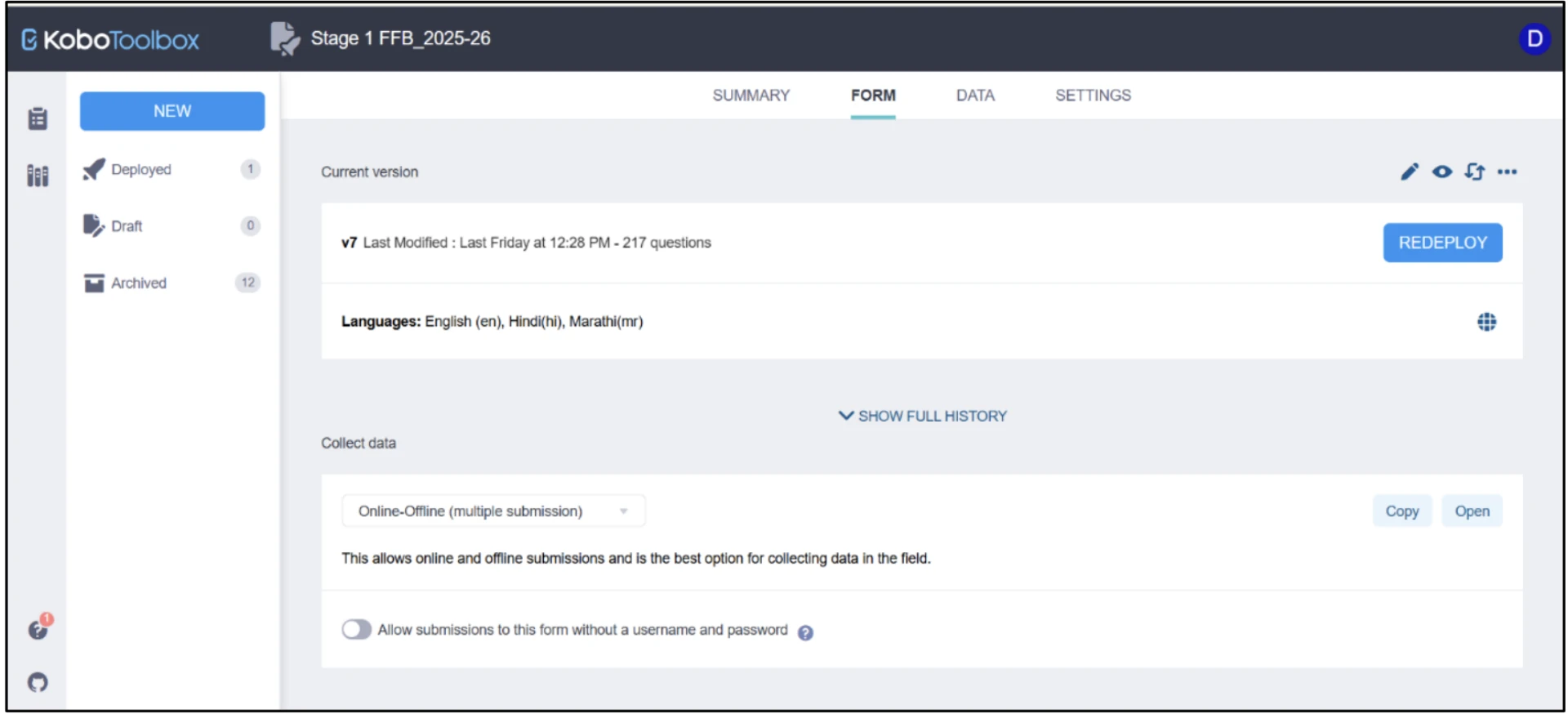
The answer was digital collection over paper: faster, more reliable, and far more accurate. We selected Kobo Toolbox, an open-source platform well suited to building adaptive forms with skip logic and error control -features that significantly reduced data mistakes in the field.
Quality & Credibility First
With growing concerns around greenwashing, credibility is non-negotiable. We're embedding routine data-quality checks at project and central levels, developing SOPs, and keeping third-party verification on the table for larger-scale reporting. The aim is clear: data that stakeholders can trust. We are also partnering with remote sensing applications to build in dynamic soil and crop monitoring to avoid lags between analysis and decision making.
Data That's Shared, Not Shelved
Data is powerful only when people see and use it. We're designing simple, live dashboards to share insights with the teams that collect the data, so learnings feed back into operations in real time. This approach reduces errors, builds data literacy, and creates a feedback loop where field teams learn from what they record.
Carbon Data Built In
Climate impact is central to Beetle's work, so carbon measurement is not an afterthought. We design our interventions with clear carbon outcomes in mind, collect the right data at the right time, and feed those observations into models and tools that translate field actions into verifiable CO₂ removal and sequestration. Biochar batches are tracked and geo-tagged, soil carbon changes are monitored through field testing and remote sensing, and practice-level emissions are estimated using established calculators during annual planning and reporting.
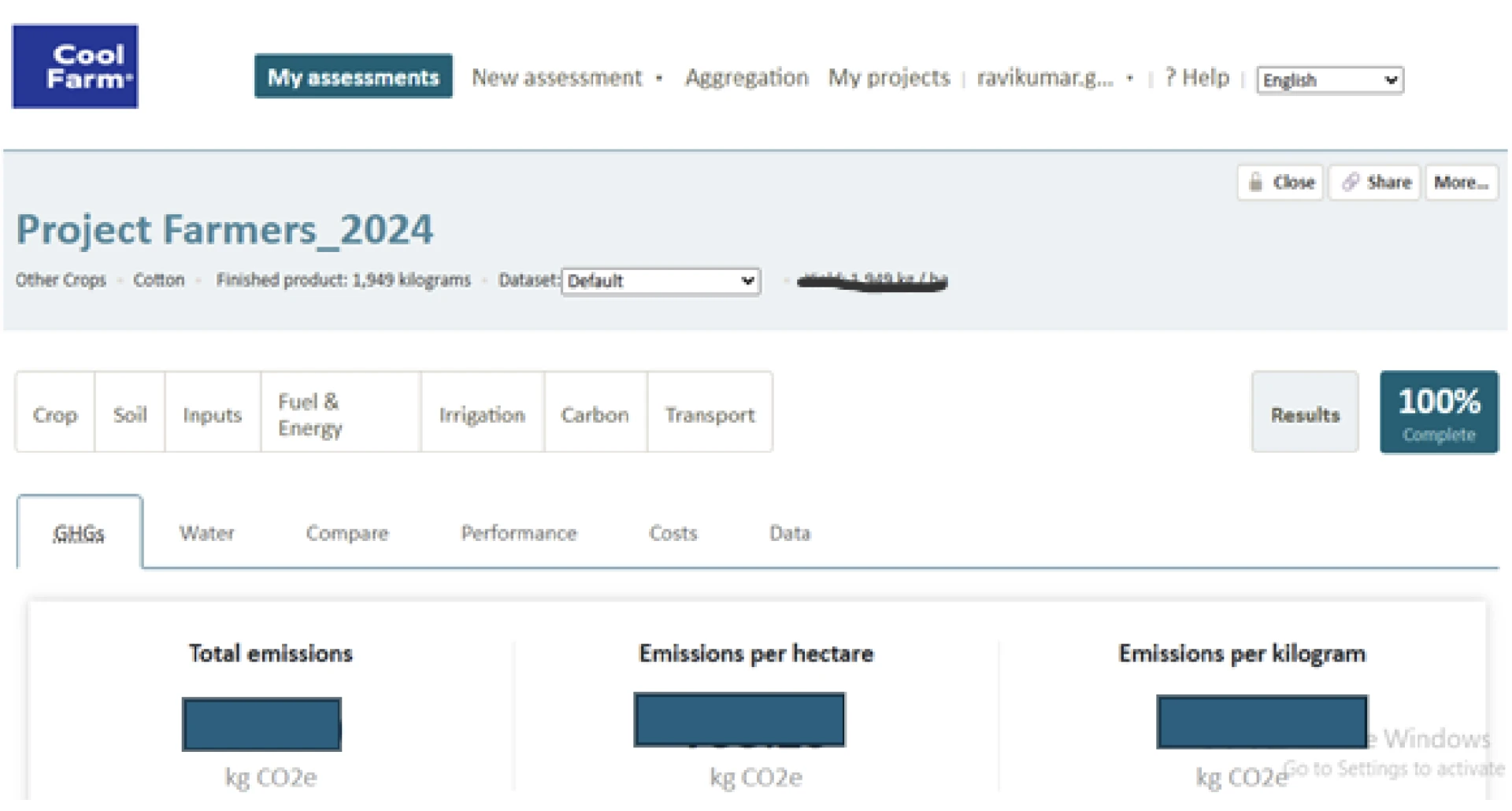
We collect detailed carbon-related data and use the Cool Farm Tool for annual planning and footprint analysis. This lets us compare operational designs, measure sequestration potential, and produce transparent reports for partners and buyers.
Always Learning, Always Improving 🐞
Our MRV system is not a finished product -it's a living process.
Like regenerative agriculture itself, it evolves with each season, each farmer conversation, each supply chain transaction, and each new challenge.
We're committed to continuous improvement: testing, learning, adjusting, and scaling what works so we can drive measurable climate gains, strengthen farmer livelihoods, and build trust through transparent, verifiable results.
More Posts
Until Next Time: Let's Regenerate Together!
As we wrap up this edition of Beetle Bulletin, we hope these stories, insights, and updates have given you a deeper glimpse into the impact we are creating together. Every step we take—whether on the field, in research, or through innovation—brings us closer to a regenerative future.
Stay tuned for the next edition, and as always, we'd love to hear your thoughts, ideas, and contributions!