Building Regenerative Systems in Bangladesh: Beetle Regen Solutions' Integrated Model for Soil, Water and Farmer Resilience
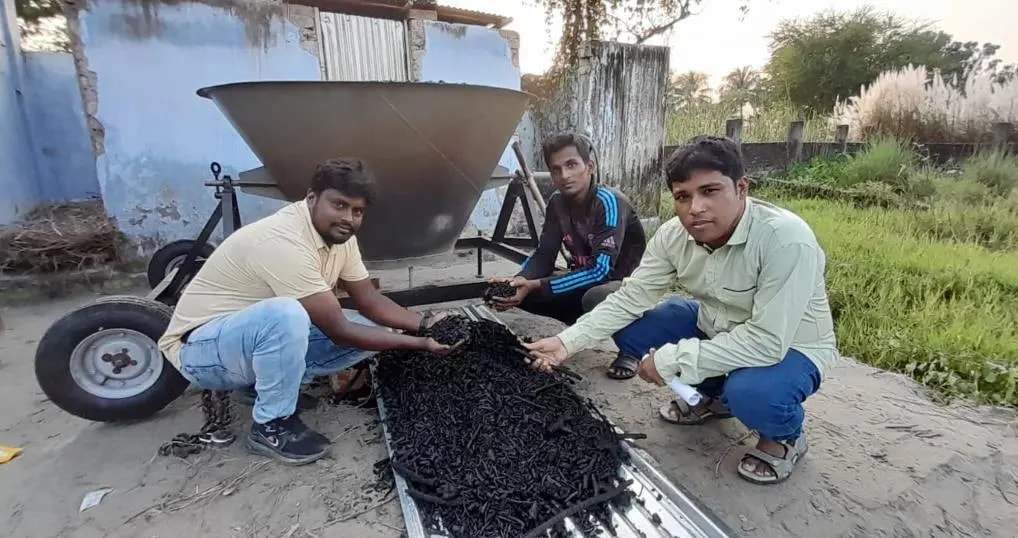
In Bangladesh's Khulna district, Boro rice farmers are demonstrating how regenerative agriculture can strengthen farm resilience when soil health, water stewardship, biodiversity, and farmer training are addressed together. Led by Beetle Regen Solutions, the initiative combines scientific soil testing, locally relevant water-management practices, organic composting, border cropping, agroforestry, and the use of locally produced biochar made from Elephant Grass. Rather than relying on a single solution, the project supports farmers in reducing input dependency, improving soil structure and water retention, diversifying farm value, and building more resilient rice-production systems.
The challenge: rising costs, stressed soils, and fragile farm economics
Farmers in Daulatpur, Khulna, often work within a complex farming system where the same plots are used interchangeably for aquaculture and rice cultivation. Initial soil testing by Beetle Regen Solutions revealed critical vulnerabilities: poor soil water retention, severe soil acidity, and degradation linked to repeated chemical fertilizer use. These conditions forced farmers to irrigate more frequently, increasing fuel and pumping costs, while also pushing them toward higher chemical input dependency. The result was a steady squeeze on profitability with every harvest cycle.
The intervention: a regenerative land-management package, not a single input
The project began with a wider regenerative land-management approach designed around local soil conditions, farmer practices, and climate risks. Locally produced biochar remained an important soil amendment, but it was introduced alongside soil diagnostics, improved water management, organic composting, crop diversification, and agroforestry practices that together strengthen rice-farming resilience.
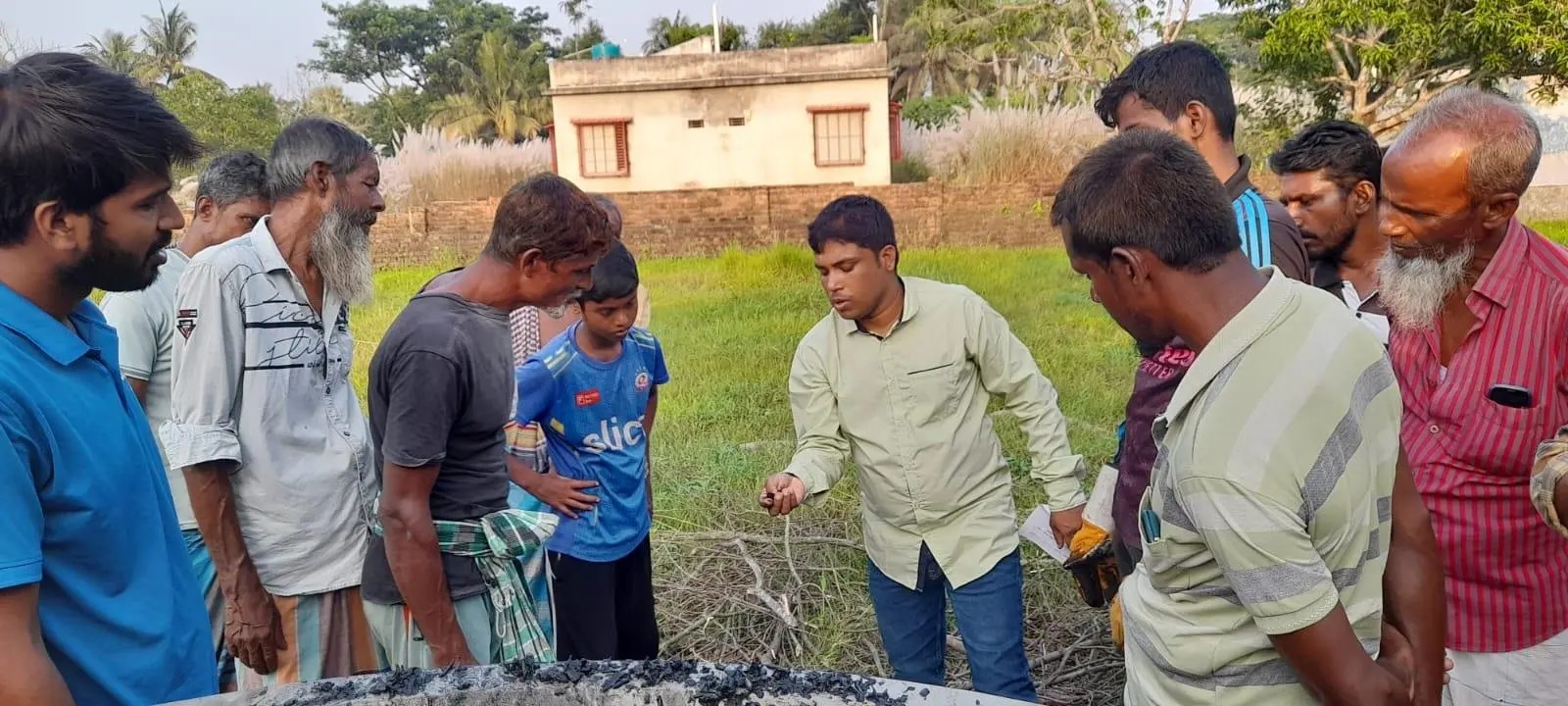
To ensure correct adoption, Beetle Regen Solutions paired these practices with hands-on farmer training. Farmers were coached on co-composting methods, targeted input use, demand-based irrigation, and practical field-level changes that could restore soil health while improving farm economics over multiple crop cycles.
The impact: lower inputs, less irrigation and stronger yields
The results were visible in the first harvest cycle. Farmers using biochar reduced synthetic input use by approximately 20%, helping lower input costs while reducing the risk of chemical run-off. Improved soil structure also reduced mandatory irrigation by two cycles per season, translating into savings on energy, water pumping, and fuel.
Productivity gains were equally encouraging. Farmers also reported an additional 2 to 3 maunds of rice per bigha, approximately 80-120 kilograms. Field observations also showed healthier crop characteristics, including thicker plant bases, stronger root systems, and deeper green foliage. Together, these gains point to a model that improves both farm economics and ecological resilience.
Adoption of regenerative practices across participating farms
Soil testing and targeted agronomy
All targeted smallholder farmers adopted regenerative practices on their rice farms, beginning with comprehensive soil diagnostics. These tests established baselines for soil texture, acidity, and nutrient deficiencies, enabling farmers to make more informed decisions on input application, soil correction, and crop-cycle planning. This data-driven approach helps smallholders move away from blanket input use and toward more targeted, proactive agronomic management.
Water management and field infrastructure
Field consultations with beneficiary smallholders, including Mr. Islam Biswas, Mr. Aslam Biswas, and Mr. Abdul Gani, confirmed the strategic use of on-farm canals for demand-based water storage and irrigation. This field infrastructure supports timely water availability while reducing transit loss. Farmer Mr. Ahad Morol also highlighted the use of adjacent river canals for requirement-based irrigation, helping prevent water wastage and reduce the risk of on-farm soil erosion.
Compost, border cropping and agroforestry integration
Our smallholder farmers adopted a standardized blend of 500 kilograms of organic cow dung per acre with biochar, helping restore organic matter, improve nutrient retention, and support long-term soil structure.
Participating smallholders also used border areas of their rice farms for seasonal vegetables such as okra, bottle gourd, cucumber, bitter gourd, and papaya. This border-cropping approach introduces functional biodiversity, creates secondary income streams, and makes better use of farm space without reducing primary rice production.
Agroforestry remains a common and valuable practice in the region and further strengthens regenerative agriculture within rice ecosystems. Integrating compatible tree species can improve microclimate stability, support soil organic carbon, diversify farm outputs, and strengthen the ecological and financial resilience of smallholder systems.
In farmers' words
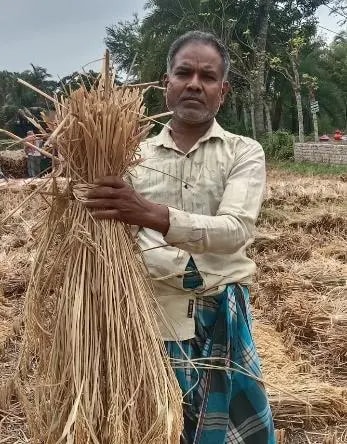
These new learnings and practices helped me reduce my water use and improve my harvest economics. Compared to previous seasons, I saw an increase of 2 to 3 maunds of rice per bigha.
Manzurul Islam, Khulna district
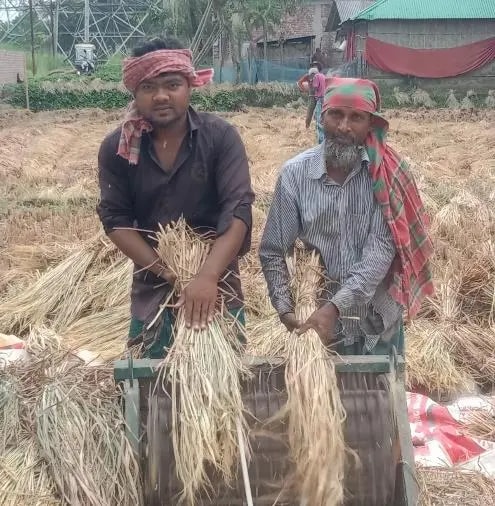
After using biochar, I noticed a stronger crop structure, including thicker rice stalk bases and healthier plant growth. It also helped reduce my dependency on synthetic chemical fertilizers.
Tanvir Hasan, Khulna district
Why this matters: regenerative systems that work together
For Beetle Regen Solutions, the Khulna initiative demonstrates that regenerative agriculture works best as an integrated system along with its traceability-led carbon insetting approach.
By working directly with smallholder farmers, documenting regenerative practices at the farm level, and connecting soil-health improvements with measurable climate outcomes, Beetle enables agribusinesses and value-chain partners to invest in emissions reductions and carbon removal within their own supply landscapes. This creates a more transparent pathway for climate action while ensuring that farmers remain central to the value generated through regenerative transition.
Beetle Regen Solutions invites farmers, development partners, agribusinesses, and climate-smart agriculture stakeholders to collaborate in scaling integrated regenerative land-management models.
For more information on our projects, visit www.beetleregen.com