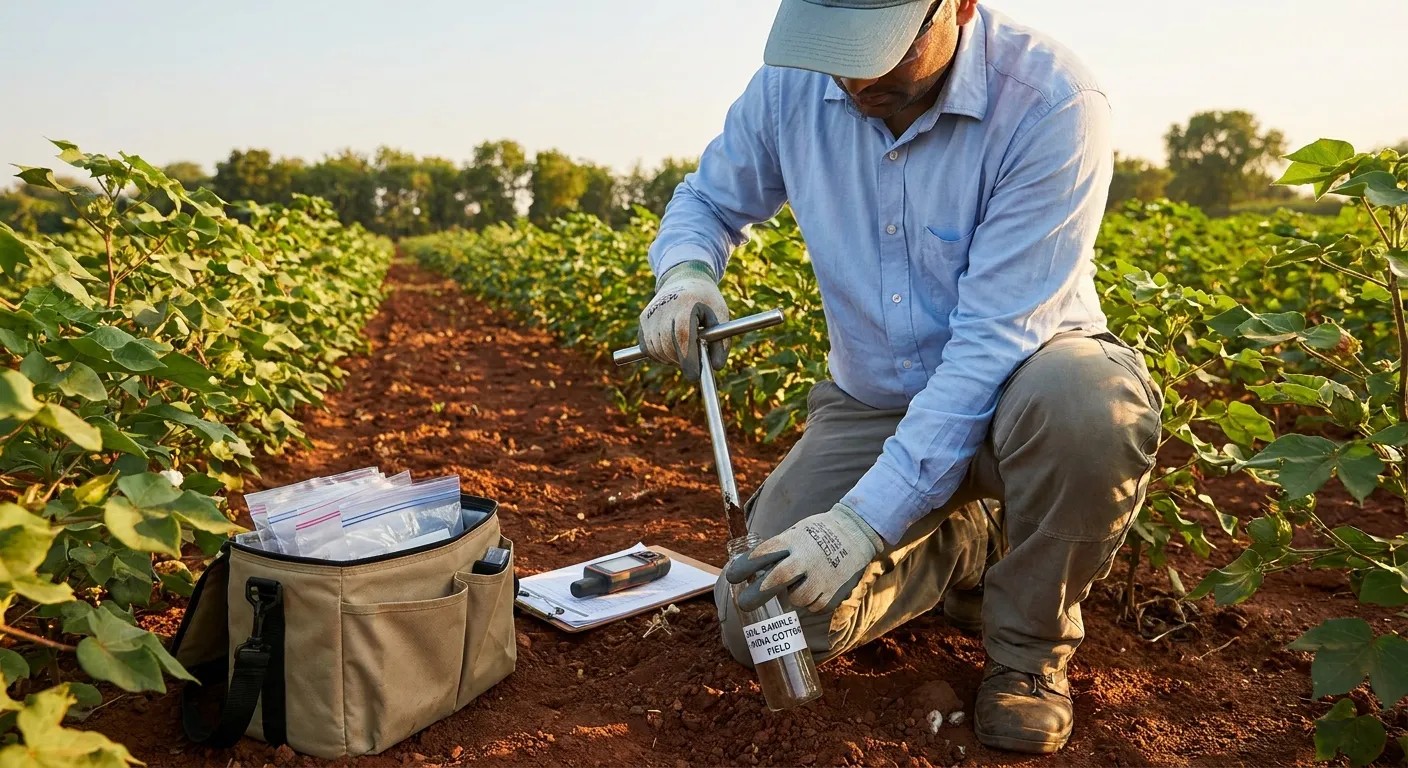
Soil Testing as a Brand Validation Tool for Regenerative Claims
Picture this: your brand's sustainability page declares that your cotton is "sourced from regenerative farms that restore soil health and sequester carbon." Your ESG report repeats the claim. Your packaging carries a regenerative badge. Then an investor due-diligence team asks a simple question: What soil data supports that?
For most textile brands today, the honest answer is: not enough. Soil testing has long been treated as a farmer's agronomic tool — something that tells a grower how much fertilizer to apply. But in 2026, soil testing has become something far more consequential for brands: a verification layer that separates credible regenerative sourcing claims from marketing language that won't survive regulatory or investor scrutiny.
This guide is written for sustainability leads, sourcing managers, and ESG teams at textile and fashion brands who want to build a defensible, data-backed regenerative sourcing program. We'll walk through which soil health indicators matter most, how to design a testing protocol, how to integrate soil testing into supplier onboarding and annual audits, and how to translate raw soil data into brand narratives that hold up under third-party review.
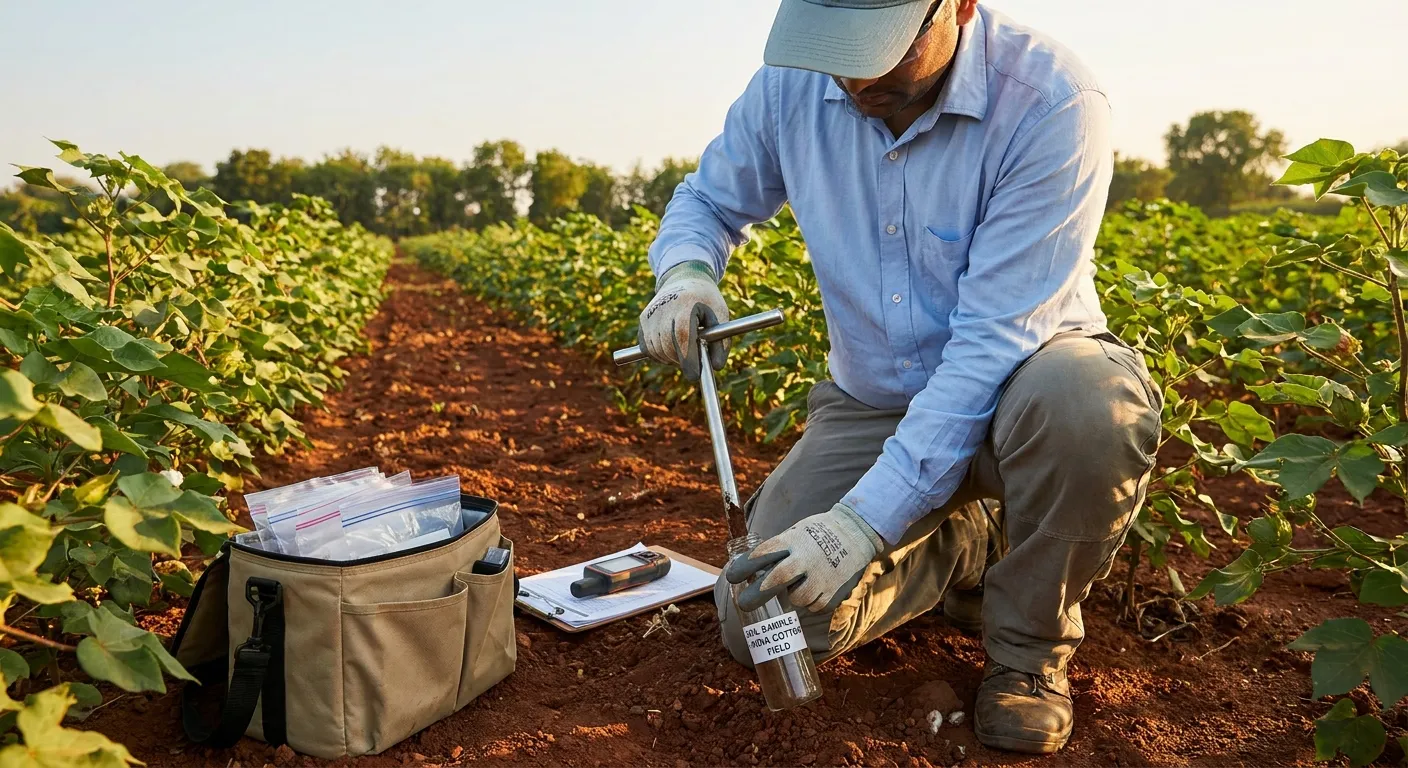
Why Soil Testing Is Now a Brand Accountability Issue
Regenerative agriculture has moved from niche to mainstream in textile sourcing conversations. Brands from fast fashion to luxury are announcing regenerative cotton commitments, partnering with farm programs, and publishing soil health targets. But the credibility gap is widening. Regulators in the EU, investors applying ESG frameworks, and third-party auditors are all asking the same question: where is the evidence?
Soil testing is the most direct answer available. Unlike farm practice certifications, which verify what a farmer does, soil testing verifies what is actually happening in the ground. It measures outcomes, not intentions. That distinction matters enormously when your brand's claims are reviewed under the EU Green Claims Directive, the Corporate Sustainability Reporting Directive (CSRD), or the Securities and Exchange Board of India's Business Responsibility and Sustainability Reporting (BRSR) framework.
The greenwashing risk is real and growing. A brand that claims "regenerative sourcing" without soil data to back it up is exposed to regulatory challenge, investor skepticism, and reputational damage. Conversely, a brand that can point to multi-year soil organic carbon trends across its supplier base has a genuinely defensible story — one that can support carbon accounting, scope 3 emissions reporting, and consumer-facing communication simultaneously.
For brands sourcing cotton from India or Bangladesh, where Beetle Regen Solutions operates its regenerative programs, soil testing also serves a practical supply chain function. It creates a shared language between brands and farmers, establishes baseline conditions for measuring improvement, and provides the data infrastructure that carbon credit verification and blockchain traceability systems depend on. To understand how this data flows across a supply chain, see our guide on how to integrate regenerative agriculture data across supply chains.
Which Soil Health Indicators Actually Matter for Brand Claims
Not every soil metric carries equal weight for brand validation purposes. Brands need to be selective. Testing everything is expensive and produces data that is hard to communicate. Testing the right indicators produces a focused, credible dataset that serves both agronomic and brand storytelling purposes.
Soil Organic Carbon (SOC)
Soil organic carbon is the single most important indicator for regenerative brand claims. SOC measures the amount of carbon stored in the soil as organic matter. It is directly linked to soil fertility, water retention, and climate impact. When SOC increases over time, it means the farm is sequestering carbon from the atmosphere — a claim that connects directly to your brand's carbon accounting and scope 3 emissions narrative. SOC is also the primary metric used by carbon credit verification standards including Verra's VM0042 and the Gold Standard's Soil Organic Carbon framework.
Bulk Density
Bulk density measures how compacted the soil is. Lower bulk density means looser, more porous soil, a sign that tillage practices are improving, root systems are healthy, and water can infiltrate rather than run off. For brands making claims about water stewardship or reduced chemical inputs, bulk density trends provide supporting evidence. It is also a relatively low-cost measurement, making it practical for large supplier networks.
Microbial Activity and Biological Health
Soil is not just chemistry, it is a living ecosystem. Microbial biomass carbon and enzyme activity tests measure the biological health of the soil. High microbial activity indicates that organic matter is cycling effectively, nutrient availability is improving, and the soil food web is functioning. These indicators are harder to communicate to consumers but are highly credible with scientific auditors and ESG reviewers who understand that biological health is the foundation of long-term regenerative outcomes.
Water Infiltration Rate
Water infiltration measures how quickly water moves into the soil. Regenerative practices like cover cropping, reduced tillage, and compost application all improve infiltration over time. For brands making climate resilience claims, particularly relevant in drought-prone cotton regions of India, infiltration data provides concrete evidence that farming practices are building adaptive capacity at the farm level.
pH and Nutrient Cycling
Soil pH and available nutrient levels (nitrogen, phosphorus, potassium) are secondary indicators that support the agronomic story. They demonstrate that reduced synthetic input use is not compromising soil fertility, a common concern among buyers evaluating whether regenerative practices are economically sustainable for farmers over the long term.
1. Map Your Supplier Landscape Before You Test Anything
Effective soil testing programs start with supplier mapping, not soil probes. Before you can design a testing protocol, you need to know which farms are making which claims, what volume they represent in your sourcing, and what baseline data already exists.
Start by segmenting your supplier base into tiers. Tier 1 suppliers, those you source from directly, should be your first priority for soil testing requirements. Within Tier 1, prioritize farms that are already enrolled in regenerative programs, farms in regions where you are making public sourcing claims, and farms that represent the highest volume of your cotton procurement.
For brands sourcing from India, this mapping exercise often reveals that cotton comes from multiple agro-climatic zones, Vidarbha in Maharashtra, Telangana, Gujarat, and increasingly from Odisha and Andhra Pradesh. Each zone has different baseline soil conditions, different degradation histories, and different testing infrastructure. Your protocol needs to account for this variation rather than applying a single standard uniformly.
Baseline documentation is equally important. Before the first soil test is conducted, collect farm-level records on current and historical practices: tillage methods, fertilizer and pesticide use, irrigation sources, and any prior soil health interventions. This context is essential for interpreting soil test results and for establishing a credible before-and-after narrative. Our analysis of how regenerative farming reverses soil degradation provides useful context for understanding what baseline conditions typically look like in conventional cotton farming regions.
2. Define Your Soil Testing Protocol and Sampling Standards
A soil testing protocol is only as credible as its methodology. Inconsistent sampling, poorly timed collection, or unaccredited laboratory analysis will undermine the data's value for third-party verification. Getting the protocol right from the start saves significant cost and credibility risk later.

Composite vs. Individual Sampling
For large farms or smallholder clusters, composite sampling, combining multiple sub-samples from across a field into a single representative sample, is the standard approach. It reduces laboratory costs while capturing field-level variability. For carbon credit verification purposes, however, individual plot-level samples may be required by the methodology. Align your sampling approach with the verification standard you intend to use before you begin.
Sampling Depth Standards
For soil organic carbon and bulk density, the standard sampling depths are 0, 15 cm (topsoil) and 15, 30 cm (subsoil). Some carbon methodologies require sampling to 30 cm or even 100 cm for full carbon stock calculations. Establish your depth standard early and maintain it consistently across all sampling events, depth inconsistency is one of the most common reasons soil carbon data is rejected during third-party audits.
Seasonal Timing
Soil properties fluctuate with moisture, temperature, and crop stage. For baseline measurements, sample during a consistent seasonal window, typically post-harvest, before the next crop is planted. For annual progress measurements, sample at the same time each year. This consistency is essential for detecting real trends rather than seasonal noise in your SOC data.
Accredited Laboratory Selection
In India, accredited soil testing laboratories are available through the Indian Council of Agricultural Research (ICAR) network, state agricultural universities, and private laboratories certified under NABL (National Accreditation Board for Testing and Calibration Laboratories). For international brand programs, laboratory accreditation is a non-negotiable requirement for third-party credibility. Maintain chain-of-custody documentation from sample collection through laboratory receipt, this paper trail is what auditors will ask for first.
Linking Protocol to Recognized Frameworks
Align your soil testing protocol with at least one recognized verification framework from the outset. Verra's VM0042 (Improved Agricultural Land Management), the Gold Standard's Soil Organic Carbon Activity, and the Soil Carbon Initiative all provide methodology-specific sampling requirements. Designing your protocol to meet these standards from day one means your data is immediately usable for carbon credit verification, not just internal reporting.
3. Integrate Soil Testing Into Supplier Onboarding
The most effective way to build a soil data foundation is to make soil testing a standard condition of regenerative supplier qualification, not an optional add-on. When soil testing is embedded in onboarding, it becomes part of the supplier relationship from the first interaction rather than a retrofit requirement that creates friction later.
A baseline soil health scorecard for new suppliers should capture SOC, bulk density, pH, and microbial activity at minimum. This scorecard serves two purposes: it establishes the starting point for measuring improvement, and it helps your sourcing team identify which farms have the most potential for rapid regenerative gains versus which farms need more intensive support before they can credibly support your brand claims.
Communication with farmers is critical here. Smallholder farmers in India and Bangladesh often have limited experience with formal soil testing programs. The process needs to be explained clearly, conducted with respect for farmers' time and land, and framed as a benefit to the farmer, not just a brand requirement. Beetle Regen's farmer-first approach to capacity building means that soil testing is introduced as part of a broader regenerative training program, where farmers understand how the data will be used to improve their soil health and, ultimately, their yields and income. For more on how farmer-centered program design works in practice, see our post on regenerative agriculture vs. conventional farming ROI in 2026.
On the technology side, onboarding soil data should flow directly into your traceability and ERP systems. A soil test result that lives only in a PDF on someone's desktop has limited value. When it is linked to a farm ID, a GPS coordinate, a supplier record, and a sourcing volume, it becomes a living data asset that supports carbon accounting, compliance reporting, and brand storytelling simultaneously.
4. Build Annual Soil Audits Into Your Sourcing Calendar
A single baseline soil test tells you where a farm started. Annual soil audits tell you whether regenerative practices are actually working. For brands making multi-year regenerative commitments, the annual audit is where the evidence accumulates, and where the credibility of your claims is built or lost.
Schedule annual soil testing audits at the same time each year, using the same protocol and the same laboratories where possible. Year-over-year SOC trends are the most powerful data point you can present to ESG auditors, investors, and certification bodies. A farm that shows a consistent 0.1, 0.3% annual increase in soil organic carbon is demonstrating measurable, verifiable regenerative progress, the kind of data that supports carbon sequestration claims under internationally recognized methodologies.
Link audit results to supplier performance tiers. Farms that show consistent SOC improvement should receive preferential sourcing volumes, longer-term contracts, and access to premium pricing programs. Farms that show stagnant or declining soil health should trigger a review of their regenerative practice implementation, and potentially a conversation about additional support or, in persistent cases, sourcing reallocation. This creates a direct commercial incentive for farmers to maintain and improve their regenerative practices.
Annual soil audit data also feeds directly into your scope 3 emissions reporting. Under the GHG Protocol's Land Sector and Removals Guidance, soil carbon sequestration in your supply chain can be counted as a scope 3 removal, but only if it is supported by measured, verified soil data. Without annual soil testing, this accounting is not possible. For a comprehensive look at how carbon sequestration frameworks work in agricultural supply chains, our guide on carbon sequestration in agriculture provides the full methodological context.
5. Translate Soil Data Into Credible Brand Narratives
Soil test results are numbers. Brand claims are stories. The translation between the two is where most brands either build genuine credibility or inadvertently create greenwashing exposure. Getting this translation right requires both scientific accuracy and communication discipline.

What Claims Are Defensible
Claims that are directly supported by measured soil data are defensible. Examples include: "Our supplier farms have increased soil organic carbon by an average of X% over three years, as measured by NABL-accredited laboratory analysis." Or: "Soil bulk density across our regenerative cotton supply base has decreased by Y%, indicating improved soil structure and reduced compaction." These claims are specific, measurable, and traceable to a documented methodology.
Claims that are not defensible without soil data include: "Our cotton is grown in regeneratively managed soil," "Our sourcing restores soil health," or "Our supply chain sequesters carbon." These claims imply outcomes that require measurement to verify. Without soil testing data, they are practice claims dressed as outcome claims, exactly the kind of language that regulators and auditors are increasingly challenging under green claims legislation.
Using Soil Data in ESG Reports and Investor Disclosures
ESG frameworks including GRI 303 (Water and Effluents), GRI 304 (Biodiversity), and the TNFD (Taskforce on Nature-related Financial Disclosures) all create reporting pathways for soil health data. Investors applying the TCFD framework are increasingly asking about physical climate risks in supply chains, and soil health data is direct evidence of how your supply chain is building or losing climate resilience.
When presenting soil data in ESG reports, always include: the number of farms tested, the geographic coverage, the laboratory accreditation, the methodology used, and the year-over-year trend. Avoid presenting single-year snapshots as evidence of regenerative progress, trends are what matter, and trends require multiple years of consistent soil testing.
Third-Party Verification Pathways
For brands that want the highest level of credibility, third-party verification of soil data is the gold standard. This can take several forms: independent audit by an accredited sustainability assurance firm, carbon credit verification under a recognized standard (which inherently includes soil data verification), or integration with a blockchain traceability platform that creates an immutable record of soil test results linked to specific farm and batch identifiers. Beetle Regen's traceability programs are designed to support all three pathways, ensuring that soil data collected at the farm level is audit-ready from the moment it is captured.
Soil Testing and Carbon Accounting: Closing the Loop
The relationship between soil testing and carbon accounting is direct and quantifiable. Soil organic carbon data is the primary input for calculating carbon sequestration in agricultural supply chains. Without it, carbon accounting for your scope 3 agricultural emissions is based on estimates and emission factors, useful for rough calculations, but not sufficient for verified carbon credit issuance or credible net zero claims.
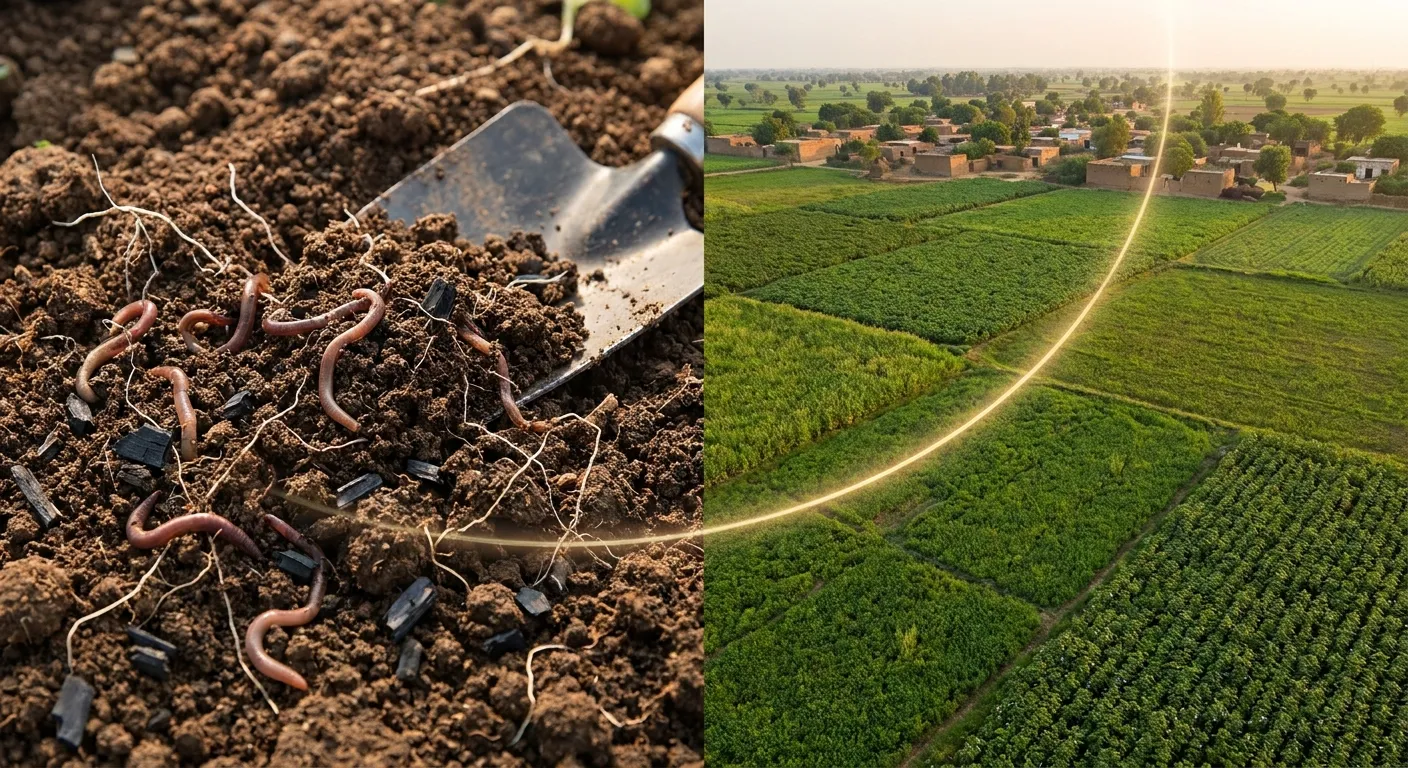
When soil testing is integrated into a carbon accounting framework, the data flow looks like this: farm-level SOC measurements establish a baseline carbon stock. Annual measurements track changes in that stock. The difference, adjusted for sampling uncertainty and permanence risk, represents verified carbon sequestration. This sequestration can then be counted as a scope 3 removal in your GHG inventory, used to generate carbon insets that reduce your reported emissions, or converted into carbon credits that can be retired against your net zero commitments.
Biochar applications add another dimension to this picture. When biochar is applied to soil as part of a regenerative program, it contributes to SOC in a form that is highly stable and resistant to decomposition, meaning the carbon sequestration is more permanent than sequestration from organic matter alone. Soil testing that includes biochar-amended plots can demonstrate accelerated SOC gains, strengthening both the carbon accounting case and the brand's regenerative storytelling. For a detailed look at how biochar works in Indian cotton farming contexts, see our post on carbon sequestration frameworks in agriculture.
Beetle Regen's Sustainability as a Service (SaaS) programs integrate soil testing directly into the carbon accounting workflow. Soil data collected through our farmer programs flows into carbon footprinting models, feeds scope 3 emissions calculations, and supports carbon credit verification, all within a single program structure that brands can access without building internal soil science capacity. This is the practical difference between treating soil testing as an isolated agronomic exercise and treating it as a strategic brand asset.
For brands navigating the full landscape of ESG reporting requirements, our Modern ESG Dictionary provides a useful reference for the terminology and frameworks that connect soil data to sustainability disclosures.
Frequently Asked Questions About Soil Testing for Textile Brands
How often should brands require soil testing from suppliers?
At minimum, annual soil testing is required to detect meaningful trends in soil organic carbon. For suppliers in the first two years of a regenerative transition, semi-annual testing can provide more granular data on how quickly practices are taking effect. For established regenerative suppliers with a multi-year data record, annual testing is sufficient for ongoing verification.
What does soil testing cost and who pays for it?
Basic soil testing in India, covering SOC, bulk density, pH, and key nutrients, typically costs between ₹500 and ₹2,000 per sample through NABL-accredited laboratories, depending on the test panel and laboratory. For a supplier network of 100 farms with composite sampling, annual testing costs are manageable within a sourcing program budget. The question of who pays is a program design decision: some brands absorb testing costs as part of their supplier development investment; others share costs with farmers or build them into premium pricing structures. Beetle Regen recommends treating testing costs as a shared investment, with brands covering the cost for the first two years and transitioning to a shared model as the program matures.
Can soil test results be used in sustainability reports?
Yes, provided the testing follows a documented, consistent methodology and is conducted by accredited laboratories. Soil test results can support disclosures under GRI Standards, CSRD, BRSR, and TCFD frameworks. For carbon-specific claims, results should be verified against a recognized carbon methodology (Verra, Gold Standard, or equivalent) before being used in carbon accounting disclosures.
What is the difference between soil testing and soil certification?
Soil testing is a measurement process: it produces data about the current state of soil health indicators. Soil certification (such as the Regenerative Organic Certified standard or the Land to Market verification) is a third-party assessment process that evaluates whether a farm's practices and outcomes meet a defined standard. Soil testing data is typically an input into certification processes, but certification involves additional practice audits and governance requirements beyond what testing alone provides. For brands, soil testing is the foundation; certification is the formal verification layer built on top of it.
How does soil testing connect to blockchain traceability systems?
Blockchain traceability platforms can store soil test results as immutable records linked to specific farm IDs, GPS coordinates, and batch identifiers. This means that when a brand traces a bale of cotton from farm to fabric, the soil health data associated with that farm is part of the traceable record, not a separate document that has to be cross-referenced manually. This integration is what makes soil testing a genuine supply chain transparency tool rather than just an internal reporting input. For a deeper look at how traceability technology and regenerative data connect, see our guide on supply chain transformation through regenerative agriculture consulting.
Make Soil Testing the Foundation of Your Regenerative Brand Claims
The brands that will lead on regenerative sourcing in the next five years are not the ones with the boldest claims, they are the ones with the most rigorous data. Soil testing is the foundation of that data infrastructure. It connects farm-level practice to brand-level accountability, turns regenerative commitments into verifiable outcomes, and gives sustainability teams the evidence they need to defend their claims to auditors, investors, and regulators.
Building a soil testing program into your supplier onboarding and annual sourcing audits is not a small undertaking. It requires protocol design, laboratory partnerships, farmer communication, data management, and integration with your existing carbon accounting and traceability systems. But it is precisely this rigor that separates credible regenerative sourcing from greenwashing, and that distinction is becoming commercially significant as regulatory scrutiny intensifies.
Beetle Regen Solutions works with textile brands to design and implement soil testing programs that are farmer-friendly, audit-ready, and directly connected to carbon accounting and scope 3 emissions reporting. If your brand is ready to move from regenerative claims to regenerative evidence, connect with the Beetle Regen team to discuss how a structured soil testing protocol can be built into your sourcing program, starting with your next supplier onboarding cycle.