
Fashion Brand Net Zero Roadmap: 5 Steps to Verified Climate Targets
A sustainability director at a mid-size apparel brand recently shared a candid observation: her company had published a net zero pledge in 2023, hired a consultant to build a carbon model, and then watched the initiative quietly stall when the first supplier data request went unanswered. Three years later, the pledge was still on the website. The emissions were still climbing. Sound familiar?
The fashion brand net zero roadmap is not a communications exercise. It is an operational programme that requires structured sequencing, credible data, and on-the-ground supply chain action. This guide breaks that programme into five concrete steps — from establishing a carbon footprint baseline to achieving third-party verified climate targets — and addresses the three roadblocks that derail most brands before they reach the finish line.
Whether you are a sustainability director building your first emissions inventory or an ESG lead trying to move your brand from aspirational pledge to verified commitment, this roadmap gives you the operational clarity to act.

Why Most Fashion Brands Stall Before Their Net Zero Journey Begins
The fashion industry has made ambitious climate commitments. Dozens of major brands have signed up to the UNFCCC Fashion Industry Charter for Climate Action, pledging to halve emissions by 2030 and reach net zero by 2050. Yet independent analyses consistently show that fewer than 20% of these brands have published credible, time-bound plans to back those pledges.
The gap between pledge and progress is not usually a lack of intention. It is a lack of structure. Three specific roadblocks appear repeatedly across brands of every size:
- Data gaps: Scope 3 emissions — which account for 80 to 95% of a fashion brand's total carbon footprint, are notoriously difficult to measure. Supplier data is incomplete, inconsistent, or simply unavailable at Tier 2 and Tier 3 levels.
- Supplier disengagement: Brands often lack the leverage or the incentive structures to bring upstream suppliers into their decarbonisation programmes. Farmers, spinners, and dye houses are asked to report data without being offered any tangible benefit for doing so.
- Greenwashing risk: Without third-party verification, every public claim about net zero progress carries reputational and regulatory risk. The EU Green Claims Directive and India's BRSR framework are raising the bar for what constitutes a credible sustainability disclosure.
A well-structured fashion brand net zero roadmap addresses all three of these challenges systematically. The five steps below are sequenced deliberately, each one builds the foundation for the next.
1. Establish a Credible Carbon Footprint Baseline
Every credible fashion brand net zero roadmap starts in the same place: a rigorous, methodology-aligned carbon footprint baseline. Without this, target-setting is guesswork and intervention prioritisation is impossible.
Understanding Scope 1, 2, and 3 for Fashion Brands
The GHG Protocol Corporate Standard divides emissions into three scopes. For fashion brands, the distribution is heavily weighted toward Scope 3:
- Scope 1: Direct emissions from owned or controlled sources, typically a small share for brands without manufacturing operations (e.g., company vehicles, on-site energy use at owned facilities).
- Scope 2: Indirect emissions from purchased electricity and heat. Transitioning to renewable energy contracts addresses this scope relatively quickly.
- Scope 3: All other indirect emissions across the value chain. For fashion brands, this includes raw material production (cotton, synthetics, wool), yarn spinning, fabric weaving and dyeing, garment manufacturing, logistics, retail operations, consumer use, and end-of-life disposal.
Scope 3 is where the real work, and the real opportunity, lies. Carbon accounting for fashion brands that stops at Scope 1 and 2 is not a net zero strategy. It is a partial picture that will not satisfy investors, regulators, or science-based target validators. For a deeper introduction to the mechanics of carbon accounting, see our guide on Carbon Sequestration in Agriculture: A Complete Framework.
Scope 3 Categories Most Relevant to Apparel
Not all 15 Scope 3 categories carry equal weight for fashion brands. The highest-impact categories are typically:
- Category 1, Purchased goods and services: Raw fiber production (cotton, polyester, wool) and all upstream processing. This is usually the single largest source of Scope 3 emissions for apparel brands.
- Category 4, Upstream transportation and distribution: Freight from supplier countries to distribution centres.
- Category 11, Use of sold products: Consumer washing and drying over the garment's lifetime.
- Category 12, End-of-life treatment: Landfill, incineration, or recycling of garments after consumer use.
Data Collection Methods and Standards
Brands typically use a combination of three approaches to build their baseline:
- Spend-based estimation: Uses financial data and industry-average emission factors. Fast to implement but low accuracy, useful for a first-pass baseline.
- Activity-based modelling: Uses physical data (kg of cotton purchased, km of freight, litres of water used) with more precise emission factors. More accurate but requires supplier cooperation.
- Primary supplier data: Direct measurement from suppliers using standardised tools like the Higg Facility Environmental Module (FEM). Highest accuracy, but requires significant supplier engagement infrastructure.
The best baselines combine all three, using primary data where it is available and spend-based estimates to fill gaps, with a clear plan to improve data quality over time. For brands working with sustainability reporting frameworks like CSRD or BRSR, the baseline methodology must be documented and auditable from day one.
2. Map and Prioritise Your Supply Chain Emission Hotspots
Once the baseline is established, the next step in the fashion brand net zero roadmap is hotspot analysis. Not all emissions are equally addressable, and not all interventions deliver equal impact. Hotspot mapping tells you where to focus first.

Where Emissions Concentrate in Fashion Supply Chains
Research consistently shows that the majority of a fashion brand's carbon footprint sits in the first two tiers of the supply chain, raw material production and primary processing. For cotton-based brands, this means:
- Cotton farming: Synthetic fertiliser use (a major source of nitrous oxide, a potent greenhouse gas), irrigation energy, and land-use change all contribute significantly to upstream emissions.
- Yarn spinning and fabric weaving: Energy-intensive processes, often powered by coal-heavy grids in South and Southeast Asia.
- Dyeing and finishing: High water and energy consumption, with significant chemical inputs that carry embedded carbon.
This distribution has a critical implication: the most impactful interventions for a fashion brand net zero roadmap are upstream, not downstream. Switching to LED lighting in retail stores is worthwhile, but it will not move the needle on a supply chain that emits tens of thousands of tonnes of CO₂e at the farm and mill level.
The Regenerative Agriculture Opportunity at Tier 1
Cotton farming represents one of the most significant, and most actionable, scope 3 emissions hotspots for apparel brands. Transitioning cotton sourcing to regenerative farming practices addresses this hotspot directly. Regenerative cotton programmes reduce synthetic fertiliser inputs, improve soil organic carbon, and create measurable, verifiable emission reductions within the brand's own supply chain.
This is the principle behind carbon insetting: rather than purchasing offsets from unrelated projects, brands invest in emission reductions within their own value chain. The result is a stronger climate claim, better supplier relationships, and a more resilient supply chain. For a detailed look at how this supply chain transformation works in practice, see our post on Supply Chain Transformation Through Regenerative Agriculture Consulting.
Traceability as a Hotspot Visibility Tool
Supply chain traceability and hotspot mapping are inseparable. Without knowing which farms your cotton comes from, which mills processed it, and which freight routes it travelled, you cannot assign emissions accurately, and you cannot verify reductions. Blockchain traceability and ERP integration tools are increasingly used to build the data infrastructure that makes hotspot analysis possible at scale. For a practical guide to building this infrastructure, see How to Integrate Regenerative Agriculture Data Across Supply Chains.
3. Set Science-Aligned Targets Using the SBTi Framework
With a baseline established and hotspots identified, the third step in the fashion brand net zero roadmap is formalising your targets. This is where many brands make a critical error: they set targets that sound ambitious but are not grounded in climate science.
What Science-Based Targets Actually Require
The Science Based Targets initiative (SBTi) provides the most widely recognised framework for corporate climate target validation. For fashion brands, SBTi validation requires:
- Near-term targets (5-10 years): Absolute emission reductions of at least 42% by 2030 (from a 2020 base year), covering Scope 1, 2, and material Scope 3 categories.
- Long-term net zero targets: Reducing emissions by at least 90% across all scopes by no later than 2050, with residual emissions addressed through permanent carbon removal.
- FLAG targets: Brands with significant agricultural supply chains must also set Forest, Land and Agriculture (FLAG) targets, which specifically address land-use emissions from fiber production.
The distinction between a carbon neutral claim and a net zero claim matters here. Carbon neutrality can be achieved through offsetting alone, buying credits to balance current emissions without reducing them. Net zero requires deep, verified emission reductions first, with offsets only used for residual emissions that cannot be eliminated. Regulators and investors increasingly distinguish between the two, and the fashion brand net zero roadmap must reflect this distinction clearly.
Regulatory Alignment: CSRD, BRSR, and Beyond
For brands operating in or sourcing from India, the BRSR (Business Responsibility and Sustainability Reporting) framework now requires large listed companies to disclose Scope 1, 2, and 3 emissions. For brands selling into the EU, the Corporate Sustainability Reporting Directive (CSRD) mandates detailed climate transition plans. Setting SBTi-validated targets positions brands ahead of both frameworks simultaneously. For a deeper look at how these regulatory requirements intersect with on-farm climate action, see How Regenerative Agriculture Aligns with Climate Policy.
4. Implement Supply Chain Interventions That Actually Reduce Emissions
Target-setting without implementation is the most common failure mode in corporate climate programmes. Step four of the fashion brand net zero roadmap is where strategy becomes action, and where the quality of your supply chain partnerships determines whether your targets are achievable.
Regenerative Agriculture Programmes for Cotton Sourcing
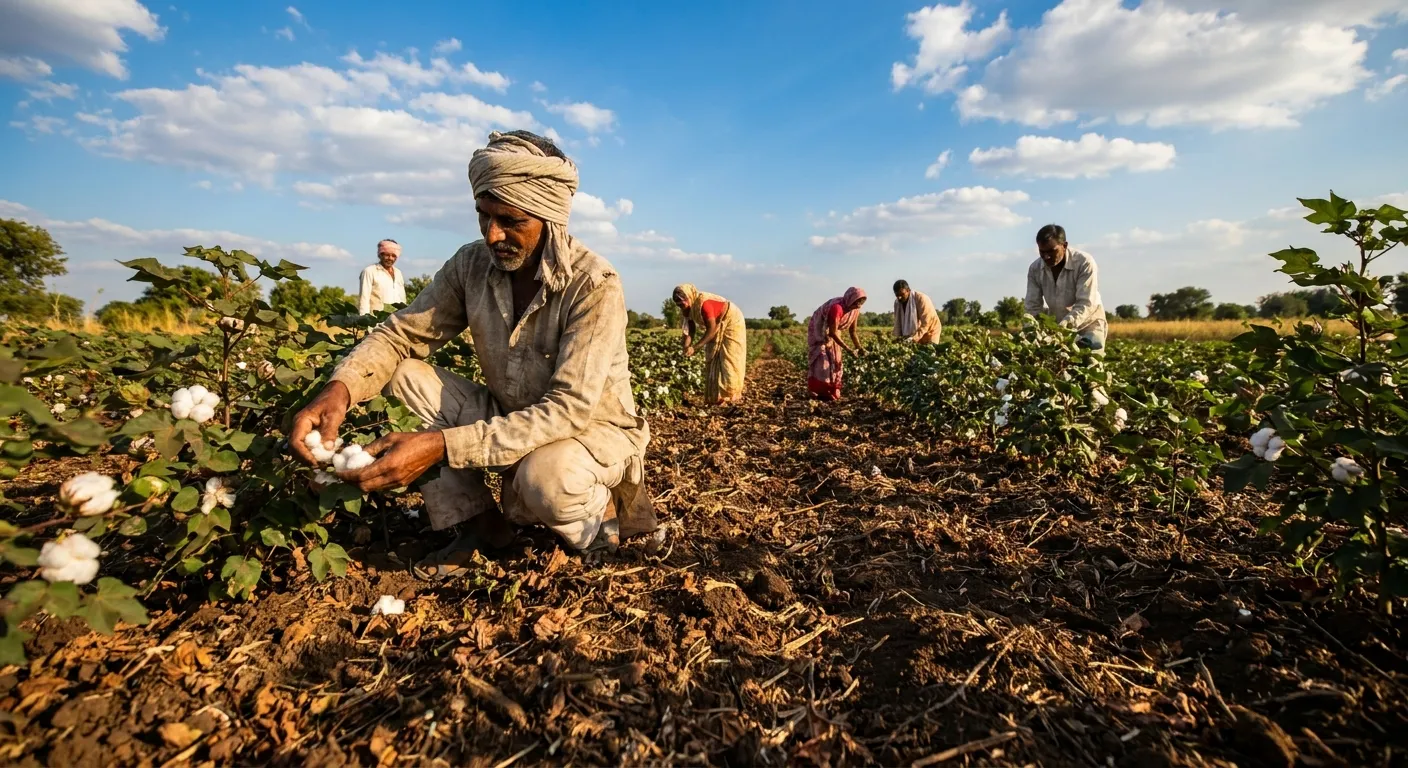
For brands sourcing cotton from India or Bangladesh, transitioning to regenerative agriculture supply chain visibility programmes is one of the highest-impact interventions available. Regenerative cotton farming practices, including reduced tillage, cover cropping, composting, and the elimination of synthetic inputs, deliver measurable reductions in Scope 3 Category 1 emissions while simultaneously improving soil health and farmer income.
Beetle Regen's regenerative cotton programmes work directly with farmer communities in India, providing capacity building, agronomic support, and the data infrastructure needed to verify emission reductions at the farm level. This is not a certification exercise, it is a hands-on transition programme that builds farmer capability and generates auditable carbon data simultaneously.
Biochar Carbon Insetting
Biochar is one of the most durable nature-based carbon sequestration solutions available to fashion brands. When agricultural residues (such as cotton stalks or rice husks) are converted to biochar through pyrolysis and applied to farmland, carbon that would otherwise return to the atmosphere is locked into the soil for hundreds to thousands of years. Biochar applications within a brand's own supply chain generate verified carbon credits that count as insetting, reducing the brand's net Scope 3 emissions rather than simply offsetting them elsewhere.
For brands building a fashion brand net zero roadmap that will withstand investor and regulatory scrutiny, insetting through biochar is significantly more credible than purchasing generic offset credits from unrelated projects. The carbon removal is permanent, verifiable, and directly connected to the brand's own value chain.
Alternative Wetting and Drying for Rice-Adjacent Supply Chains
Brands sourcing from South Asian supply chains that include rice cultivation, either directly or through farmer households that grow both cotton and rice, have an additional methane reduction opportunity. Alternative Wetting and Drying (AWD) is a water management technique that reduces methane emissions from flooded paddy fields by up to 48% without reducing yields. Implementing AWD across supplier farming communities addresses a significant and often overlooked source of agricultural greenhouse gas emissions.
ERP Integration and Real-Time Emissions Monitoring
Interventions only count if they can be measured and verified. ERP integration with carbon accounting platforms allows brands to track emission reductions in near-real-time as regenerative practices are adopted across the supply chain. This data infrastructure serves three purposes: it enables accurate annual reporting, it provides the evidence base for third-party verification, and it creates the feedback loops that allow brands to identify which interventions are delivering the greatest impact per unit of investment.
Supplier Engagement: The Human Side of Decarbonisation
No supply chain intervention succeeds without genuine supplier engagement. The most effective approach combines three elements:
- Capacity building: Providing farmers and manufacturers with the knowledge and tools to adopt lower-carbon practices, not just asking them to report data.
- Incentive alignment: Ensuring that suppliers benefit financially from participation. Regenerative premiums, carbon credit revenue sharing, and preferential sourcing agreements all create tangible reasons for suppliers to engage.
- Co-investment: Brands that share the cost of transition, through pre-financing, technical assistance, or guaranteed offtake agreements, see dramatically higher supplier participation rates than those that simply issue data requests.
This farmer-first approach is central to how Beetle Regen designs its supply chain programmes. When farmers see a direct connection between regenerative practices and improved livelihoods, engagement becomes self-sustaining rather than compliance-driven.
5. Verify, Report, and Continuously Improve Your Net Zero Progress
The fifth and final step in the fashion brand net zero roadmap is the one that transforms internal progress into external credibility. Verification and reporting are not bureaucratic obligations, they are the mechanism by which a brand's climate commitments become trustworthy.
Third-Party Verification: Why It Is Non-Negotiable
Self-reported emission reductions carry limited credibility with investors, regulators, and sophisticated consumers. Third-party verification by accredited bodies, using standards such as Verra's Verified Carbon Standard (VCS), Gold Standard, or the Soil Carbon Initiative, provides the independent assurance that makes climate claims defensible.
For brands implementing regenerative agriculture insetting, verification involves on-farm soil sampling, activity data review, and comparison against approved baseline methodologies. This is where the quality of your data infrastructure, built in steps one through four, determines how efficiently and cost-effectively verification can be completed. For a comprehensive look at the carbon sequestration methodologies that underpin this verification process, see Carbon Sequestration in Agriculture: A Complete Framework.
Reporting Frameworks and Disclosure Standards
A credible fashion brand net zero roadmap aligns its reporting with recognised frameworks. The most relevant for fashion brands in 2026 are:
- GRI Standards: The most widely used framework for sustainability reporting, covering environmental, social, and governance disclosures.
- TCFD: The Task Force on Climate-related Financial Disclosures framework, now mandatory for large companies in many jurisdictions, requires scenario analysis and transition plan disclosure.
- CDP: The Carbon Disclosure Project scores companies on climate transparency and action, a key signal for institutional investors.
- CSRD / ESRS: The EU's Corporate Sustainability Reporting Directive requires detailed climate transition plans, including Scope 3 coverage and SBTi-aligned targets, for companies operating in or selling into the EU market.
Carbon Credits for Residual Emissions
Even the most aggressive decarbonisation programme will leave some residual emissions that cannot be eliminated with current technology. High-quality carbon credits, particularly those generated through verified nature-based solutions within the brand's own supply chain, are the appropriate tool for addressing these residuals. The key is sequencing: credits should be used to address what remains after deep emission reductions, not as a substitute for them. For guidance on evaluating carbon credit quality, see Net Zero Agriculture: Complete Buyer's Guide 2026.
Building a Continuous Improvement Loop
Net zero is not a destination reached once and then maintained passively. It requires annual baseline updates, supplier scorecard reviews, target recalibration as science evolves, and ongoing investment in new interventions. Brands that build this continuous improvement infrastructure into their operating model, rather than treating net zero as a one-time project, are the ones that will sustain credible progress over the decade ahead.
The Fashion Brand Net Zero Roadmap in Practice: Overcoming the Three Biggest Roadblocks
Even with a clear five-step structure, most brands encounter the same three obstacles. Here is how to address each one directly.
Roadblock 1: Data Gaps in Scope 3
Incomplete supplier data is the most common reason net zero programmes stall. The practical solution is a tiered data strategy: use spend-based estimates for Tier 2 and Tier 3 suppliers where primary data is unavailable, while investing in primary data collection for your highest-impact hotspots first. Prioritise the 20% of suppliers that account for 80% of your Scope 3 emissions. As your supplier engagement programme matures, progressively replace estimates with primary data, improving both accuracy and credibility over time.
Traceability platforms that integrate with supplier ERP systems can automate much of this data collection, reducing the manual burden on both brands and suppliers. For a practical guide to building this data infrastructure, see How to Integrate Regenerative Agriculture Data Across Supply Chains.
Roadblock 2: Supplier Engagement at Tier 2 and Tier 3
Brands that treat supplier engagement as a data extraction exercise consistently fail. Suppliers, particularly smallholder farmers at Tier 3, have no incentive to participate in a programme that costs them time and delivers no benefit. The solution is to redesign the engagement model so that participation creates value for suppliers, not just for the brand.
This means offering capacity building programmes that improve farm productivity, creating revenue-sharing arrangements for carbon credits generated on supplier farms, and providing preferential sourcing commitments to suppliers who meet regenerative standards. When the fashion brand net zero roadmap is designed as a partnership rather than a compliance requirement, supplier engagement rates improve dramatically.
Roadblock 3: Greenwashing Risk
The regulatory and reputational consequences of overstating climate progress have never been higher. The EU Green Claims Directive, the UK's Competition and Markets Authority Green Claims Code, and India's BRSR framework all create legal exposure for brands that make unsubstantiated sustainability claims.
The protection against greenwashing is not caution, it is rigour. Brands that invest in third-party verification, align with recognised standards (SBTi, GHG Protocol, Verra), and disclose their methodology transparently are far better positioned than those that make vague claims without evidence. A Sustainability as a Service model, where an experienced partner manages the methodology, data infrastructure, and verification process, can significantly reduce both the implementation burden and the greenwashing risk for brands that lack in-house expertise.
Frequently Asked Questions About the Fashion Brand Net Zero Roadmap
How long does it take to complete a fashion brand net zero roadmap?
Building a credible baseline and setting SBTi-validated targets typically takes 12 to 18 months for a brand starting from scratch. Implementing supply chain interventions and achieving measurable emission reductions is a multi-year process, most brands target significant reductions by 2030 as a near-term milestone on the path to net zero by 2050. Starting with a rigorous baseline and clear hotspot analysis in year one dramatically accelerates the pace of subsequent steps.
What is the difference between carbon neutral and net zero for fashion brands?
Carbon neutrality means balancing current emissions with an equivalent amount of carbon credits or offsets, without necessarily reducing the underlying emissions. Net zero requires deep, verified emission reductions (typically 90%+) across all scopes, with high-quality carbon removal used only for residual emissions. For a fashion brand net zero roadmap, the distinction matters because regulators and investors increasingly reject carbon neutral claims that rely primarily on offsetting rather than genuine reduction. For a fuller explanation of these terms, see The Modern ESG Dictionary: All You Need to Know.
Do small and mid-size fashion brands need SBTi validation?
SBTi validation is not legally mandatory, but it is increasingly expected by major retailers, institutional investors, and B2B customers. For brands supplying to large retailers like H&M, Marks & Spencer, or PVH, all of which have their own SBTi commitments, supplier alignment with science-based targets is becoming a sourcing requirement. Even brands that do not pursue formal SBTi validation benefit from using the SBTi methodology as an internal framework for target-setting, as it ensures targets are grounded in climate science rather than arbitrary percentages.
How does regenerative agriculture fit into a fashion brand's net zero strategy?
Regenerative agriculture addresses the single largest source of Scope 3 emissions for most cotton-based fashion brands: raw material production. By transitioning cotton sourcing to regenerative farming systems, brands can reduce upstream emissions, sequester carbon in agricultural soils, and generate verified insetting credits, all within their own value chain. This makes regenerative agriculture one of the most powerful tools available in a fashion brand net zero roadmap, particularly for brands with significant cotton or natural fiber sourcing from India or Bangladesh.
What role do carbon credits play in a net zero roadmap?
Carbon credits play a supporting role, not a leading one. In a credible net zero strategy, credits are used to address residual emissions that cannot be eliminated after all feasible reduction measures have been implemented. The highest-quality credits for fashion brands are those generated through insetting, verified emission reductions or removals within the brand's own supply chain, rather than generic market offsets. Insetting credits through regenerative agriculture and biochar programmes deliver co-benefits (soil health, farmer income, biodiversity) that generic offsets cannot match.
Take the Next Step on Your Fashion Brand Net Zero Roadmap
The gap between a net zero pledge and a verified net zero achievement is closed one structured step at a time. Brands that start with a rigorous carbon footprint baseline, map their supply chain hotspots honestly, set science-aligned targets, implement verified supply chain interventions, and report transparently are the ones that will meet their 2030 milestones, and build the credibility that regulators, investors, and consumers increasingly demand.
Beetle Regen works with fashion and apparel brands at every stage of this journey, from first-pass carbon accounting and hotspot analysis through to regenerative cotton sourcing, biochar insetting, and third-party verified reporting. If your brand is ready to move its fashion brand net zero roadmap from aspiration to verified action, connect with the Beetle Regen team to discuss where your programme stands and what the most impactful next steps look like for your specific supply chain.