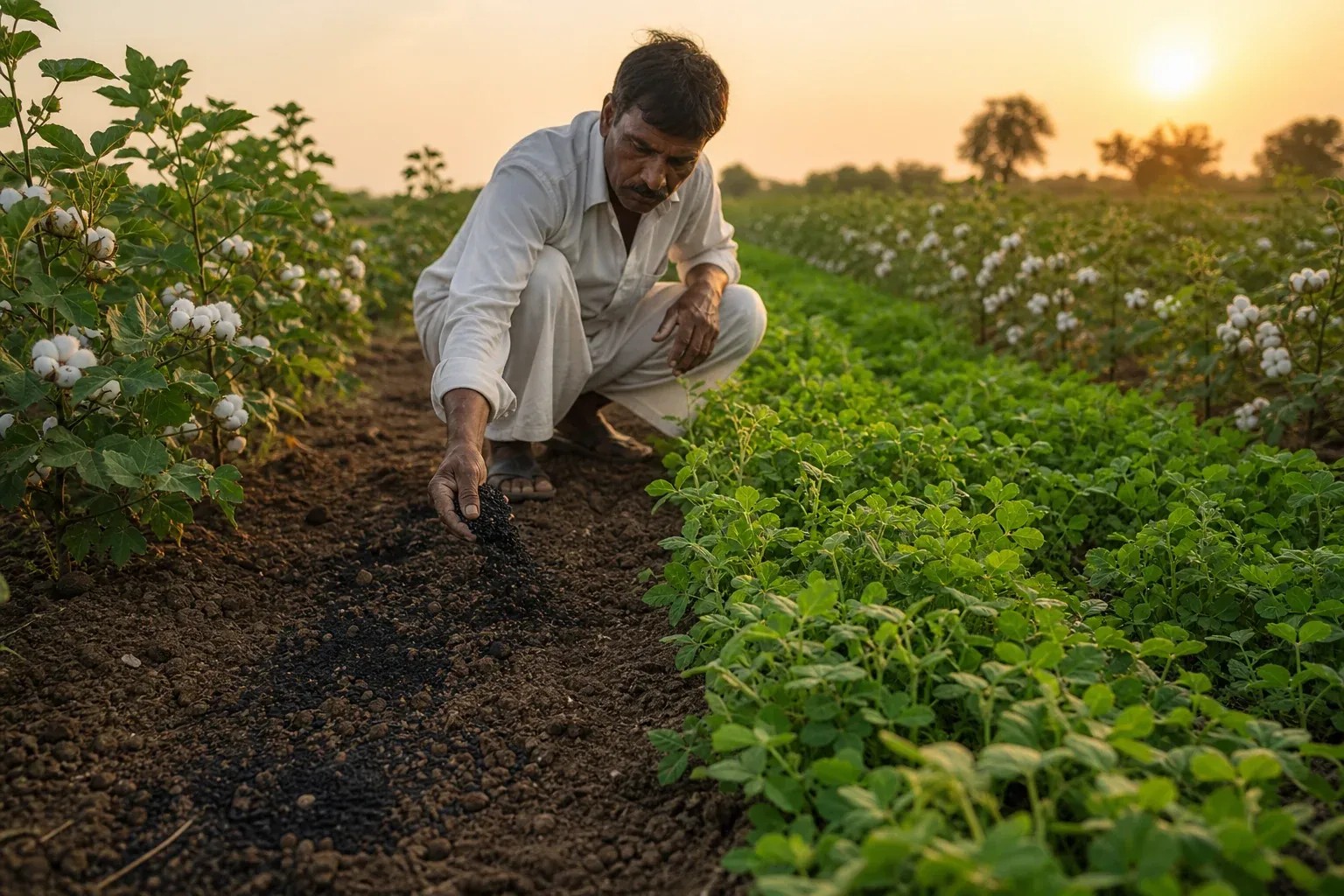
Biochar vs Cover Crops: Which Sequesters More Carbon?
Biochar vs cover crops for carbon sequestration is not an academic debate. It shapes how much a textile brand pays per tonne of carbon removed, how fast that carbon shows up in a Scope 3 report, and how much a smallholder farmer earns from the practice change. This article compares both methods head to head on cost, permanence, measurement complexity, and yield co-benefits, so you can pick the right one, or the right combination, for your program.
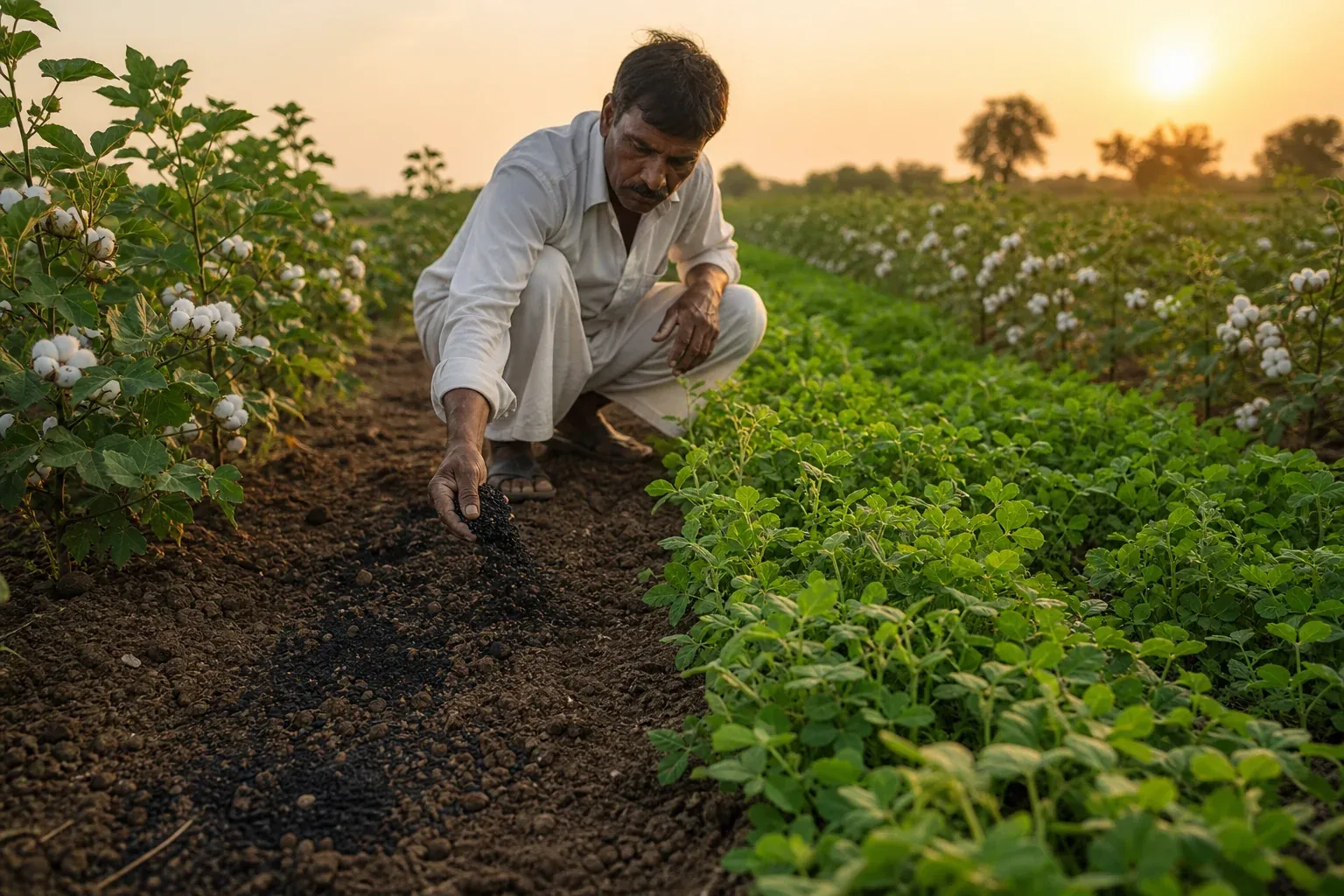
How Each Method Actually Sequesters Carbon
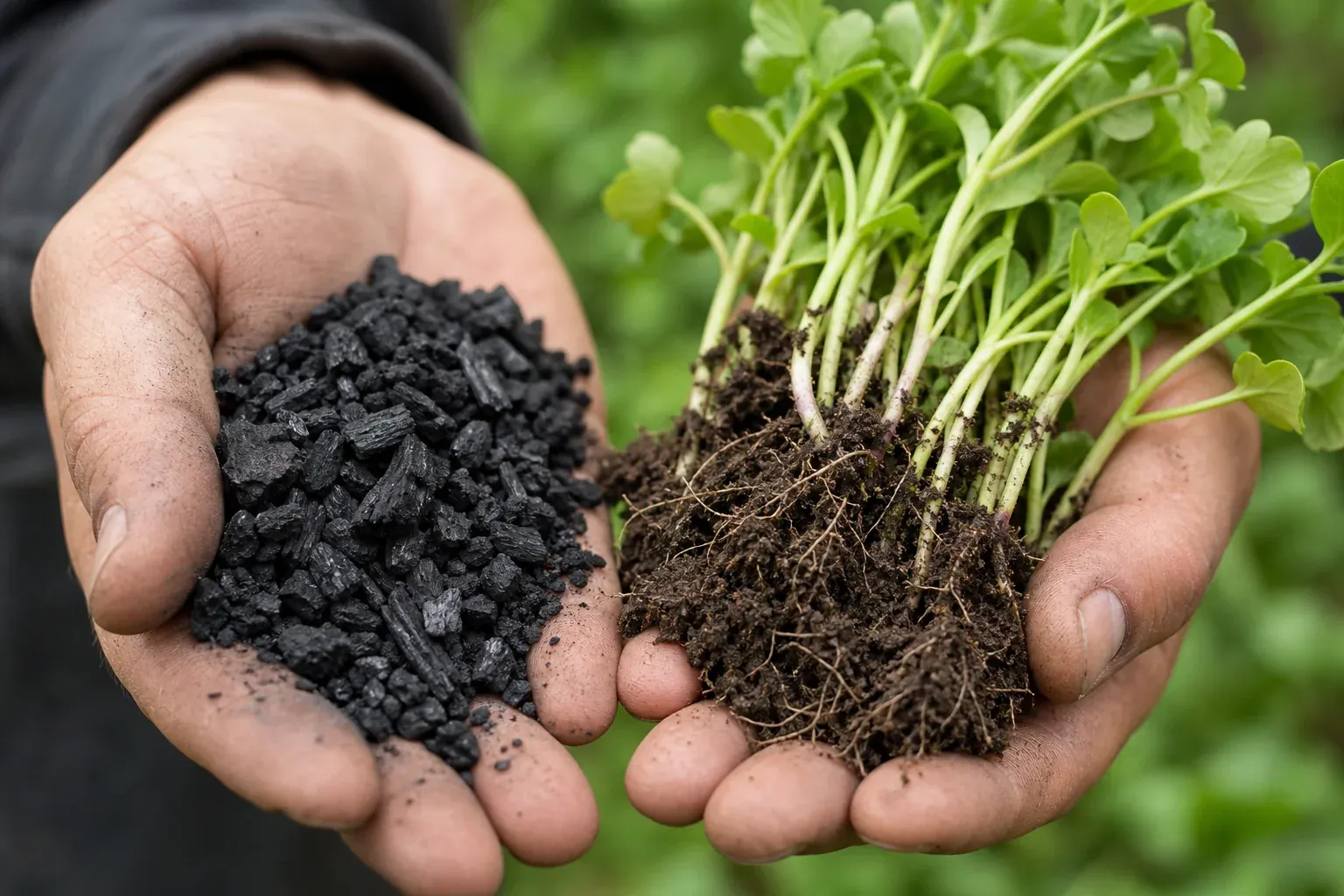
Biochar carbon insetting starts with crop residue, usually cotton stalks, rice husks, or other agricultural waste that would otherwise be burned in the field. That residue goes through pyrolysis, a controlled heating process with very little oxygen. The result is a stable, carbon-rich material that looks like charcoal. When farmers work it into the soil, most of that carbon stays locked in place for centuries rather than breaking down within a few growing seasons.
Cover cropping works differently. Farmers plant species like sunn hemp, cowpea, or clover between main crop cycles instead of leaving fields bare. Living roots pull carbon dioxide from the air through photosynthesis and push carbon into the soil as root biomass and residue. Soil microbes then convert some of that plant material into stable soil organic carbon over time, while the rest cycles back into the atmosphere through natural decomposition.
The core difference comes down to this: biochar is an engineered, one-time carbon deposit with a long shelf life. Cover crops are a biological process that keeps adding small amounts of carbon every season, but that carbon stays more vulnerable to loss if farming practices change. Our complete guide to cover crops in regenerative agriculture breaks down species selection and rotation timing in far more depth than we can cover here.
Biochar vs Cover Crops: Carbon Sequestration Compared Side by Side
Sustainability teams evaluating carbon insetting programs need numbers they can defend to auditors and boards. Here is how the two methods stack up across the factors that matter most for a textile supply chain carbon program.
| Factor | Biochar Carbon Insetting | Cover Crops |
|---|---|---|
| Typical carbon permanence | 100+ years, often rated at 300-1,000 years depending on feedstock and pyrolysis temperature | 5-20 years, reversible if tillage or fallow periods resume |
| Estimated CO2e sequestered | 2-5 tonnes CO2e per hectare per application, delivered as a single large pulse | 0.2-1 tonne CO2e per hectare per year, accumulating gradually |
| Cost per tonne of CO2e | Higher upfront cost per tonne due to pyrolysis units, transport, and quality testing | Lower cost per tonne, mainly seed and labor, but lower total volume per season |
| MRV complexity | Moderate to high; requires feedstock records, pyrolysis temperature logs, and lab carbon stability tests | High; requires repeated soil sampling across seasons to isolate a small, noisy signal |
| Time to measurable result | Weeks to months after application, since the carbon content is fixed before it enters the soil | 2-4 years before soil organic carbon change is statistically detectable |
| Yield co-benefit for farmers | Improved water retention and nutrient cycling, especially in degraded or sandy soils | Reduced erosion, weed suppression, and nitrogen fixation depending on species mix |
| Upfront investment | Higher; needs pyrolysis infrastructure or a supplier relationship | Lower; needs seed procurement and a shift in planting calendar |
Neither column wins outright. Biochar delivers a bigger, more durable, and faster-to-verify carbon number, which matters if a brand needs a defensible insetting claim for this year's sustainability report. Cover crops cost less to start and rebuild soil biology in ways biochar alone cannot match, which matters if the real goal is long-term farm resilience.
Permanence: Why Durability Ratings Matter to Buyers
Ask any corporate sustainability team what keeps them up at night on a carbon claim, and reversal risk is usually near the top. A tonne of carbon that disappears in five years because a farmer switched back to conventional tillage is a liability, not an asset, once it shows up in an audited disclosure.
Biochar's molecular structure resists microbial breakdown far better than fresh organic matter does. Independent frameworks, including approaches used by registries like Verra and carbon removal certifiers such as Puro.earth, rate biochar's durability in centuries rather than years, which is why it increasingly appears in permanent carbon removal categories rather than avoidance categories.
Cover crop carbon lives in a different risk bucket. Soil organic carbon built through cover cropping can be lost quickly if a farmer tills the field aggressively, switches to bare fallow, or faces a drought that kills the cover stand before it establishes roots. That does not make cover crops a bad investment. It means buyers need ongoing monitoring commitments, not a one-time verification, to trust the number over time. Our guide to MRV and traceability systems for cotton covers how ongoing monitoring protocols work in practice.
A carbon credit is only as credible as its weakest measurement link. Biochar removes most of the guesswork before the material ever touches the soil. Cover crops ask you to trust a slower, living system that needs years of consistent management to prove itself.
Cost Per Tonne: What Textile Brands and Cooperatives Actually Pay
Cost is where the two methods diverge most sharply, and where sustainability teams often get surprised. Biochar carbon insetting cost per tonne for textile brands includes several line items that cover crops simply do not have: feedstock collection, pyrolysis unit operation or third-party production, transport to the field, application labor, and lab testing to confirm carbon content and stability. Add the overhead of maintaining a supply chain traceability system connecting the biochar batch to a specific farm plot, and the per-tonne price climbs further. Cover crops avoid most of that infrastructure cost. A cooperative's biggest expense is seed, plus the opportunity cost of using land for a cover stand instead of a second cash crop in some rotations. Labor costs stay relatively low since planting and termination follow the existing farming calendar. The tradeoff is volume. Because cover crops sequester a fraction of a tonne per hectare per year, a program needs far more acreage and far more years to reach the same tonnage biochar delivers in a single application cycle.
For a mid-size cotton cooperative supplying a European denim brand, the practical math often looks like this: cover crops make sense as the default, low-cost baseline practice across most of the supplier base, while biochar gets targeted at specific high-priority plots where a brand needs a fast, auditable permanence claim for this year's Scope 3 disclosure. Layering the two lowers blended cost per tonne while still hitting a credible aggregate number.
MRV Complexity: Measuring, Reporting, and Verifying Each Method
Measurement, reporting, and verification (MRV) determines whether a carbon claim survives an auditor's questions. This is often the deciding factor for brands facing EU CSRD compliance strategy requirements for textile manufacturers in India.
Biochar MRV relies on documenting the feedstock source, the pyrolysis temperature and duration, and lab tests confirming the carbon's stability, often expressed through an H:Corg ratio that predicts how long the material will resist decomposition. Once that data exists, the carbon calculation stays fairly stable over time because the material does not change much once it is in the ground. Application records and photos at the plot level round out the audit trail.
Cover crop MRV asks for something harder: proof that soil organic carbon actually increased, season over season, on a specific plot. That means repeated soil sampling at consistent depths, lab analysis for organic carbon content, and enough years of data to separate a real trend from normal seasonal noise caused by rainfall, temperature, or sampling variation. Two to four years of consistent data collection is typical before a verifier will sign off on a meaningful number. Cooperatives that skip this step and claim carbon gains from a single season's soil test open themselves up to credible pushback from auditors.
Yield and Soil Health Co-Benefits for Farmers
Carbon credits matter to brands, but yield and income matter more to the farmers actually changing their practices. Both methods offer real agronomic benefits, just through different pathways.
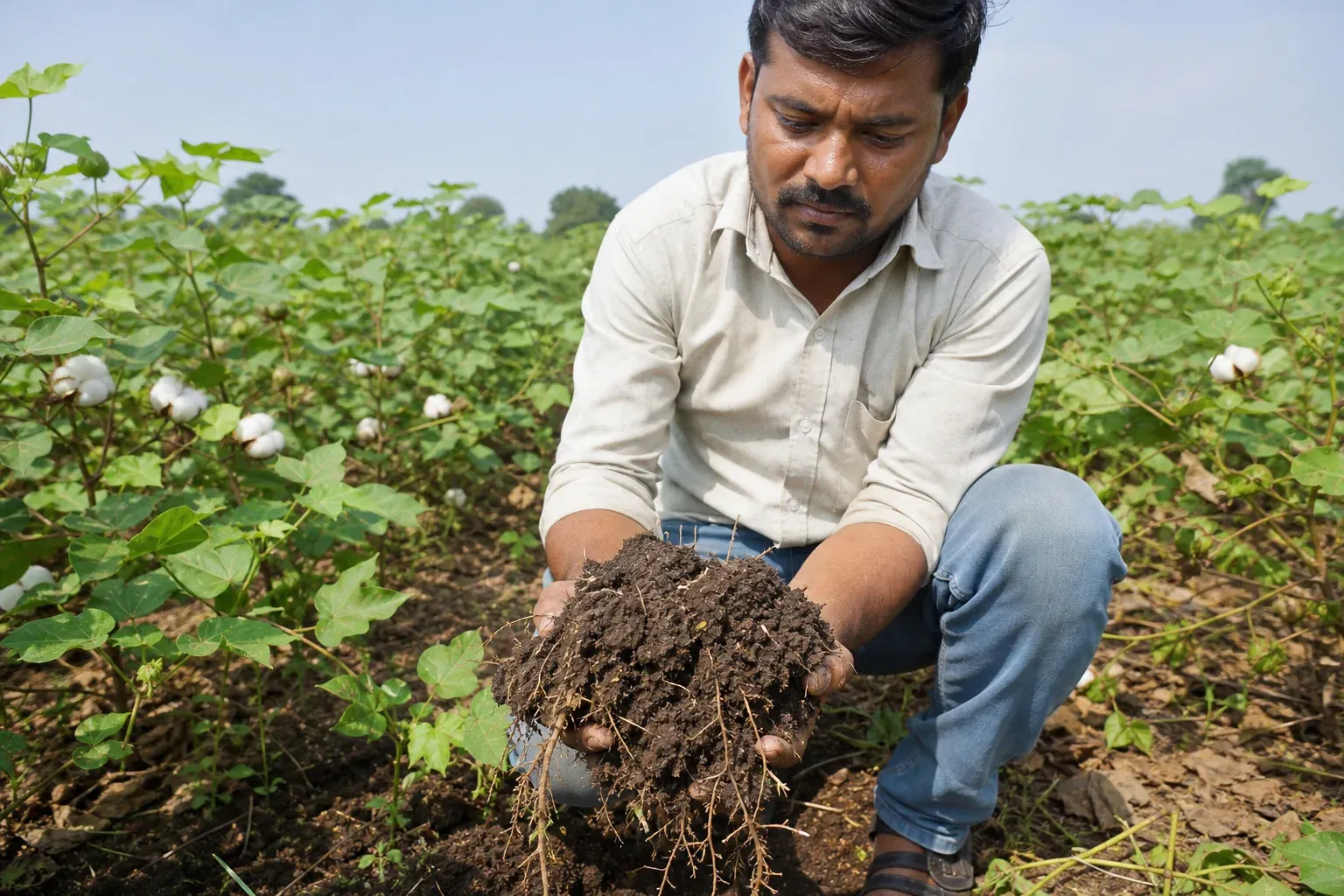
Biochar improves water retention in sandy or degraded soils common across parts of Maharashtra, Madhya Pradesh, and Telangana. Its porous structure holds moisture and nutrients that would otherwise leach away after irrigation or rainfall, which can reduce fertilizer waste and support more consistent yields during dry spells. Farmers working degraded plots often see the biggest jump in soil workability within the first one to two seasons after application, a pattern we cover in detail in our complete guide to regenerative agriculture.
Cover crops offer a different set of benefits. Species like sunn hemp and cowpea fix nitrogen in the soil, reducing the need for synthetic fertilizer in the following cash crop. Root systems break up compacted layers and reduce erosion during monsoon rains, a persistent problem across cotton-growing regions in central India. Ground cover also suppresses weeds, cutting labor and herbicide costs for smallholder farmers.
Both practices support the agronomic foundation needed for regenerative cotton certification pathways for smallholder farms in India, and both feed directly into documented crop yield gains from regenerative agriculture practices. Farmers do not have to choose one soil health strategy forever. Many cooperatives run cover crops across their full acreage as a baseline practice, then add biochar on specific plots that need faster soil recovery.
Which Should You Choose: A Decision Framework
The right answer depends on what your program actually needs to prove, and on what your budget and timeline allow. Use this framework to narrow down the choice.
Choose biochar-led programs when:
- Your brand needs a high-permanence carbon insetting claim within one to two reporting cycles
- You are working with degraded or sandy soils that need a fast structural improvement
- Your budget can absorb higher upfront cost per tonne in exchange for durability and faster verification
- You need a defensible number for EU CSRD or Scope 3 disclosure requirements this reporting year
Choose cover crops when:
- Your priority is rebuilding soil biology and structure over multiple seasons rather than hitting a single-year carbon target
- Budget constraints rule out pyrolysis infrastructure or a biochar supplier relationship for now
- You can commit to multi-year soil sampling to build a credible MRV trend line
- Farmers in your network need low-cost erosion control and fertilizer savings more than a carbon payment
Stack both when:
- You want a layered carbon program: cover crops as the broad baseline practice across the cooperative, biochar targeted at priority plots
- You are building a multi-year net zero roadmap that needs both fast wins and long-term soil resilience
- Your brand's net zero roadmap requires diversified carbon sources to reduce risk from any single method
This layered approach is the model Beetle Regen recommends most often for cooperatives working across India and Bangladesh. It spreads risk, keeps costs manageable at scale, and gives farmers more than one way to benefit from changing how they manage their land. If you want a deeper look at how the full range of practices compares, our carbon sequestration in agriculture framework maps out where tillage, compost, and agroforestry fit alongside these two methods.
Frequently Asked Questions
Can biochar and cover crops be used together on the same field?
Yes. Many cooperatives apply biochar once as a soil amendment, then maintain cover crops in the following rotations to protect and build on that improved soil structure. The two practices are complementary rather than competing, and combining them often produces better soil health outcomes than either practice alone.
Which method qualifies for carbon credits faster?
Biochar generally qualifies faster because its carbon content can be measured and verified in a lab before or shortly after application. Cover crops typically need two to four years of consistent soil sampling before a verifier can confirm a statistically credible increase in soil organic carbon.
Do cover crops help with EU CSRD and Scope 3 reporting?
Yes, though they usually contribute a smaller, slower-building number to a Scope 3 inventory compared to biochar. Brands report cover crop carbon gains as part of a broader regenerative agriculture program, often alongside other practices, rather than as a standalone high-volume carbon removal line.
What is the typical payback period for smallholder farmers adopting either practice?
Cover crops tend to show a faster farm-level payback through reduced fertilizer and herbicide costs, often within one to two seasons. Biochar's payback depends on soil condition and access to affordable feedstock, but farmers on degraded soils frequently see water retention and yield benefits within the first one to two seasons after application, with carbon payments adding income on top of those agronomic gains.
Both methods hold real, measurable value for a carbon program. The right mix depends on your timeline, your budget, and how much permanence risk your brand is willing to carry into an audit. Beetle Regen works directly with cooperatives and textile brands across India and Bangladesh to design carbon programs that combine biochar insetting and cover cropping based on what each supply chain actually needs, not a one-size-fits-all template. If you are weighing biochar vs cover crops for carbon sequestration for your own supply chain or farmer network, contact us to talk through a program that fits your soil, your budget, and your reporting timeline.